
Did you know that energy-saving light bulbs solve only half the problem
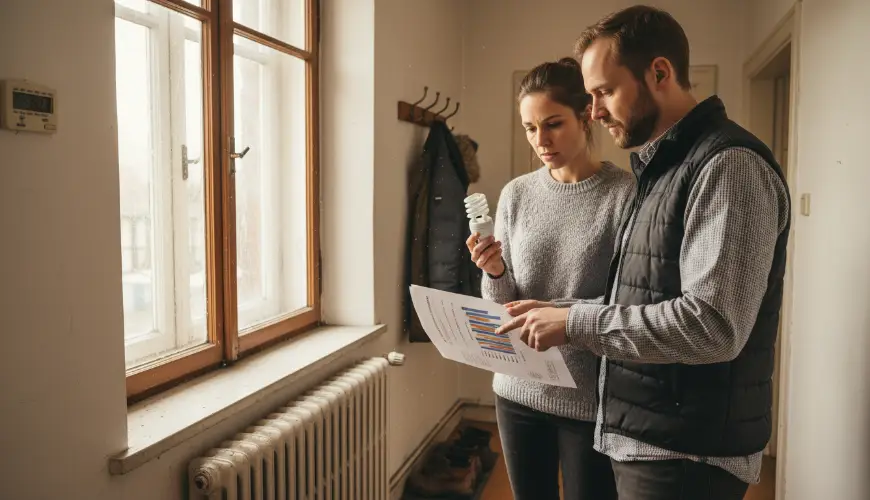
Switching to energy-saving light bulbs is often one of the first steps people take when they decide to live more sustainably. It makes sense – replacing a traditional bulb with an LED takes ten seconds, costs a few dozen crowns, and the result is immediately visible on the energy label. However, if someone only changes their light bulbs and concludes that they've solved their ecological footprint, they're probably telling themselves something that isn't entirely true. Lighting accounts for only a fraction of total energy consumption in the average household – and the rest usually remains untouched.
This doesn't mean that replacing light bulbs is pointless. It isn't. LED bulbs consume approximately 75% less energy than traditional incandescent bulbs and their lifespan is incomparably longer – while a traditional bulb lasts around 1,000 hours, a quality LED can shine for up to 25,000 hours. These are numbers that speak for themselves. The problem arises, however, when this single step becomes the entire story of a "green household" – while the boiler, refrigerator, washing machine, or heating method remain unchanged.
Try our natural products






Where energy actually disappears
To understand why focusing solely on lighting is insufficient, it's enough to look at the numbers. According to data from the European Environment Agency, European households consume the most energy on space heating and cooling – this item accounts for approximately 64% of total household energy consumption. Water heating takes up another roughly 15%. Lighting? It hovers around 3 to 5% of total consumption, depending on the size of the household and its equipment.
In other words – even if someone replaced every single bulb in their home with the most energy-efficient LED on the market and regularly switched them off, their savings would amount to just a few percentage points of the total energy bill. Meanwhile, a poorly insulated wall, an old boiler, or energy-inefficient appliances can easily consume a hundred times what a person saves on lighting.
Take a specific example: a family living in a family home from the 1980s that hasn't been insulated. They pay tens of thousands of crowns for heating every year. They replace their light bulbs, get smart switches, and feel ecologically responsible. Meanwhile, heat is literally escaping through the windows, roof, and uninsulated facade – and no LED bulb in the world can compensate for this loss. Insulating the facade, replacing windows, or installing a heat pump will bring many times greater savings than any combination of energy-saving lights.
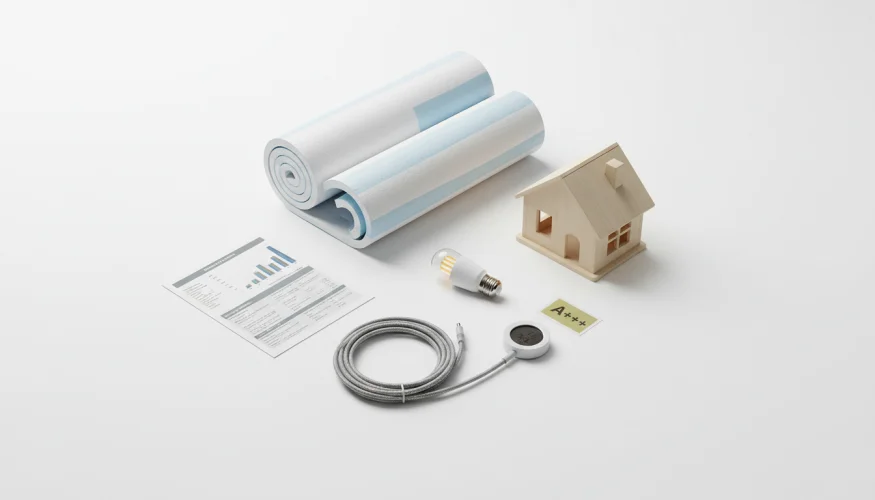
This isn't an argument against LED bulbs. It's an argument for people to think about household energy as a whole, rather than as a series of isolated steps, each of which "is enough" on its own.
Similar logic applies to appliances. An old refrigerator from the 1990s can consume three times more energy than a modern model with an energy label of A or higher. A washing machine that washes at 90°C instead of 40°C consumes significantly more energy – and yet most modern detergents are designed to work effectively even at lower temperatures. A dishwasher, when properly full, can actually be more efficient than washing by hand. These things have a many times greater impact on a household's energy balance than the choice of light bulb.
The psychology of small steps and the great illusion of change
Behind the phenomenon of "but I have LED bulbs" lies an interesting psychological mechanism. Experts call it moral licensing – it's the tendency of people to compensate for one "good" behaviour by allowing themselves to behave less responsibly in another area. Research published in journals such as Psychological Science has shown that people who take one ecological step are paradoxically less willing to take a second step, because they feel they've "already done their part."
In the context of household energy consumption, this can look like this: a person replaces their light bulbs, feels good about it, and then buys a larger television, leaves the computer in standby mode all night, and heats to 23°C instead of 20°C. The net result? Energy consumption may have actually increased. A small symbolic gesture can in fact obscure the need for real, deeper change.
As American environmentalist Bill McKibben once noted: "Individual action is important, but it must not become an excuse for avoiding harder decisions." And that's precisely the point – energy-saving bulbs are easy, quick, and cheap. Insulating a home, replacing a boiler, or changing the heating method, on the other hand, are costly, time-consuming, and require genuine decision-making. It's humanly understandable that people reach for the easy solution – but it would be a mistake to think that everything is thereby resolved.
This problem doesn't only affect individuals. Companies know it very well – they label a product as "ecological" because it contains 10% less plastic, while their entire production chain remains energy-intensive and dependent on fossil fuels. It's the same pattern: one visible change as a stand-in for real transformation.
What actually helps
If a household genuinely wants to reduce its ecological impact while also saving on energy, it needs to approach the matter systematically. This doesn't mean everything has to change at once – but it does mean having an overview of where energy is actually being lost and addressing things according to their actual impact, not according to how easy they are.
The first step is usually a household energy audit. This can be carried out by a specialist firm or an energy advisor, and its output is an overview of where the greatest losses occur and where the greatest opportunities for savings lie. In the Czech Republic, grants for energy savings can be obtained through the Nová zelená úsporám programme, which supports insulation, replacement of heat sources, or installation of solar panels. These are measures that genuinely move the numbers.
Another important aspect is behaviour itself – and this is where we return to why simply replacing light bulbs isn't enough. Lowering the room temperature by just one degree Celsius can save up to 6% of heating costs. Regular ventilation through short, intensive airing rather than leaving a window slightly open for a long time, proper thermostat settings, using appliances outside peak hours – all of these are habits that have a measurable impact.
A sustainable household isn't about one product or one gesture. It's about a way of thinking that takes the entire system into account – from how the house is built and insulated, to what it's heated with, what appliances are used in it, and the everyday habits of its occupants. Lighting is present in this system, but it is certainly not at the top of the list.
This doesn't mean one should wait to replace light bulbs until the facade has been insulated. Every saving makes sense and LED lighting is now so affordable that there's no reason to delay it. The point is not to fall for the illusion that the work is done once that's taken care of. True household energy efficiency is the result of dozens of decisions – and the choice of light bulb is the smallest among them.
Perhaps the most honest question anyone can ask themselves is: if I truly wanted to reduce energy consumption in my home, what would have the greatest impact? The answer probably won't be "I'll replace my light bulbs" – but that doesn't mean it shouldn't be one of the steps on a longer journey.
The transition to a more sustainable way of life is a process, not an event. And energy-saving bulbs are, in this process, a good but very small part of a much bigger picture. The sooner people realise this, the sooner they will start addressing the things that truly matter – and the greater impact their efforts will have, both on their wallets and on the environment.