

# Training for People Who Hate Classic Exercise
There is one type of person that every trainer knows. They come to the gym with the best intentions, last three weeks, and then disappear. Not because they're lazy. Not because they don't care about their health. But because they simply don't enjoy exercise - and nobody ever told them it doesn't have to be that way. If you're one of those people who automatically thinks of squats, treadmills, and next-morning soreness when they hear the word "workout," then this article is for you.
The truth is that movement and exercise are not the same thing. Movement is a natural part of human life - we dance, walk, kick a ball, swim, play with our children. Exercise, on the other hand, is a construct that we as a society created only relatively recently, as a response to an increasingly sedentary lifestyle. The problem arises when the word "training" becomes synonymous with suffering. That's when the brain starts rejecting movement altogether - which is a shame, because there are far more ways to move and have fun than most people realize.
Try our natural products


Why conventional exercise doesn't work for everyone
Science has brought us some interesting insights in recent years about why some people hate working out. Research shows that genetics plays a role in how pleasantly or unpleasantly we perceive physical exertion - some people have a naturally higher threshold for perceiving pain and fatigue during exercise, while others feel it much more intensely. This doesn't mean these people should give up on movement, but it certainly explains why conventional training feels like punishment to them.
Add to that the psychological aspect. For many people, the gym is an environment full of comparison - with others, with their past selves, with unrealistic ideals from fitness magazines. A study published in the journal Psychology of Sport and Exercise showed that people who exercise from external motivation (to look better, to meet social expectations) have significantly lower long-term adherence to physical activity than those who find intrinsic joy in the activity itself. In other words - if you don't enjoy exercise, it won't last long, regardless of how strong your willpower is.
And this is exactly where the interesting part begins. What if the problem isn't a lack of discipline, but simply the wrong type of movement?
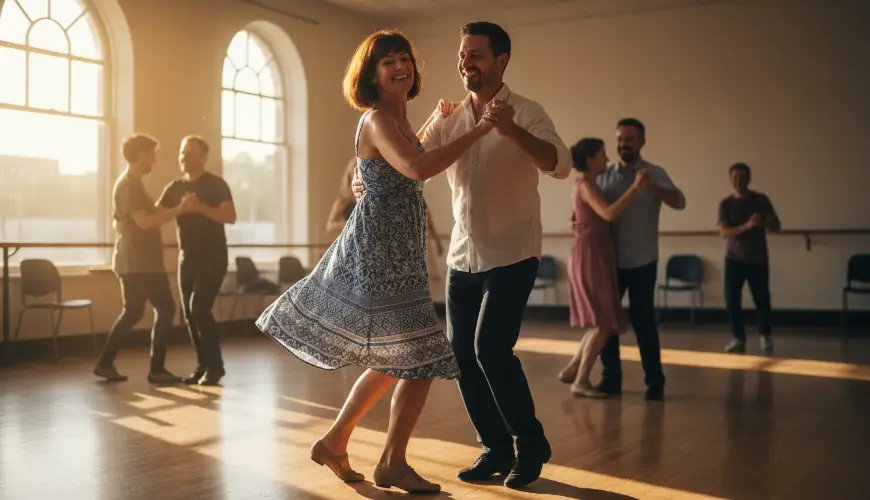
Consider Martina, a forty-five-year-old teacher from Brno. For years she tried going to the gym, completed several running challenges, and even tried group aerobics classes. She always lasted a few weeks and then gave up - feeling guilty and convinced that she simply wasn't "the type" for exercise. Then she accidentally started taking salsa lessons. Today she dances four times a week, goes on weekend hikes in nature, and feels physically better than she did at thirty. She didn't change her willpower. She simply changed the form of movement.
Alternatives that work better than the gym
Nature as a gym is one of the most natural solutions for people who can't stand organized training. Nordic walking, hiking, trail running, or simply regular walks in the forest activate muscle groups similarly to conventional strength training, while also adding the considerable psychological benefit of contact with nature. The Japanese concept of shinrin-yoku - forest bathing - is now scientifically proven as an effective way to reduce cortisol, improve mood, and strengthen the immune system. And all it involves is walking among trees.
Dance is another area that deserves far more attention than it typically receives. Whether it's salsa, swing, bachata, or contemporary dance, it is a physical activity that develops coordination, balance, cardiovascular fitness, and strength - while most people don't even realize they're actually working out. According to data from the World Health Organization, adults need at least 150 minutes of moderate-intensity physical activity per week. An hour of dancing meets this standard without a single squat.
Bouldering wall climbing, which has experienced a tremendous boom in recent years, works in a similar way. Climbing is essentially solving logic puzzles with your own body - the brain is so occupied with planning movement that it forgets to register that it's actually working hard. The result is an intense full-body workout that nevertheless feels like play.
Water sports - kayaking, paddleboarding, swimming, or even aqua aerobics - offer movement in an environment that naturally reduces the perception of effort. Water cushions joint pain, cools the body, and creates a sense of lightness. For people with joint problems or excess weight, moving in water can be a genuine revelation - for the first time in their lives, they can move without pain and without feeling heavy.
Yoga and tai chi are categories unto themselves. It's not just about stretching or meditation in motion - properly practiced yoga is demanding strength training that builds the deep stabilizing system, improves flexibility, and develops body awareness. Add to that the emphasis on breathing and the present moment, and you have a physical activity that simultaneously reduces stress. For people who dislike training precisely because it is stressful and exhausting, yoga can be a genuine alternative.
How to start when you've never enjoyed movement
Starting is always the hardest part - and yet it's paradoxically the simplest thing you can do. All it takes is one small step, literally and figuratively.
The key principle is to start with an activity that has its own intrinsic value - meaning one you would do even without the health benefit. Did you love climbing trees as a child? Try rock climbing. Do you love music? Dance. Do you enjoy spending time in nature? Hiking or cycling. The logic is simple: if you perceive an activity as a reward, you'll keep coming back to it. If you perceive it as a punishment, you'll look for excuses to avoid it.
The second important factor is the social component. Research repeatedly confirms that moving in a group or with a partner significantly increases regularity. Not only because we keep each other accountable, but primarily because shared activity brings an added dimension - fun, conversation, shared experience. That's why group dance classes, team sports, or group outings work better than solitary cycling on a stationary bike in the corner of the bedroom.
The third factor is proportionality. One of the biggest mistakes people make when they decide to start exercising is an overly ambitious beginning. They arrive enthusiastic, overdo it, can barely walk the next day, and give up within a week. Both body and mind need time to adapt. Starting with twenty minutes of enjoyable activity three times a week is a far better strategy than an exhausting workout once every two weeks.
As the famous philosopher and essayist Ralph Waldo Emerson said: "The first wealth is health, the second is love." And wisdom in relation to one's own health means knowing what truly benefits us - rather than blindly following trends that don't suit us.
It is also essential to reconsider what we actually mean by "movement" in everyday life. Walking to work instead of driving, taking the stairs instead of the lift, active breaks at work - all of this counts. Research from the Mayo Clinic shows that regularly interrupting sitting with brief physical activities has a demonstrably positive effect on metabolism, cardiovascular health, and even cognitive function. You don't need a gym. You need to stop sitting.
For people who have an aversion to organized exercise, even a simple shift in mental framing can be liberating. Instead of "I have to go work out," try "I'm going for a walk because I enjoy fresh air." Instead of "I need to burn calories," try "I want to feel good in my body." The language we use shapes our experience - and if we associate movement with positive emotions rather than obligation, the brain stops perceiving it as a threat.
There is one more aspect that rarely gets discussed: movement as a form of self-care, not self-punishment. Fitness culture has long conditioned us to exercise as compensation for what we've eaten, or as punishment for how we look. This approach is not only psychologically harmful, but also unsustainable in the long term. A healthy relationship with movement is built on an entirely different foundation - on respect for one's own body, joy in movement, and the awareness that we are taking care of ourselves because we deserve it.
Modern research in behavioral psychology and exercise science sends us a clear message: there is no single correct way to move. There are only ways that suit us and ways that don't. And if conventional exercise falls into the second category, that's not a failure - it's an invitation to keep looking. Because there truly are many possibilities, and somewhere between dance, climbing, nature, and water, there is an activity waiting to convince you that movement can be the best part of your day.