

# Hair Care in Hard Water Without Expensive Products

Anyone who has ever moved from one city to another may have noticed a surprising change – their hair suddenly looks different, responds poorly to their favourite shampoo, and conditioner seemingly stops working. This mysterious phenomenon is very often caused by hard water, meaning water with a high mineral content, primarily calcium and magnesium. Yet this is a problem that affects a large portion of the Czech population, without many people even being aware of it.
Water hardness varies significantly from region to region in the Czech Republic. While in some parts of Bohemia the water coming from the tap is relatively soft, residents of other cities – such as large parts of Prague or Brno – deal with moderately hard to hard water. According to data from the National Institute of Public Health, the average hardness of drinking water in the Czech Republic is approximately 2–3 mmol/l, with water exceeding 2.5 mmol/l considered hard. These are figures that have a far from negligible impact on hair.
Try our natural products
What hard water does to hair
To understand how the whole mechanism works: calcium and magnesium contained in hard water deposit on the surface of the hair upon contact. The hair fibre is covered with tiny scales – the cuticle – which under ideal conditions should lie flat against each other, creating a shiny, smooth surface. However, mineral deposits disrupt these scales, lift them up, and leave an invisible layer of limescale on the hair. The result? Hair becomes rough, dull, more prone to breakage, and harder to comb. Curly hair also loses the definition of its waves, while straight hair suffers from excessive static electricity.
The problem is not just about aesthetics. Long-term exposure to hard water can weaken the structure of the hair fibre to such an extent that hair begins to fall out excessively or break. Mineral deposits also prevent hair care products from being properly absorbed – conditioners, masks, and serums simply cannot fully penetrate the hair if its surface is coated with a layer of minerals. It is a bit like trying to paint a wall through a layer of dust: the result will never be perfect.
An interesting real-life example: Markéta, a thirty-year-old graphic designer from Prague, complained for years that her hair was dry and lifeless, despite using premium hair care products. It was only when she started using a shower filter and applying a chelating shampoo once a week that she noticed a significant change. Her hair regained the shine and elasticity she remembered from childhood, when she grew up in the countryside with soft well water. Her story is certainly not unique.
Another unpleasant side effect is the impact of hard water on the scalp. Mineral deposits can disrupt the scalp's natural pH, clog pores, and contribute to dandruff or excessive sebum production. The scalp responds to irritation by producing more sebum as a defence mechanism, which paradoxically leads to hair becoming greasy more quickly. This creates a vicious cycle that is difficult to escape without changing your approach to hair care.
How can you tell if this is your problem? There is a simple home test: fill a transparent bottle with tap water, add a little liquid soap, and shake it. If only a small amount of foam forms and the water remains cloudy, you most likely have hard water at home. Soft water, on the other hand, produces a rich, lasting lather. More accurate results can be obtained from commercially available test strips, which measure water hardness in mmol/l or German degrees of hardness.
How to care for hair in hard water
The good news is that there are numerous ways to reduce or completely eliminate the negative effects of hard water. The key is a combination of the right products, changed habits, and possibly a technical solution in the form of filtration.
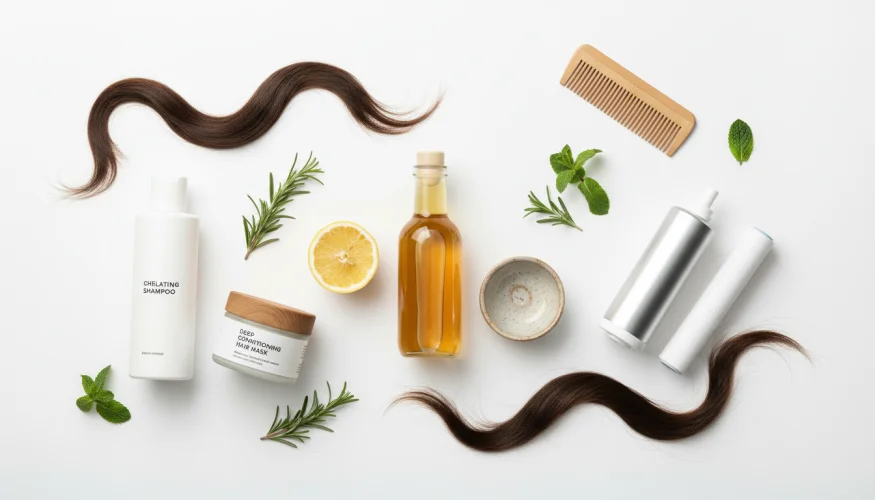
The first and most important step is to incorporate a chelating or detox shampoo into your routine. Unlike regular shampoos, these contain a chelating agent – most commonly EDTA acid or citric acid – which binds to mineral ions and removes their deposits from the hair. These shampoos are not recommended for daily use as they can dry out the hair somewhat, but used once or twice a week they are an excellent tool for maintaining clean, mineral-free hair. After using them, it is always advisable to apply a nourishing mask or deeply hydrating conditioner.
Acidic rinses are another traditional yet highly effective solution. Vinegar – preferably apple cider vinegar – diluted with water in a ratio of approximately 1:3 acts as a natural chelating agent and also closes the hair cuticle, contributing to shine and smoothness. Lemon juice has a similar effect. Simply apply this rinse after washing your hair, leave it on for a few minutes, and rinse thoroughly. There is no need to worry about smelly hair – once the hair dries, the smell of vinegar disappears completely.
The choice of conditioner and hair masks also plays a crucial role. Products rich in moisturising ingredients such as sodium hyaluronate, panthenol, or plant oils help compensate for the drying effect of hard water. Particularly effective are amino acid-based products, which can penetrate the structure of the hair fibre and strengthen it from within. As dermatologist and trichologist Dr. Antonín Novák noted in one of his professional texts: "Hair weakened by hard water needs not only surface care, but above all deep nourishment that restores its natural elasticity."
A technical yet highly effective solution is installing a shower filter. Modern shower filters are capable of significantly reducing the content of calcium, magnesium, as well as chlorine and heavy metals in water. Installation is straightforward – they screw directly onto the shower head – and the cost of purchase is reasonable. The filter cartridge typically needs replacing approximately every three months, depending on water hardness and frequency of use. People who take this step very often report an immediate and significant improvement in the condition of their hair and skin.
When it comes to everyday care, even seemingly minor changes help: rinsing hair with cooled boiled water or bottled mineral water with a low mineral content. This approach is somewhat inconvenient, but for particularly sensitive or damaged hair it can be temporarily very beneficial. An alternative is to collect rainwater – it is naturally soft and leaves hair beautifully radiant. This solution is especially appreciated by owners of gardens or houses.
Proper washing technique is also an important part of hair care in hard water. Lukewarm water is always a better choice than hot water, because hot water opens the hair cuticles and allows minerals to penetrate deeper into the fibre structure. A final rinse with cold water, on the other hand, closes the cuticles and helps retain moisture inside the hair. This simple habit costs nothing but can have a surprisingly significant impact on the overall appearance and health of hair.
For those seeking a comprehensive approach to hair care, nutrition from within is also worth mentioning. Research published in the specialist journal Dermatology and Therapy confirms that deficiencies in zinc, biotin, iron, and B vitamins are directly reflected in hair quality. If hair is already weakened by hard water, it is simultaneously more susceptible to the effects of nutritional deficiencies. A balanced diet rich in these nutrients – or targeted supplementation following consultation with a doctor – therefore forms an important foundation for any hair care routine.
Sustainable hair care as part of an eco-friendly lifestyle
Caring for hair in hard water does not necessarily have to involve an accumulation of plastic packaging and chemically demanding products. On the contrary, many of the solutions described above are naturally eco-friendly. Apple cider vinegar, lemon juice, or rainwater are examples of how excellent results can be achieved with minimal environmental impact.
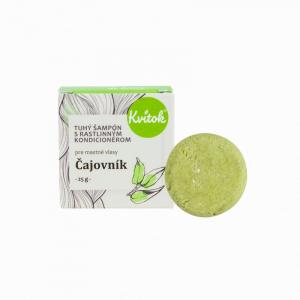
Solid shampoos and conditioners are also becoming increasingly popular, formulated specifically for hair stressed by hard water. These products not only come without plastic packaging, but thanks to their concentrated formula they last significantly longer than their liquid counterparts. Their composition tends to be gentler on the scalp and the environment, as they do not contain unnecessary fillers and preservatives.
Similarly, shower filters, although a technical product, contribute to sustainability by reducing the consumption of hair care products – when water does not damage hair, fewer products are needed to achieve the same result. Fewer products means less packaging, less chemistry in wastewater, and less money spent on unnecessarily expensive preparations that cannot function as they should anyway.
An ecological approach to hair care is therefore not at odds with effectiveness – quite the opposite. Understanding the root cause of the problem, namely hard water, and addressing it in a targeted way leads to better results than blindly accumulating products without regard for their actual function. Hair is a living reflection of overall health and one's approach to daily care, and therefore deserves attention rooted in understanding, not marketing promises.