
# Try Cleaning Using the One Room Per Day Method Keeping your home clean can sometimes feel overwhe
The modern household is a constant source of chaos. Laundry piles up, dishes wait to be washed, dust settles in the living room, and the bathroom could use some thorough attention. Many people try to tackle everything at once – spending an entire Saturday cleaning, vacuuming, mopping floors, tidying every room, and finally resting on Sunday. But by Wednesday, the house is a mess again and the whole cycle starts over. There is, however, a different approach that breaks this exhausting loop: the "one room a day" cleaning method.
It's a simple yet surprisingly effective system that changes the way we think about maintaining a home. Instead of throwing yourself into a total deep clean once a week, you dedicate a short amount of time each day to just one room. The result isn't just a cleaner home – it's a calmer mind, less stress, and paradoxically, more free time.
Try our natural products




Why the traditional "big weekend clean" doesn't work
Psychologists and productivity experts agree that our brains handle large, vague tasks poorly. When we tell ourselves "I need to clean the whole flat," a defensive mechanism kicks in – procrastination. The task seems too big, too demanding, and too undefined. As a result, we put it off until the actual mess forces us to act. And then cleaning hurts – both physically and mentally.
The "one room a day" method elegantly solves this problem by breaking the task into manageable pieces. Every day you know exactly what's ahead of you. No decision-making, no wondering where to start. Today it's the bathroom. Tomorrow the kitchen. The day after, the bedroom. The simplicity of this approach is its greatest strength.
Take Markéta, for example, a mother of two who works full time. Every weekend she spent five to six hours cleaning, and yet she always felt the house never looked quite the way she wanted. She started trying the one-room-a-day system – spending twenty minutes each morning before work on one space. After two weeks, she found her weekends were free and her home looked better than ever. This isn't an isolated experience – thousands of people who have adopted this approach share similar stories.
As organisational coach and bestselling minimalism author Joshua Becker once noted: "A clean home is not the result of one great effort, but of small daily decisions." This idea lies at the very heart of the method we're writing about.
How to set up the whole system in practice
Before you begin, it's worth recognising that the method works best when tailored to a specific household. A two-room flat will have a different schedule than a family home with a garden. But the foundation is always the same: make a list of all the spaces that need regular attention and assign each one a day of the week.
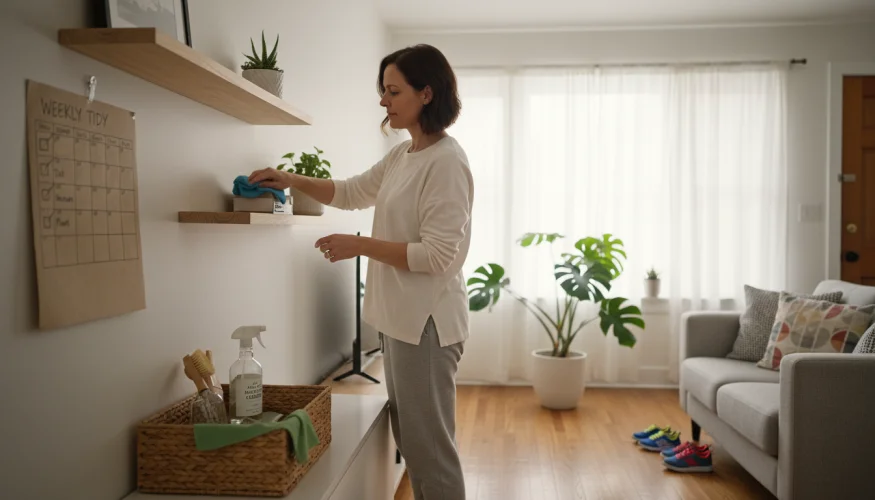
A typical schedule for a three-room flat might look like this: Monday – bathroom, Tuesday – kitchen, Wednesday – living room, Thursday – bedroom, Friday – children's room or study, Saturday – hallway, entrance areas and balcony, Sunday – rest or a catch-up day for anything missed. The key is that you dedicate no more than twenty to thirty minutes to each room per day – no more. If cleaning drags on for hours, the system stops working and motivation quickly fades.
Each room also has its own character and different needs. The bathroom requires surface disinfection, cleaning the sink, toilet and shower. The kitchen focuses on degreasing the hob, wiping down the worktop, cleaning the sink and checking the fridge. The living room usually means dusting, vacuuming and quickly putting things back in their place. Each of these tasks on its own takes just a moment – but together, when done regularly, they keep the home in a permanently acceptable state.
An important part of the system is the so-called daily reset – a short five-minute routine each evening to tidy up things that have spread around the flat during the day. This habit is the safety net of the entire system: it ensures that mess doesn't accumulate to the point of overwhelming even the most disciplined weekly plan.
A sustainable approach to the home includes the right tools
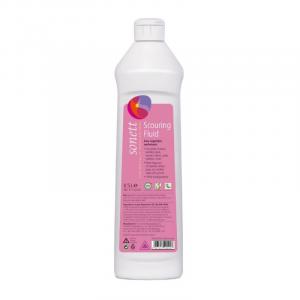
The one-room-a-day method naturally leads to thinking about what we actually clean with. When you attend to your home every day, you start to become more aware of the products you use – and what effect they have on your family's health and on the environment. Chemical cleaning products full of synthetic substances aren't just an ecological concern – they can irritate the airways, cause allergic reactions and leave residues on surfaces where we prepare food or where children play.
The good news is that the market for eco-friendly alternatives has developed significantly in recent years. There are certified products based on natural ingredients that are just as effective as their chemical counterparts – while being gentler on skin, indoor air and the environment. Organisations such as ECOCERT or Nordic Ecolabel award certifications to products that meet strict environmental and health standards – and such labelling is a reliable guide when shopping.
The tools themselves matter just as much. Microfibre cloths made from recycled materials, bamboo brushes or mops with replaceable heads are examples of tools that reduce waste while working excellently. With regular daily cleaning, these tools also don't require such aggressive products – surfaces aren't dirty enough to necessitate reaching for strong chemicals.
The natural cleaning duo – vinegar and baking soda – can handle a surprisingly large portion of everyday cleaning. Vinegar is excellent at removing limescale and cutting through grease, while baking soda cleans mechanically without scratching surfaces. For disinfection, you can add a few drops of tea tree essential oil, which has proven antimicrobial properties. This approach to cleaning is not only cheaper but also more mindful – and that's exactly what the one-room-a-day method encourages.
It's worth noting that the way we care for our home reflects broader values. An interest in eco-friendly products, the effort to minimise chemical load in the household, and a conscious approach to purchasing are all part of a lifestyle that takes into account the health of the whole family and the planet. The World Health Organization has repeatedly warned about the risks associated with long-term exposure to household chemicals, particularly in children and people with respiratory conditions – and that's an argument worth paying attention to.
Regular cleaning in smaller doses has another advantage that is often overlooked: it allows you to continuously monitor the condition of things in your home. When you pay attention to the bathroom once a week, you'll notice a dripping tap before it causes damage. Regular attention to the kitchen will catch mould behind the sink in its early stages. Daily contact with your home creates a natural awareness of what is where, what needs repairing or replenishing – and that saves not only stress, but money too.
People who practise the one-room-a-day system over the long term often mention another unexpected effect: the home becomes a place of calm rather than a source of anxiety. Clutter has a demonstrable impact on the mind – a study published in the Personality and Social Psychology Bulletin showed that women who described their home as chaotic or full of unfinished tasks had higher levels of cortisol, the stress hormone. Conversely, the feeling that the household is under control contributes to an overall sense of wellbeing and security.
The one-room-a-day method is no revolutionary science. It's common sense translated into a daily routine. It doesn't promise perfection – it promises manageability. And that is precious in today's overloaded world. Instead of cleaning being a source of guilt and stress, it becomes a short, bounded ritual that leaves you feeling good afterwards. Twenty minutes in the morning, one room, a concrete result. Day by day, room by room – and suddenly the home is a place you actually want to be in.
Getting started isn't complicated at all. Just take a piece of paper, write down a list of rooms, assign them days of the week, and simply begin tomorrow morning. No special equipment, no expensive organisational courses. Just the decision that this time it will be different – and a little consistency that, after a few weeks, transforms into a natural part of the day.