

Bean chilli pot without meat that will satisfy the whole family
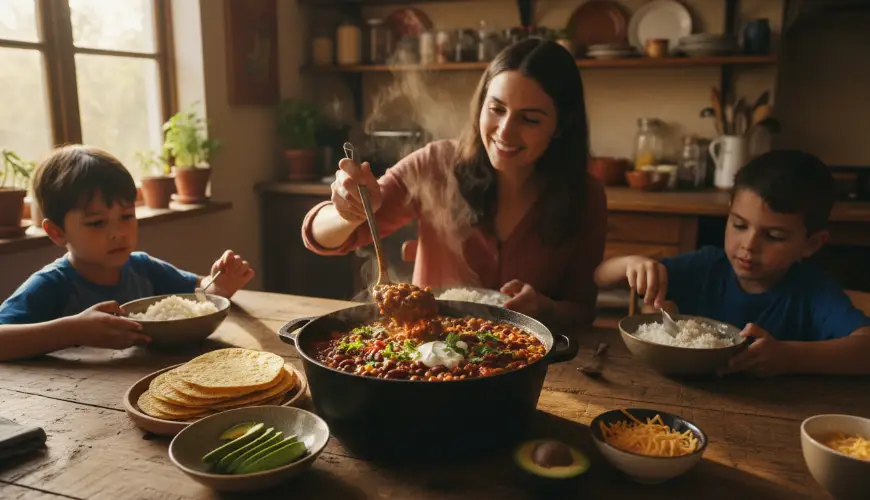
There are dishes that have the ability to bring the whole family together around one table – and a bean chili pot undoubtedly belongs among them. It is a dish that carries something more than mere nutritional value: it smells of comfort, warms you on cold days, and leaves no one hungry. And all of this without a single piece of meat.
Meat-free cooking has been gaining more and more fans in recent years, not only among vegans or vegetarians. Growing interest in sustainability, health, and simplicity in cooking is leading more and more families to reach for recipes where legumes, vegetables, and spices play the leading role at least a few times a week. Bean chili pot is one of the best examples of how healthy and tasty food are not mutually exclusive – quite the opposite, in fact.
Try our natural products





Why are beans such an exceptional food?
Beans are among the oldest cultivated crops in the world. Their history stretches thousands of years back to Central and South America, from where they gradually spread across the globe. Today there are hundreds of varieties – from classic red kidney beans through black beans to light cannellini. Each has its own flavor, texture, and nutritional profile, but they all share one thing: they are extraordinarily nutritious.
Beans are a rich source of plant-based protein, fiber, iron, magnesium, and a whole range of B vitamins. According to information from the World Health Organization, legumes are one of the key components of a balanced diet, and their regular consumption contributes to reducing the risk of cardiovascular disease, type 2 diabetes, and certain types of cancer. These are numbers that speak for themselves.
For families with children, it is also important that beans can truly satisfy hunger. The fiber they contain slows digestion and maintains a feeling of fullness for a long time – so no more "Mom, I'm hungry again" an hour after dinner. And because beans are naturally gluten-free, they are also suitable for households where someone suffers from celiac disease or gluten sensitivity.
A chili pot with beans – whether it's called chili sin carne, bean goulash, or simply "that pot Mom always makes in winter" – is one of the most practical ways to make use of these wonderful properties of legumes. It is a dish that works just as well on a weekday evening as for a weekend lunch, and one that tastes even better reheated the next day.
Take, for example, a family with three children where both parents work full time. In the evening they come home tired, not wanting to spend hours in the kitchen, yet wanting to give the children something nutritious and tasty. This is exactly the kind of situation where a large pot of bean chili shines – it is prepared from readily available ingredients, keeps in the refrigerator for several days, and can be served in various ways: with rice, with bread, with tortillas, or simply in a bowl with a dollop of sour cream.
What makes a bean chili pot truly exceptional
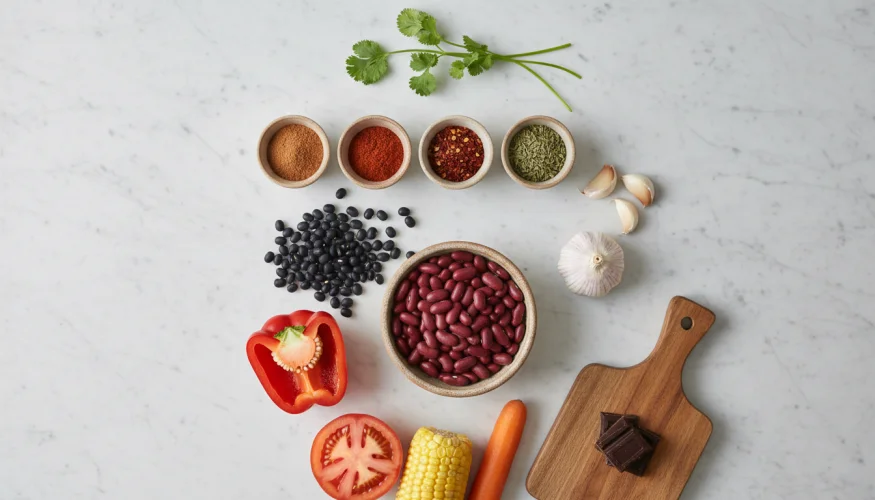
The secret of a good meat-free chili lies not in meat substitutes or complicated cooking techniques. It lies in the combination of the right spices, quality ingredients, and a little patience. The base consists of onion, garlic, and pepper sautéed in quality oil – this simple trio creates an aromatic foundation upon which tomatoes, spices, and of course beans are then built.
Spices play an absolutely crucial role in this dish. Classic chili sin carne cannot do without cumin, smoked paprika, chili flakes, and oregano. It is precisely the smoked paprika that gives the dish its characteristic depth of flavor, which reminds many people of grilled meat – and this is one of the reasons this recipe surprises even committed meat-eaters. You can also add cocoa or dark chocolate, which may sound unusual, but the result is surprisingly harmonious: bitter chocolate rounds out the flavor and gives the dish a silky complexity that is otherwise difficult to achieve.
As Mexican chef and writer Enrique Olvera once noted: "The best food doesn't come from expensive ingredients, but from understanding how individual flavors complement each other." And a bean chili pot is a perfect example of this – cheap, accessible ingredients come together here with a thoughtful combination of flavors to create something much greater than the sum of its parts.
An important part of the recipe is also the choice of beans. Red kidney beans are most commonly used for their firm texture and mildly sweet flavor, but a combination of multiple varieties – for example black beans and pinto beans – brings interesting variety both visually and in terms of taste. If you have time, soak dried beans overnight and cook them yourself – the flavor and texture are incomparable to those from a can. However, a can is a quick and fully adequate alternative for days when time simply isn't available.
The vegetables in this dish are not merely filler – they are equal players. Corn adds sweetness and playful texture, carrot thickens the broth and adds natural sweetness, while zucchini or sweet potatoes transform the dish into an even more filling affair. This flexibility is one of the greatest strengths of bean chili: the recipe can be adapted to whatever is in the refrigerator, what is in season, or what the children enjoy.
Sustainability on the plate and in the shopping basket
Bean chili pot is not only tasty and nutritious – it is also remarkably sustainable. The production of legumes has a significantly lower carbon footprint compared to animal products. According to research published in the journal Nature Food, producing one kilogram of beef generates approximately 60 times more greenhouse gases than producing legumes. This does not mean it is necessary to stop eating meat overnight – but even one meat-free day a week can have a measurable positive impact on the environment.
This aspect is particularly important for families who want to lead a sustainable lifestyle without having to make radical changes. Bean chili pot is an excellent example of how to eat responsibly without having to sacrifice taste or comfort. Moreover, dried beans are among the cheapest foods available, so sustainability here goes hand in hand with economy – and every family will appreciate that.
When shopping for ingredients, it is worth reaching for local and seasonal products. Czech tomatoes in summer, homegrown garlic, locally grown peppers – these seemingly small choices reduce the ecological burden of transportation and at the same time support local farmers. And if it matters to you that your household's entire lifestyle is in line with the values of sustainability, choosing quality, environmentally friendly products can be a natural extension of what you do in the kitchen.
Bean chili pot is also well suited as an opportunity to involve children in cooking. Measuring spices, stirring, adding vegetables – these are all activities that children enjoy and that naturally teach them about the relationship with food, ingredients, and cooking. Children who participate in food preparation are, according to research, more willing to eat healthily and have a more positive relationship with a varied diet. A pot full of fragrant chili is therefore not only dinner, but also a small lesson about where food comes from and why it matters.
The quantity produced from a single batch is another practical advantage. A large pot of bean chili can easily feed a family of four to six, while leftovers can be frozen and used at any time. Frozen portions are a lifesaver on those days when you don't feel like cooking at all – and yet they still offer a homemade, nutritious meal without the need to order pizza or reach for ready-made products.
There are many ways to serve bean chili:
- with cooked rice or quinoa for a complete main meal
- with fresh bread or tortillas for an informal dinner
- with a little grated cheese and sour cream for a creamier version
- with avocado or guacamole for a Mexican touch
- as a filling for burritos or tacos for a fun alternative
Each family member can thus customize the dish to their own taste, which is particularly practical in households where different people have different preferences. One dish, endless possibilities – this is a philosophy that works better than anything else in the busy rhythm of family life.
At the end of the day, bean chili pot is more than just a recipe. It is a way of thinking about food – as something that should be tasty, nutritious, accessible, sustainable, and shared. A pot full of fragrant, spicy, filling food in the middle of the table has the ability to slow down the rush of everyday life and serve as a reminder that the best meals are the simplest ones. And perhaps that is precisely why chili sin carne has become a beloved dish for families around the world – from Mexico City to Prague.