

# Prepare Kale Chips from the Oven in 10 Minutes
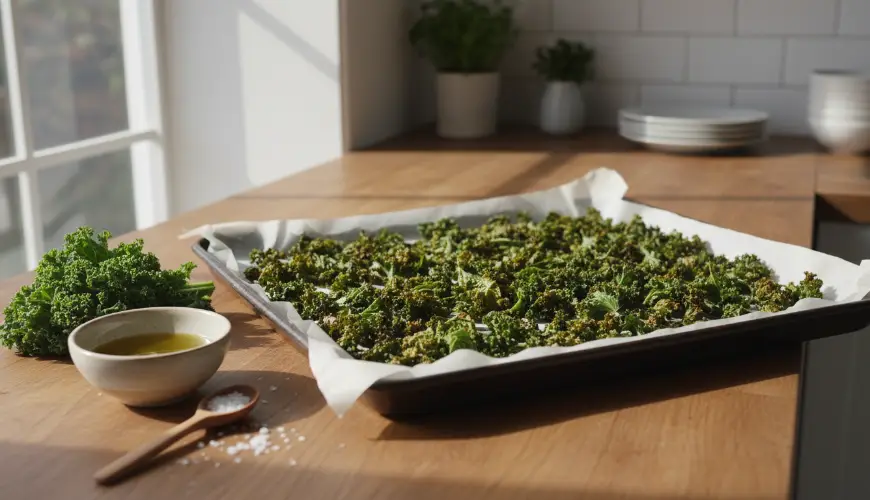
There are few things that can satisfy a craving for something crunchy as quickly and healthily as homemade kale chips baked in the oven. While supermarket shelves groan under the weight of bags filled with industrially processed snacks, all it takes is an oven, a little oil, and a bunch of fresh kale to create something that not only tastes great but genuinely benefits the body. And all of this requires approximately ten minutes of active work.
Kale, particularly the leafy variety – known in English as kale – has become a symbol of healthy eating in recent years. This is not a baseless food trend. According to data from the Harvard T.H. Chan School of Public Health, kale ranks among the most nutritionally rich vegetables of all. It contains vitamins K, C, and A, a whole range of minerals including calcium and magnesium, as well as antioxidants and fibre. In other words, it is a vegetable that truly has a great deal to offer.
Try our natural products



Why chips, and why baked in the oven?
Frying is a method that weakens vegetables in many ways. The high temperature of the oil destroys some vitamins, adds unnecessary calories, and the resulting dish is heavy on the digestive system. The oven, by contrast, works differently – dry hot air dehydrates the vegetables, evaporates excess moisture, and leaves them crispy, light, and full of flavour. Kale chips baked in the oven therefore have a significantly lower fat content than their fried alternatives, while being equally, if not more, satisfying.
The entire process is also surprisingly simple. No culinary skill, special equipment, or hours spent at the stove are required. All you need is an oven preheated to approximately 150 to 180 degrees Celsius, a baking tray lined with parchment paper, and basic ingredients that most households already have. The preparation itself takes around ten minutes of hands-on time, while the oven does the rest of the work on its own.
Take Martina as an example – a working mother of two from the Central Bohemian Region who was looking for a healthy alternative to classic potato chips for her son. He was accustomed to crunchy snacks from a bag, and convincing him to eat vegetables had always been a battle. Martina tried oven-baked kale chips seasoned with just salt, garlic, and a little sweet paprika. The result? Her son asked for seconds. Since then, making kale chips has become part of their weekend ritual, and importantly, her son has developed an entirely different relationship with vegetables.
How to do it: a step-by-step guide
Preparing kale chips truly requires nothing complicated. The entire process can be summarised in a few natural steps that flow seamlessly from one to the next.
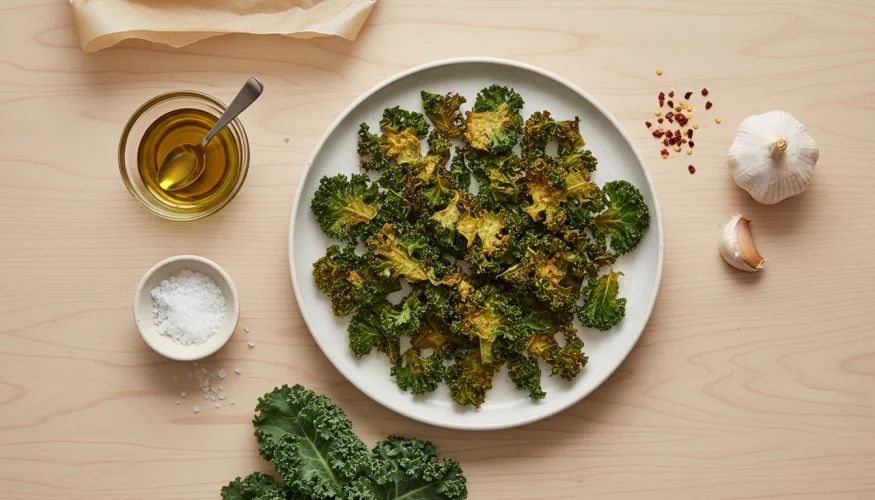
It begins with choosing the kale. Curly kale works best, but excellent results can also be achieved with Brussels sprouts or even broccoli – though that is a slightly different story. The leaves need to be thoroughly washed and, crucially, really properly dried. Moisture is the enemy of crispiness. Wet leaves will not crisp up in the oven but will instead steam, and the result will resemble cooked vegetables rather than chips. A paper towel or a salad spinner are your best friends in this regard.
Once the leaves are dry, remove the tough central ribs and tear the leaves into smaller pieces – roughly the size of a palm or slightly smaller. Pieces that are too small will burn easily, while pieces that are too large may not bake evenly. The golden mean is key. The pieces are then transferred to a bowl, drizzled with one or two tablespoons of quality olive oil, and gently massaged by hand so that each piece is lightly coated in oil. Add salt, and optionally garlic powder, smoked paprika, nutritional yeast for a cheesy flavour, or chilli flakes for those who enjoy heat. The seasoning possibilities are virtually endless.
The prepared leaves are then spread evenly on a baking tray lined with parchment paper. The key is to ensure the pieces do not overlap – each leaf needs space so that air can circulate freely and the leaves bake rather than steam. If you have a large amount of kale, it is better to use two trays or bake in two batches.
The tray goes into an oven preheated to 150 to 170 degrees Celsius. A lower temperature is safer – the chips dry out more slowly and there is less risk of burning. At around 160 degrees, baking takes approximately 10 to 15 minutes. Keep an eye on the oven, because the difference between perfectly crispy chips and bitter, burnt pieces is a matter of a minute or two. Once the edges are lightly browned and the leaves are crispy to the touch, they are done.
After removing from the oven, it is a good idea to let the chips cool on the tray for a moment – they will crisp up a little more as they cool. They are then ready to eat immediately. They taste best fresh, but stored in a sealed container at room temperature they will keep for a day or two, though they gradually lose their crispiness.
As American chef and writer Michael Pollan once wrote: "Eat food. Not too much. Mostly plants." Kale chips are precisely the kind of food that embodies this simple philosophy – they are plants in their most appealing form.
Nutritional value and why it matters
One of the greatest advantages of kale chips is their nutritional profile compared to classic potato chips. A single serving of industrially produced crisps from a bag contains an average of 150 to 200 calories, with a large proportion coming from saturated fats and added salt. Homemade kale chips baked in the oven with minimal oil contain significantly fewer calories and also deliver genuine nutritional value.
Kale is one of the best sources of vitamin K, which is essential for proper blood clotting and bone health. A single leaf of kale can provide more than the daily recommended intake of this vitamin. Vitamin C, which kale also contains in abundance, supports the immune system and aids the absorption of iron from plant-based sources. Antioxidants such as quercetin and kaempferol, present in kale, are according to research associated with reduced inflammation in the body and protection of cells against oxidative stress – as noted, for example, by the US National Library of Medicine database.
For people who monitor their sodium intake or avoid added preservatives and stabilisers, homemade kale chips are an unambiguous choice. You know exactly what is in them, because you made them yourself. This transparency is genuinely valuable at a time when the composition of industrially produced foods is becoming increasingly complex and difficult to understand.
Kale chips are also naturally gluten-free, which will be appreciated by people with coeliac disease or gluten sensitivity. They are suitable for vegetarians and vegans and can easily be adapted to various dietary needs. When prepared without added sugar, they are also suitable for low-carbohydrate diets.
An interesting variation for those wishing to increase their protein content is to use nutritional yeast as part of the seasoning. This deactivated yeast culture has a naturally cheesy, nutty flavour and is rich in B vitamins. Combined with kale and a little olive oil, it creates a flavour profile that surprisingly resembles cheese-flavoured crisps – without a single gram of dairy product.
Whether as a quick snack between meals, a healthy treat to enjoy with a film, or an original accompaniment to soup, oven-baked kale chips are one of those things so simple that you find yourself wishing you had discovered them sooner. All it takes is a little kale, a little oil, a little salt, and ten minutes of time – and the result is a snack that tastes good, benefits the body, and requires no compromise between health and the pleasure of eating. That is a combination that is hard to come by.