

# Natural First Aid for Children's Runny Nose
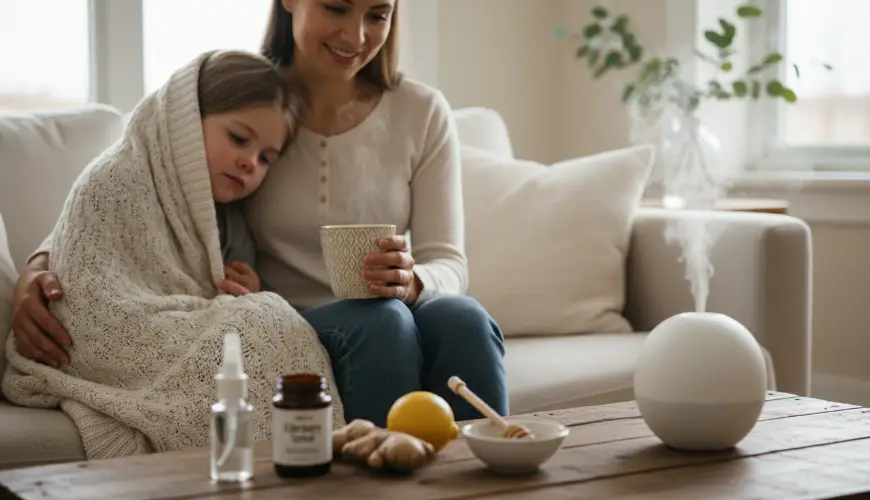
Every parent knows it. The child comes home from kindergarten with a slightly red nose, starts sniffling, and by the next day it has turned into a full-blown cold. A stuffy nose, watery eyes, poor sleep – and along with all of that, exhausted parents who would gladly reach for anything that solves the situation quickly. But it isn't always necessary to immediately open a medicine cabinet full of chemical preparations. Natural first aid for children's colds can be surprisingly effective, gentle on a small organism, and at the same time available in every household.
A cold in itself is not an illness – it is a natural defensive reaction of the body. The nasal mucosa produces mucus to trap and expel viruses or bacteria that have entered the respiratory tract. A child's immune system is still developing, which is why children, especially those of preschool age, are more susceptible to repeated colds. According to the World Health Organization, a young child can experience up to six to eight respiratory infections per year, which is a completely normal part of building immunity. This does not mean, however, that we must treat every cold with medication – on the contrary, nature offers us a whole range of tools to relieve the child and at the same time support their natural defence mechanisms.
Try our natural products
The foundation of relief starts at home, in everyday small things
Before we get into specific natural approaches, it is worth remembering that the environment in which the child spends time plays a crucial role in treating a cold. Dry air in an overheated room is one of the greatest enemies of a congested mucosa. It dries it out, slows down natural cleansing, and prolongs the time the child suffers. The ideal air humidity in a child's room is between 50 and 60 percent – this can easily be achieved using a humidifier, a wet towel draped over a radiator, or a bowl of water placed near a heat source. Ventilating the room at least twice a day will ensure that the air remains fresh and not stale.
Equally important is adequate fluid intake. A child with a cold should drink more than usual – warm herbal teas, lukewarm water, or diluted fruit juices help keep the mucous membranes hydrated and make it easier for mucus to drain. A popular home remedy that generations of mothers and grandmothers swear by is chamomile or linden tea with a drop of honey – and science backs them up. A study published in the medical journal JAMA Pediatrics demonstrated that honey reduces the frequency of nocturnal coughing and improves sleep quality in children with respiratory infections. However, honey should never be given to children under one year of age due to the risk of botulism.
Rinsing the nose with saline solution or sea water is among the most recommended natural methods, and paediatricians recommend it as the first step before any other treatment. Regular rinsing of the nostrils helps mechanically remove mucus, viruses, and allergens from the mucosa, thereby relieving congestion and at the same time shortening the duration of the infection. For young children, specially formulated isotonic sprays or drops based on sea water are available, which are gentle and can be used even for infants. Older children can gradually get used to a simple rinse using a nasal irrigation bottle.
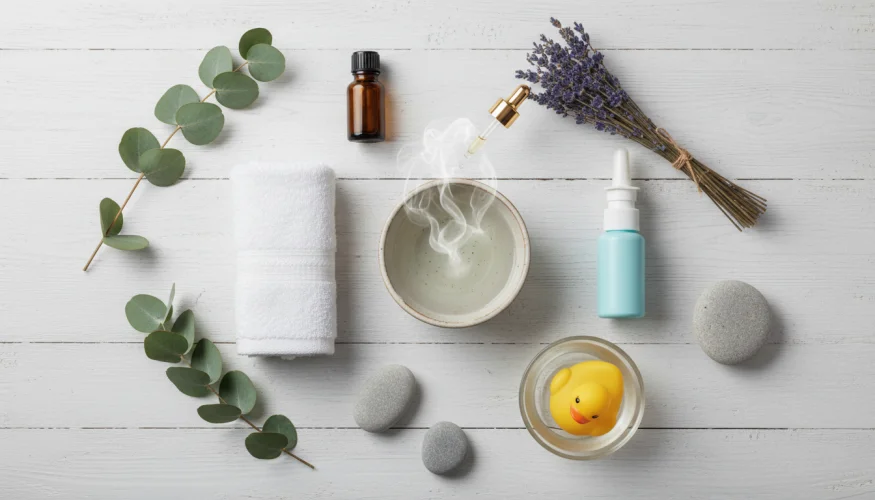
One of the most pleasant natural approaches is inhalation. Warm steam moistens the mucosa, loosens a congested nose, and provides immediate relief. Simply fill a bowl with hot water, add a few drops of eucalyptus or thyme essential oil, and let the child breathe in the steam – of course under adult supervision and at a safe distance so the child does not get scalded. For the youngest children, a suitable alternative is a bath with a few drops of lavender or eucalyptus oil added to the water, where steam naturally rises and the child inhales it without any risk.
Herbs and natural substances that truly work
The natural medicine cabinet is full of helpers that can significantly ease the course of a child's cold. One of the most thoroughly researched is elderberry (Sambucus nigra). Elderberry syrup has proven antiviral properties and has long been used as immune support during colds and flu. Research referenced by the National Center for Complementary and Integrative Health, among others, suggests that elderberry extract may shorten the duration of flu symptoms. For children, commercially available syrups in appropriate dosages exist, or a homemade version can be prepared from dried berries.
Echinacea is another herb that has firmly established itself in connection with children's colds. It supports the activity of immune cells and may help shorten the course of an infection if started at the first signs. It is important to know, however, that echinacea is not suitable for every child and with prolonged use may lose its effectiveness – so consultation with a paediatrician or herbalist is recommended.
Ginger and garlic are classic kitchen ingredients with strong anti-inflammatory and antimicrobial effects. Ginger tea with lemon and honey is a time-tested recipe that works across generations and cultures. Garlic, nicknamed "nature's antibiotic," can be incorporated into a sick child's diet in cooked form – for example in soup or in a sauce. Although raw garlic is more potent in terms of effectiveness, young children will rarely eat it without protest.
Turmeric, a spice from a yellow root plant, has attracted the attention of the scientific community in recent years thanks to its active compound curcumin, which has significant anti-inflammatory properties. A glass of warm milk with half a teaspoon of turmeric and a pinch of black pepper – known as golden milk – is considered a fundamental remedy for colds and runny noses in Indian traditional Ayurvedic medicine. Black pepper is not in the recipe by accident – the compound piperine found in pepper increases the bioavailability of curcumin by up to 2,000 percent, as stated in research published in the journal Planta Medica.
Imagine, for example, a situation where four-year-old Eliška starts sneezing and sniffling on a Sunday evening, and her mother knows that a packed week awaits the whole family the next morning. Instead of panicking, she reaches for a tried-and-tested approach: a nasal rinse with sea water, a warm bath with eucalyptus oil, elderberry syrup, and a cup of chamomile tea with honey. In the morning, Eliška slept better than the previous night, the stuffy nose was more bearable, and she went to kindergarten on Wednesday – two days earlier than would have been the case if they had simply waited for the cold to pass on its own without any support.
As the German herbalist Sebastian Kneipp once said: "Nature is the best pharmacy." And although this thought dates from the 19th century, it holds true to this day in the context of mild childhood infections. The key, however, is not blind faith in natural remedies, but an informed decision supported by knowledge of what works, for whom, and under what circumstances.
No less important is the sleeping position. Slightly elevating the child's head using a pillow or a wedge under the mattress makes it easier for mucus to drain and prevents it from accumulating in the nasal cavities, which causes unpleasant congestion at night. Parents of older children can also try warm compresses on the forehead or the back of the neck, which promote blood circulation and bring a sense of calm.
Massaging acupressure points around the nose is a technique that originates from traditional Chinese medicine and is increasingly becoming known in Europe as well. Gentle circular movements on the points along the sides of the nostrils and under the eyes can help relieve a stuffy nose and improve mucus drainage. For the child, it is also a pleasant physical contact with a parent, which in itself contributes to a sense of safety and calm – and that is invaluable during illness.
It is also important to know when natural approaches are not enough and when it is necessary to see a doctor. If a cold lasts longer than ten days, is accompanied by a high fever, ear pain, severe headache, or green-yellow mucus, it may be a bacterial infection or a complication requiring medical care. Natural methods are an excellent tool for first aid and supportive treatment, but not a substitute for professional diagnosis. Common sense and attentiveness to the child are the best guides in deciding what the situation truly requires.
Caring for a sick child is always a combination of empathy, patience, and knowledge. Nature offers a rich palette of tools that can shorten a cold, ease it, and make it more bearable – without unnecessary chemical burden on a developing organism. And that is exactly what every parent longs for.