
# Pilates as a Trend or a Truly Functional Method
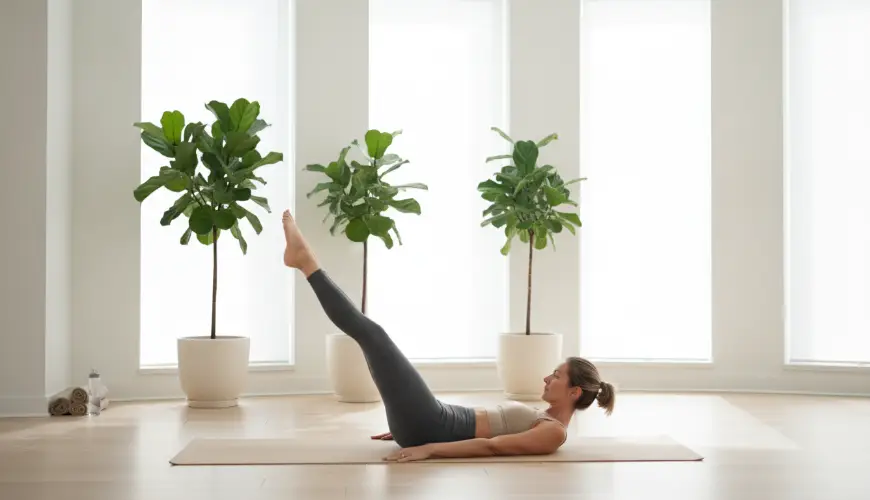
Every few years, something new appears in the fitness world that quickly gains an army of enthusiasts, floods social media, and becomes the topic of conversations in gym locker rooms and workplaces alike. Pilates has been experiencing a significant comeback in recent years, and many people are asking a perfectly valid question: is this just another wave that will soon subside, or does this exercise conceal something truly valuable and beneficial in the long term?
The answer is not as straightforward as it might seem. Pilates has nearly a century of history behind it, dozens of scientific studies, and millions of devoted practitioners around the world. At the same time, it is true that the current popularity of this exercise is also fuelled by aesthetics, influencers, and marketing. Both can be true simultaneously – and that is precisely what makes the topic of pilates so interesting.
Try our natural products
Where did pilates actually come from?
In order to assess whether this is a trend or a genuinely functional method, it helps to know its origins. Pilates was not invented by a fitness app or an Instagram celebrity. The method was developed by German athlete and therapist Joseph Hubertus Pilates in the early 20th century. He originally called it "Contrology" – control of the body – and focused it on conscious movement, breathing, and strengthening the deep muscles. During the First World War, he used it in the rehabilitation of prisoners of war and wounded soldiers, and the results were convincing enough that the method outlived its creator by entire decades.
Pilates first entered broader awareness through the dance world – ballet dancers adopted it as an ideal complement to their training, as it helps build strength without bulk, improves coordination, and works with the body as a whole. Only gradually, particularly in the 1980s and 1990s, did it begin to penetrate mainstream fitness centres, and today it is available virtually everywhere, from luxury studios to online platforms offering free classes.
This deep historical grounding is important. Pilates is not an invention of the modern era – it is a method that has been tested through practice, time, and scientific inquiry. That alone suggests that its popularity is not driven merely by a superficial fashion wave.
What does science say about the effectiveness of pilates?
Popularity on social media is one thing, but what does research say about pilates? The scientific literature is fairly consistent on this point. Studies published in specialist journals such as the Journal of Bodywork and Movement Therapies and Physical Therapy repeatedly confirm that regular pilates practice produces measurable physical results. These include improved flexibility, strengthening of the core (the so-called core muscles), better posture, reduced back pain, and increased overall physical stability.
One of the more extensive analyses, encompassing dozens of studies from around the world, showed that pilates is particularly effective for chronic lower back pain – an area that affects an ever-growing proportion of people in sedentary occupations. People who practised pilates regularly over a period of eight to twelve weeks showed significant reductions in pain and improvements in musculoskeletal function. These findings come as no surprise to those who know pilates from the inside, but for sceptics they represent an important argument.
Alongside the physical benefits, a growing body of research is also addressing the psychological effects. The World Health Organization has long highlighted the connection between physical activity and mental health, and pilates shows interesting results in this regard. The emphasis on conscious movement, concentration, and correct breathing has a demonstrable effect on reducing stress and anxiety. Pilates is therefore not merely a physical exercise – in a certain sense, it is also a mental practice.
It is also noteworthy that pilates is one of the few forms of exercise recommended across age groups and levels of physical fitness. Whether a person is a professional athlete looking for supplementary training or a senior struggling with balance issues, pilates offers modifications and approaches suitable for everyone. From the perspective of a form of exercise's functionality, this is an exceptional quality that few fitness trends are able to offer.
Consider a specific example: Jana, a forty-five-year-old accountant from Brno, had suffered for several years from chronic back pain caused by eight hours of sitting at a computer. She tried various methods – massage, yoga, the gym – but the results were temporary. After six months of regular pilates twice a week, her pain decreased significantly, and her physiotherapist noted improvements in her posture and muscular stability. Jana herself says that for the first time in years she feels "at home in her body." Thousands of such stories exist, and they are not the result of chance, but of a targeted and well-conceived exercise system.
Why did pilates explode on social media?
If pilates is so old and effective, why is it experiencing such a pronounced boom right now? The answer lies in a fortunate convergence of several factors. The Covid-19 pandemic brought millions of people to home exercise, and pilates, which requires no heavy weights or large spaces, was an ideal choice. Online platforms such as YouTube and specialist apps made classes accessible to anyone with an internet connection. And the aesthetic of pilates – elegant movements, clean studio environments, subtle strengthening without excessive sweating – proved visually very rewarding for Instagram and TikTok.
Influencers and celebrities such as Meghan Markle, Jennifer Aniston, and Hailey Bieber speak publicly about pilates being part of their daily routine, and this attracts attention. Media attention then creates an image of pilates as something exclusive, fashionable, and aspirational. Luxury studios with reformers – the specialised machines characteristic of pilates – charge sums for classes that reinforce the impression of a lifestyle for the select few.
And yet a curious paradox arises here. This very media appeal attracts people who might otherwise never have encountered pilates, and many of them then discover that behind the fashionable façade lies a genuinely functional method. Social media thus functions as a gateway that may be superficial, but leads to something substantial.
As Joseph Pilates himself once said: "In ten sessions you will feel the difference, in twenty you will see the difference, and in thirty you will have a whole new body." This quote continues to circulate throughout the fitness world to this day and captures something important – pilates is not about instant results, but about gradual, systematic work with the body.
Pilates and its place in the modern lifestyle
The key question, then, is this: is pilates a fashion trend, or a genuinely effective form of exercise? The truthful answer is that it can be both simultaneously – and that is not a problem. Trend and functionality are not mutually exclusive. Pilates is trendy because it works, and it works because it is built on solid anatomical and physiological foundations that have withstood decades of practice and scientific scrutiny.
It is important, however, to be able to distinguish. Not every class labelled "pilates" is of equal quality. The market offers an enormous range of instructors with varying levels of education and experience. Certified pilates instructor courses require hundreds of hours of practice and the study of anatomy, but in an era when anyone can film a video and call it a "pilates class," caution is warranted. Organisations such as the Pilates Method Alliance bring together certified instructors and can assist in finding quality guidance.
It is equally worthwhile knowing what to realistically expect from pilates. Pilates is not cardiovascular training – it will not significantly elevate the heart rate or aid weight loss as effectively as running or HIIT. Nor is it a substitute for strength training if the goal is significant muscle mass gain. Pilates excels at what it does best: building functional strength, improving movement patterns, strengthening the deep muscles, and contributing to the body's overall movement literacy. As part of a comprehensive approach to physical activity, it is almost irreplaceable.
The modern lifestyle brings specific challenges – sedentary work, stress, overloading one part of the body while neglecting another. Pilates responds to these challenges precisely: it teaches the body to move efficiently, corrects muscular imbalances, and strengthens areas that tend to be overlooked during everyday activities. In this sense, pilates is not only a form of exercise, but also preventive care for the musculoskeletal system.
For those seeking exercise that is gentle on the joints, suitable during pregnancy, or appropriate for recovery from injury, pilates is one of the most widely recommended methods by physiotherapists and doctors alike. This trust among professionals is not the result of a marketing campaign, but of decades of clinical practice and observation of outcomes.
Pilates has established a firm place in the contemporary world of healthy living – and it appears that this time it is not a passing fashion wave, but a method that will remain with us for a long time to come. Just as it has remained throughout the entire century since Joseph Pilates first introduced it to the world in a small studio in Manhattan. Back then, dancers and athletes seeking a better way to move their bodies came to see him. Today, millions of people from around the world are coming – and their reasons are surprisingly the same.