

Frequent cheek biting has its causes and can be prevented

Biting the inside of your cheek – that inconspicuous bad habit that many people practice almost automatically, without even being aware of it. You're sitting in a meeting, waiting in a queue, or watching a gripping series, and suddenly you realize you're chewing on the mucous membrane of your cheek. It's nothing unusual – according to estimates, a large proportion of the population engages in this behavior, yet it's talked about surprisingly little. And yet it's a topic worth paying attention to, because behind what seems like an innocent habit, much deeper causes may be lurking.
Professionally, this behavior is referred to as morsicatio buccarum – a Latin-named condition involving repeated, compulsive biting or chewing of the inner cheeks. It falls into the broader group of so-called oral parafunctions, meaning habits in which the mouth and jaw are used in ways other than their primary function. Much like teeth grinding or nail biting, it's behavior that may seem trivial at first glance, but with long-term repetition causes real problems.
Try our natural products

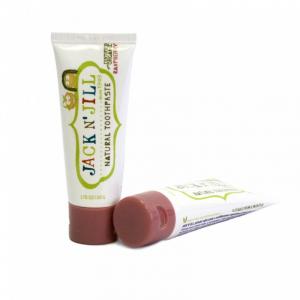
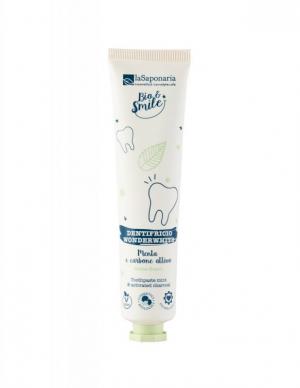



Why do we actually bite our cheeks?
The causes of this habit are varied and can differ from person to person. Most commonly, experts agree that stress and anxiety play a key role. Cheek biting acts as a kind of release valve – a way for the body to relieve tension that has nowhere else to go. Research in the field of psychology shows that repetitive movements generally activate parts of the brain associated with calming, which is why many people engage in them unconsciously in situations where they feel overwhelmed or nervous.
Besides stress, boredom also plays a role. A brain that doesn't have enough stimulation seeks it elsewhere – and the oral cavity is very accessible in this regard. That's precisely why people most often bite their cheeks during monotonous activities, such as watching television, long car rides, or waiting. It's no coincidence that this habit is associated with similar behaviors such as chewing on pencils, playing with hair, or bouncing one's leg.
Another factor may be anatomical predisposition. In some people, the teeth naturally meet in such a way that the cheek mucosa ends up too close to the chewing surfaces. Every bite while eating can then be a minor provocation that triggers the habit. Similarly, an incorrect bite or missing teeth, which change the distribution of forces in the mouth, can contribute. Dentists therefore recommend ruling out purely mechanical causes when dealing with repeated mucosal injuries.
The connection with certain psychological conditions cannot be overlooked. Obsessive-compulsive disorder (OCD), anxiety disorders, or eating disorders can intensify cheek biting or directly trigger it. In such cases, it falls under the category of body-focused repetitive behaviors (BFRB) – a group of behaviors directed at one's own body, which also includes dermatillomania (compulsive skin picking) and trichotillomania (hair pulling). According to the International OCD Foundation (IOCDF), approximately 1 to 5 percent of the population suffers from some form of BFRB, with most of them not even realizing that their behavior has a clinical name and that effective help exists.
Interestingly, cheek biting often worsens during certain periods of life – during exam periods, times of work pressure, or personal crises. One student described her experience this way: she started biting her cheeks while preparing for her state exams, without noticing it. It wasn't until her dentist pointed it out during a routine check-up that she understood how long and intensely she had been engaging in this habit. That was the first time she connected chronic stress with the condition of her oral mucosa.
What are the consequences and when is it time to seek help?
Occasional or one-off cheek biting generally doesn't leave lasting effects – the mucous membrane of the oral cavity heals relatively quickly. The problem arises when episodic behavior turns into a daily habit with a compulsive character. Repeated injury to the same spot leads to the formation of thickened, scarred tissue, which paradoxically becomes even more tempting to bite further – it becomes palpable, raised, and easily reachable for the teeth. A vicious cycle is thus created, from which it becomes increasingly difficult to break free.
From a physical standpoint, the consequences can include painful canker sores and ulcers, chronic inflammation of the mucosa, sensitivity while eating or speaking, and in extreme cases, permanent tissue changes. Dentists point out that chronically damaged mucosa should be regularly monitored, as any chronic irritation of the oral cavity is a factor worth paying attention to. The American Academy of Oral Medicine (AAOM) recommends that any lesions in the mouth that do not heal within two weeks should be professionally examined.
Psychological consequences are equally important. Shame and a sense of loss of control are very common among people with compulsive cheek biting. Many avoid situations where they might be observed – such as eating in company – because they fear that others will notice their behavior or its traces. This social dimension of the problem is often underestimated, even though it significantly reduces quality of life.
So when should you seek professional help? As a general rule, if cheek biting has been going on for more than a few weeks, if you are unable to consciously stop it, or if it significantly interferes with daily functioning, it is time to speak with a doctor or psychologist. This is not a sign of weakness – it is a sensible decision that can prevent unnecessary suffering.
As American psychiatrist Daniel Amen aptly noted: "The brain is the most complex organ in the universe, and yet most people never take it to the doctor." The same applies to behaviors that the brain controls – compulsive habits deserve the same attention as physical symptoms.

Prevention and paths to change
The good news is that cheek biting can in most cases be significantly reduced or completely overcome – even without professional intervention, if the form is mild. The key lies in awareness and gradual change of behavioral patterns.
The first step is identifying triggers. Is it work-related stress? Boredom during long journeys? Anxiety before an important event? Keeping a simple diary in which you record when and under what circumstances the biting occurs can reveal surprising patterns. Once you know what triggers the habit, you can work on specific strategies for those situations.
A very effective method is the technique of substitute behavior – instead of biting your cheek, you put sugar-free gum in your mouth, drink water, or consciously shift your attention elsewhere. The brain needs an alternative, not just a prohibition. Physical activity works similarly – regular exercise demonstrably reduces levels of cortisol, the main stress hormone, thereby also reducing the urge toward relief-seeking behaviors.
Mindfulness and awareness techniques deserve special mention in this context. Consciously focusing attention on the present moment – including awareness of what is happening in the mouth – helps interrupt automatic patterns. Meditation, breathing exercises, or simple body scanning are tools that require no equipment or major time investment, yet can have a significant effect.
For those whose cheek biting has a psychological basis, the most effective method is cognitive-behavioral therapy (CBT), or its specialized variant known as HRT (Habit Reversal Training). This therapeutic technique focuses directly on compulsive repetitive behaviors and has demonstrated high effectiveness in numerous clinical studies. The therapist helps the patient identify triggers, develop awareness before the behavior begins, and learn a competing response that replaces the habit.
From a dental health perspective, orthodontic bite correction can also help if a mechanical cause is established. Some patients wear special nightguards that physically prevent the teeth from contacting the mucosa. These solutions are of course individual and should always be discussed with a dentist.
Environment and lifestyle are also important. Chronic sleep deprivation, excessive consumption of caffeine or alcohol, and general overwork are factors that increase susceptibility to stress-related behaviors. Taking care of the body's basic needs – quality sleep, a balanced diet, physical activity, and time to rest – forms the foundation without which other strategies are less effective. In this sense, cheek biting is also a reminder that body and mind are connected and that both need to be cared for.
There is one more dimension that tends to be overlooked: social support. Sharing the problem with loved ones or in a support group reduces the shame and isolation that accompany compulsive habits. Online communities and in-person meetings of people with similar experiences can be a surprisingly powerful source of motivation and practical advice. The awareness that one is not alone changes the entire relationship with the problem.
Cheek biting is therefore a phenomenon that sits at the intersection of physical health, psychology, and everyday habits. It is not a reason for shame, but it is a reason for reflection – about what our body is telling us, how we manage stress, and whether we pay sufficient attention to our inner world. A small, seemingly insignificant movement of the jaw can be a window into a much deeper understanding of oneself.