

Tips for healthy sugar-free drinks for children
Every parent knows it – you're standing in front of a store shelf, your child is reaching for a brightly coloured bottle featuring a favourite cartoon character, and you hesitate. Juice, fruit drink, sweetened tea or lemonade? But which of these is truly suitable for a growing body, and which is just a cleverly packaged sugary drink? The question of healthy drinks for children without added sugar is more relevant today than ever before – and the answer is not always as straightforward as it might seem.
The World Health Organization (WHO) has long warned that excessive sugar consumption in childhood contributes to the development of obesity, tooth decay and metabolic disorders that children carry with them into adulthood. Yet a large proportion of children's daily sugar intake comes not from sweets or biscuits, but from drinks. Sweetened beverages are now one of the main sources of added sugar in the diets of children of all age groups. The average can of fizzy drink contains approximately 35 grams of sugar – more than the entire recommended daily allowance for a school-age child.
And yet the children's drinks market looks very appealing at first glance. Manufacturers cleverly use words such as "natural", "fruity" or "no added colours", which easily blur together with the concept of "healthy". But natural flavour and zero added sugar content are two very different things. Many fruit juices that parents consider a healthy choice contain naturally occurring sugars in high concentrations – and without the fibre that would slow their absorption, they act on the body in almost the same way as added sugar.
Try our natural products

Why the ingredients matter more than we think
A child's body is in many ways more sensitive than an adult's. The livers of young children process fructose – the fruit sugar present even in "natural" juices – less efficiently, which can lead to fat accumulation in the liver with excessive intake. Paediatricians are therefore increasingly recommending limiting even 100% fruit juices, especially in children under three. The American Academy of Pediatrics (AAP) states in its updated recommendations that children under one year of age should not be given fruit juice at all, children aged one to three years a maximum of 120 ml per day, and children aged four to six years a maximum of 180 ml per day.
These figures surprise many parents. Yet this is not excessive caution – it is about understanding how a child's metabolism works. A drink that looks healthy does not have to be healthy. And conversely – there are a whole range of tasty, refreshing and genuinely beneficial alternatives that children enjoy drinking and which at the same time do not burden their bodies with unnecessary sugar.
Take, for example, a family from Brno, where eight-year-old Anička was automatically poured a glass of apple juice every morning. Her parents were convinced that their daughter was getting vitamins and a healthy start to the day. It was only during a visit to the children's dentist that they discovered Anička was suffering from increased tooth decay despite regular oral hygiene. The dentist asked about her drinking habits and immediately identified the problem – the daily glass of juice, even 100% natural, was acting on the tooth enamel through a combination of acidity and sugar. Simply replacing the juice with water containing a slice of apple and a few mint leaves led to a significant improvement within a few months.
This story is not an exception. It illustrates how easily seemingly healthy habits can conceal real risk – and how simple the solution can be, if we know where to look.
The best choices for a healthy drinking routine for children
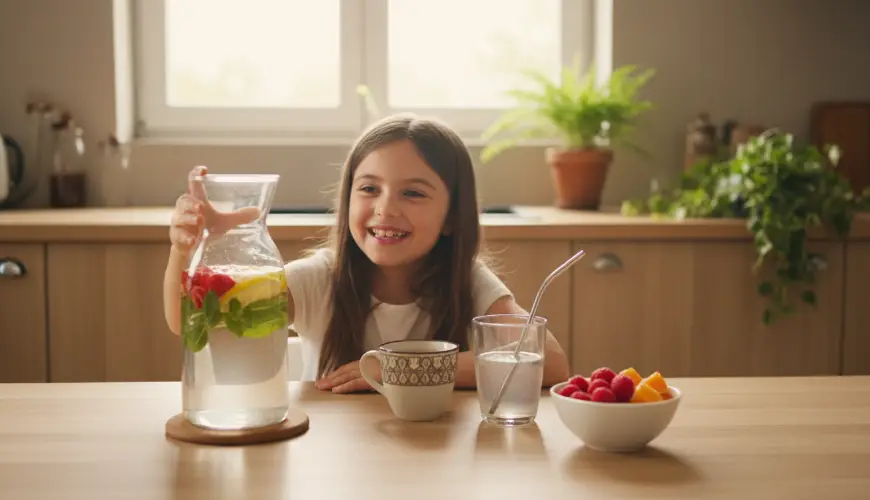
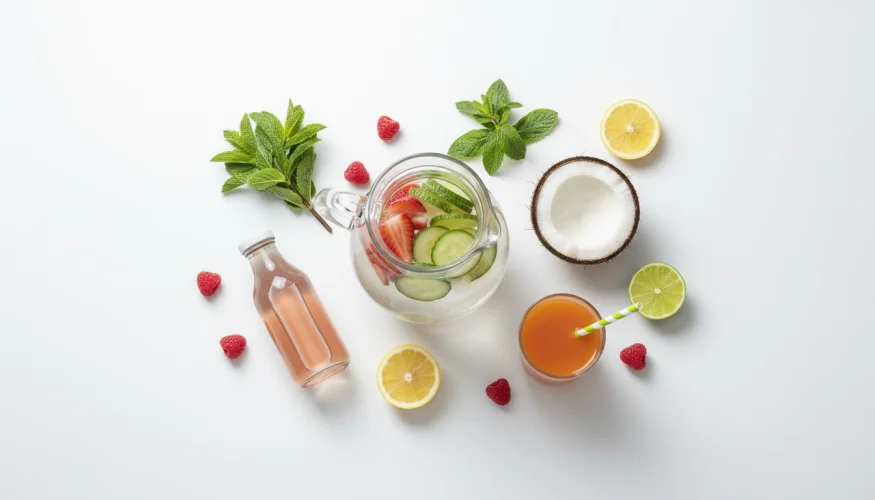
The foundation of a child's drinking routine should be plain water. This sounds obvious, but water is the most natural and beneficial fluid for a child's body. It contains no sugar, does not damage tooth enamel, supports kidney function and helps regulate body temperature. The problem is often that children refuse water as "boring". This is where a little creativity comes in – water flavoured with natural ingredients is an excellent alternative to sweetened drinks and contains no added sugar whatsoever.
Slices of citrus fruit, pieces of strawberry, cucumber with mint, raspberries or basil – these combinations give water a subtle flavour and aroma that will capture children's interest. What's more, involving the child in preparing their own drink increases the likelihood that they will actually drink it. Four-year-old Tomáš from Prague refused to drink water so stubbornly that his mother was considering a compromise in the form of sweetened teas. In the end, she tried buying a clear little bottle, letting Tomáš choose fruit from a bowl and preparing the drink together. Tomáš drank his "special drink" to the last drop – and soon began choosing his own combinations.
Another excellent solution is herbal or fruit teas without added sugar, served lukewarm or cold. Chamomile, rosehip, lime blossom or rooibos are completely safe for children and naturally gently sweet without the presence of any sugar. Rosehip tea is also rich in vitamin C, so it also serves a nutritional function. The only important thing is to check that the teas do not contain additives sweetened with stevia or other sweeteners – even these can disrupt children's perception of sweetness and reinforce a dependence on intense flavours.
Coconut water has become a popular choice in recent years among parents looking for a natural alternative to sports drinks. It contains naturally occurring electrolytes such as potassium and magnesium, making it particularly suitable after physical activity. Coconut water without added sugar is an appropriate choice for school-age children in moderate amounts, although it too is not free of natural sugar, so it should not form the basis of a drinking routine. Diluted vegetable juice – for example from beetroot or carrot – is in a similar position, providing vitamins and minerals with a lower sugar load than fruit juices.
Energy drinks, cola drinks and sweetened fizzy drinks should be kept entirely off the table. This is obvious to most parents, but what may be less apparent is that so-called "sports drinks" or "vitamin waters" are also often full of added sugar or artificial sweeteners and are completely unsuitable for children. As British paediatrician and children's nutrition author Tim Lobstein aptly put it: "The children's drinks industry is a master at selling sugar water with a vitamin promise."
Navigating the shops can be genuinely challenging for parents. It helps to get into the habit of reading product labels – specifically the line showing sugar content per 100 ml. A value below 2.5 g of sugar per 100 ml is considered low, while a value above 11 g is considered high. For drinks labelled "no added sugar", it is worth checking whether they contain substitute sweeteners such as aspartame, acesulfame K or sucralose – their safety for children is still the subject of expert debate, and most paediatricians recommend avoiding them during childhood.
The overall approach to children's drinking should be built on naturalness and the gradual development of good habits. Children who drink predominantly water and unsweetened teas from an early age will get used to this taste and will not crave sweet drinks as much. Conversely, if they have been accustomed to an intense sweet taste from a young age, the transition is more difficult – but not impossible. Research shows that children's taste preferences are formed in the first years of life and are largely the result of repeated exposure to certain flavours. In other words – the sooner we begin introducing children to the taste of unsweetened drinks, the easier their relationship with healthy drinking habits will be in the future.
A practical aid can also be the choice of suitable bottles and flasks that appeal to the child visually. A child who takes a liking to their bottle will carry it everywhere and reach for it naturally. Many eco-friendly bottles made from stainless steel or borosilicate glass are now designed specifically for children – with an ergonomic grip, spill-resistant lids and prints of favourite motifs. Unlike plastic bottles, they do not leach harmful substances such as BPA into the contents, which is a further argument for purchasing them. In the Ferwer range you will find drinking bottles for children that meet strict safety standards while being sufficiently attractive for children to love them.
An important part of a drinking routine is also regularity. Children – especially younger ones – do not have as reliable a sense of thirst as adults and can easily become dehydrated without realising it themselves. Fatigue, irritability, poor concentration at school – all of these can be symptoms of insufficient fluid intake. Parents should actively offer drinks at regular intervals, especially during physical activity, in hot weather and after returning from school.
Healthy drinks for children without added sugar are therefore not about deprivation or strict prohibitions – they are about smart alternatives, a little creativity and the patient development of habits that will benefit the child for life. Water with fruit, herbal tea, coconut water after sport or homemade rosehip syrup diluted in water – these are choices that not only quench thirst but genuinely contribute to children growing up healthy, vital and full of energy. And that, after all, is what parents care about most.