

Home trampoline as an effective training for the lymphatic system
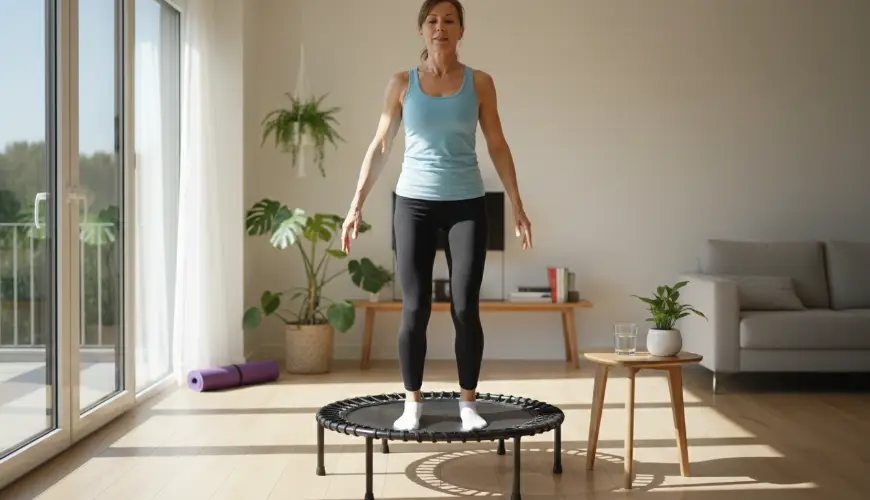
There are very few movements that are simultaneously so playful and yet so deeply beneficial to the human body. Jumping on a trampoline, which most of us associate primarily with childhood and garden games, has come into a completely different light in recent years – thanks to growing interest in the lymphatic system and its role in overall health. A home trampoline as a tool for lymphatic training? It may sound surprising, but both science and practice unequivocally support this approach.
The lymphatic system is often referred to as the "silent hero" of the human body. Unlike the circulatory system, which is driven by the heart as an active pump, lymph moves only through muscle contractions, breathing, and gravity. This means that without sufficient movement, lymph stagnates, immunity weakens, and the body has greater difficulty eliminating waste products. This is precisely where the trampoline comes into play – in a way that no other sporting activity can fully replicate.
Try our natural products





What happens to the body with every bounce
The mechanism that sets trampoline training apart from other forms of exercise lies in the alternation of gravitational forces with each jump. During a bounce, the body passes through three phases: a phase of increased gravity (upon landing on the trampoline), a phase of weightlessness (at the highest point of the jump), and again a phase of increased gravity. This rhythmic alternation acts as a natural pump for the lymphatic system. NASA research from the 1980s confirmed that rebounding – as this type of exercise is technically called – is one of the most effective forms of movement overall, particularly in terms of engaging the entire body with minimal joint stress.
Lymphatic vessels are equipped with one-way valves that open and close in response to pressure changes. When jumping on a trampoline, these valves open and close approximately one hundred times per minute – significantly faster than during walking or running. The result is up to a fifteenfold increase in lymph flow compared to the resting state, as noted by the Cleveland Clinic in its overview of the benefits of rebound exercise. This has a direct impact on the removal of toxins, strengthening the immune system, and reducing swelling caused by lymphatic stagnation.
Interestingly, achieving this effect does not require jumping high or intensively. Even the so-called "health bounce" – gentle bouncing in which the heels remain in contact with the trampoline surface or barely lift off it – activates the lymphatic system almost as effectively as energetic jumps. This makes trampoline training a suitable activity for a truly wide range of people, including seniors, those recovering from injury, or those who are just beginning to exercise.
A home trampoline: a practical tool, not just a toy
Acquiring a smaller trampoline designed for home use – so-called mini-trampolines or rebounders – has become more accessible than ever in recent years. These compact devices, typically with a diameter of between 90 and 120 centimetres, fit in a living room, bedroom, or office, and their price ranges from a few hundred to several thousand crowns depending on the quality of construction. Investing in a quality rebounder is worthwhile – cheaper models with rigid springs can actually stress the joints rather than protect them.
Consider the example of Martina, a forty-year-old accountant from Brno who suffered from chronic swelling of the lower limbs and fatigue. Her doctor recommended physical activity, but due to knee problems she was unable to run or go to the gym intensively. She purchased a mini-trampoline and began dedicating fifteen minutes each morning to gentle bouncing. After just three weeks she noticed a significant reduction in swelling, and after two months she reported markedly higher energy levels and better sleep quality. Martina's story is not exceptional – thousands of people who came to rebound exercise precisely through problems with the lymphatic system share similar experiences.
The key advantage of a home trampoline is accessibility. There is no need to travel to a fitness centre, wait for equipment, or adjust your schedule to opening hours. It is enough to get up fifteen minutes earlier, turn on favourite music or a podcast, and start moving. This gentle integration of movement into everyday life is exactly what preventive medicine experts recommend – the World Health Organization states that adults should devote at least 150 minutes per week to moderate-intensity aerobic activity, and that even shorter bouts of movement distributed throughout the day have demonstrable benefits.
For home lymphatic trampoline training to be truly effective, it is good to follow several basic principles:
- Regularity over intensity – 10 to 20 minutes daily produces better results than an hour once a week
- Hydration – the lymphatic system needs an adequate fluid intake, so it is advisable to drink a glass of water before and after exercise
- Gradual increase in intensity – start with slow bouncing and only gradually add intensity and various movement variations
- Bare feet or thin socks – for better proprioception and natural engagement of the feet
- Combination with breathing exercises – deep diaphragmatic breathing further supports lymph movement
Broader health impact: everything that trampoline training influences
It would be an oversimplification to claim that the trampoline serves exclusively as lymphatic training. The benefits of rebound exercise are in fact far broader and extend into various areas of physical and mental health. Regular bouncing demonstrably improves balance and coordination, strengthens deep stabilising muscles, increases bone density, and has a beneficial effect on the cardiovascular system. At the same time, joint loading is up to 80% lower than when running on a hard surface, as documented by biomechanical studies published in specialist sports medicine journals.
The effect on mental wellbeing is also fascinating. Bouncing naturally releases endorphins and serotonin, and the rhythmic movement has a demonstrably calming effect on the nervous system. It is no coincidence that many therapists working with trauma or anxiety incorporate rhythmic movement activities as part of the therapeutic process. As leading American trauma expert Bessel van der Kolk says: "The body keeps the score – and movement is one of the most powerful tools for changing it."
Lymphatic trampoline training also has a direct impact on the immune system, because lymph nodes – key components of the immune defence – are directly stimulated by the increased flow of lymph. People who regularly exercise on a rebounder therefore often report that they fall ill less frequently and recover more quickly from infections. Particularly during the winter months, when outdoor movement is limited and immunity naturally weakens, a home trampoline can play the role of a genuine health aid.
It is also worth mentioning the aesthetic dimension of this exercise. Improved lymphatic circulation contributes to a reduction in cellulite, which arises in part precisely as a result of lymphatic stagnation in subcutaneous tissue. Regular rebounding also supports the body's detoxification and can have a beneficial effect on skin quality. These are the reasons why trampoline training has become popular not only among athletes, but also in communities focused on holistic health and body care.
It is important to note that trampoline training is not suitable for everyone without exception. People with certain health conditions – such as severe osteoporosis, following certain surgical procedures, or in advanced pregnancy – should consult a doctor before starting. Equally important is choosing a quality trampoline with sufficient load capacity and a stable structure, ideally with a handlebar for better balance for beginners.
The world of healthy living offers an endless array of trends, diets, and exercise methods that come and go. Rebounding on a home trampoline, however, is no passing fashion wave – it is a physical activity backed by decades of research that can appeal to people across age groups and fitness levels. And the very fact that it combines effectiveness with accessibility, modest space and time requirements, and moreover brings joy of movement, makes it one of the most meaningful tools for everyday health care. A home trampoline as lymphatic training is therefore not merely an interesting alternative – for many, it can become the cornerstone of a healthier way of life.