
# How to Support a Child in Overcoming Shyness Without Pressure Shyness is a natural part of many c
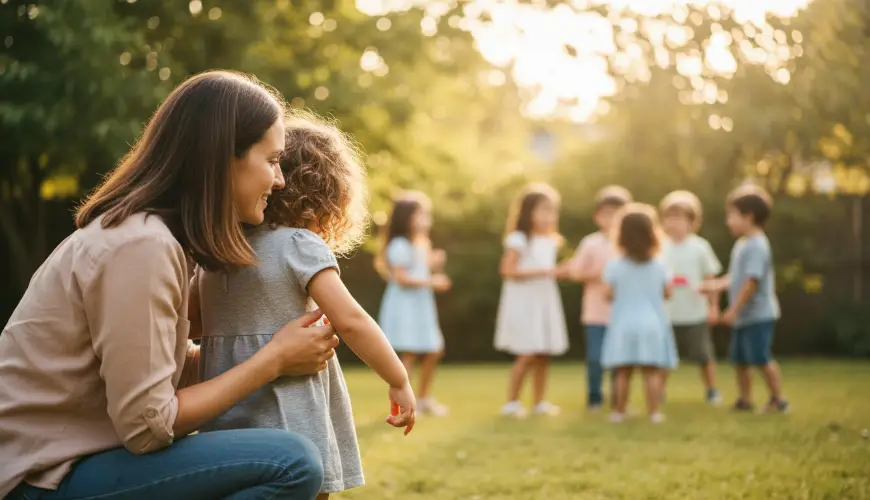
Every parent knows it – you're standing at a children's party and your child is clinging tightly to your sleeve, refusing to join in the games, and hiding behind your back every time a stranger speaks to them. Other children are happily playing, laughing, making connections, and you quietly wonder whether something is wrong with your child. There isn't. Shyness is a natural part of human nature and a completely common personality trait in children. The question is: how do you support a shy child so they feel safe in the world without losing themselves?
Shyness is not a disease or a weakness. It is a temperamental trait that manifests in various ways – from mild bashfulness in new situations to intense anxiety about social contact. According to experts from the American Psychological Association (APA), shyness is present in approximately 40% of people to varying degrees, and it is even more pronounced in children because they lack the life experience that would help them overcome uncertainty. Knowing this boundary – that is, understanding when something is a natural personality trait and when it is a problem requiring professional help – is absolutely crucial for parents.
A shy child does not perceive the world as hostile. They perceive it as uncertain. And that is a fundamental difference that should shape the entire parental approach.
Try our natural products



What shyness really is and why you should neither overestimate nor underestimate it
Many parents make the mistake of either dismissing shyness ("But there's nothing to be afraid of!") or dramatising it and turning every social situation into a therapeutic exercise. Both approaches harm the child. Dismissal tells them that their feelings are not valid. Excessive attention reinforces the belief that shyness really is a major problem they cannot handle on their own.
Research in developmental psychology shows that shyness has a strong genetic component – some children are simply born with a more sensitive nervous system that responds more quickly to new stimuli and unfamiliar situations. Harvard psychologist Jerome Kagan, who spent decades studying shyness and children's temperament, found that approximately 15–20% of children are born with what he called an "inhibited temperament" – an innate tendency to be cautious, reserved, and to need more time to adapt. This trait is not a problem in itself. It only becomes a problem when the child's environment constantly pressures, compares, or ridicules them.
Take the example of seven-year-old Anna, who started at a new school after her family moved. While her classmates exchanged phone numbers and arranged afternoon playdates during the first week, Anna sat apart and observed. Her teacher found this worrying, her classmates thought she was arrogant, and her parents began to panic. In reality, Anna simply needed more time – three weeks later she had her first friend and today she is one of the most popular members of the class. Her shyness was not an obstacle. The obstacle was the pressure from those around her that turned it into one.
The distinction also matters because shyness sometimes overlaps with social anxiety, which is a more serious condition requiring professional help. While a shy child will gradually engage in a new situation, a child with social anxiety may experience physical symptoms – stomach aches before school, crying fits, refusal to eat – and actively avoids situations. If these symptoms persist for more than a few weeks and significantly limit the child's everyday functioning, it is advisable to seek a child psychologist.
How to help a shy child in practical terms without making them feel pressured
The biggest mistake parents of shy children make is trying to solve the problem quickly and directly. "Go and play with them." "Tell them your name." "Don't be scared, they're nice." These well-meaning words can actually intensify the child's stress, because they say: your pace is wrong, you need to be different from who you are.
Supporting a shy child is a marathon, not a sprint. It requires patience, consistency, and above all unconditional acceptance of who the child is – not who they should be. Psychologist Susan Cain, author of Quiet: The Power of Introverts in a World That Can't Stop Talking, notes: "Shyness and introversion are not the same thing, but both traits are chronically undervalued in our society. A quiet person has their own way of being in the world – and it is just as valuable as a louder one."
Practical support starts at home. A child who feels safe within their own family has a stronger foundation for managing social situations outside. This means creating space for conversation – not an interrogation ("How was school? Did you talk to anyone?"), but genuine interest. Share your own experiences, talk about your own uncertainties, show your child that even adults sometimes feel uncomfortable in unfamiliar company. These seemingly small gestures build trust and reduce the feeling that being shy means being flawed.
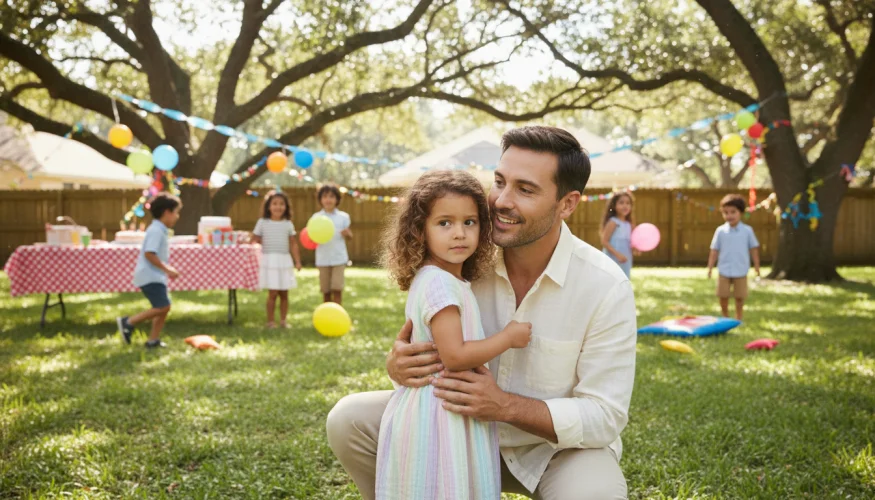
Another effective tool is the gradual and gentle expansion of the comfort zone. The key word is "gradual". Do not throw a shy child into situations they are not ready for – large birthday parties with dozens of unfamiliar children, group activities without prior preparation, or being forced to perform in front of the class without warning. Instead, start small: a get-together with two or three children in the home environment where the child feels safe. Arrange a "scouting visit" to a new place in advance, without any pressure to engage socially. Give the child time to observe before deciding to join in.
It is also extremely important to avoid introducing the child as shy when meeting other adults. "This is Tomáš, he's terribly shy" – this phrase, however kindly meant, functions as a label that tells the child: this is how others see you and this is how you are expected to behave. Instead, try simply: "Tomáš just needs a moment to settle in." This gives the child space rather than a box to fit into.
Extracurricular activities centred on the child's specific interests also play a major role. Shy children find it much easier to engage in social situations when they share a common interest with their peers – an art class, a chess club, a cooking course, or a nature camp. In such an environment, there is no need to make conversation "just for the sake of it," and interaction naturally arises from a shared activity. The child can focus on the activity and form connections organically, without feeling that they must "know how to socialise."
Parents should also pay attention to their own relationship with social situations. Children are excellent observers and are very aware when a parent themselves shows anxiety in social situations, avoids contact, or conversely places excessive emphasis on the importance of popularity and social success. Modelling a calm, confident approach to new situations is one of the most effective forms of support parents can offer – and it requires no special techniques or professional training.
When it is time to seek professional help
Patience and a loving family approach are not always enough. There are situations where it is wise to bring in a professional – and there is nothing wrong or shameful about that. On the contrary, seeking help is an expression of parental responsibility and love.
Warning signs to watch for include persistent refusal to attend school or other obligatory social situations, physical symptoms of anxiety (stomach aches, nausea, sleep disturbances) before social events, marked isolation with no friends at all over an extended period, or symptoms that worsen over time rather than improving. The Czech Association of Child and Adolescent Psychiatry offers a directory of specialists and information for parents seeking guidance on childhood anxiety and social difficulties.
Cognitive-behavioural therapy (CBT) is currently considered one of the most effective methods for working with childhood social anxiety. It focuses on specific situations, works with thought patterns, and gradually helps the child build confidence in a safe therapeutic environment. Results typically emerge within a few months and the effects are long-lasting.
It is important to remember that the goal is not to turn a quiet child into an extrovert. The goal is to help them function in the social world in a way that does not hinder their development, the fulfilment of friendships, and the achievement of what they want. Shy children can grow up to be excellent doctors, teachers, artists, and scientists – and their sensitivity and ability to listen often bring something to the world that louder personalities cannot.
Shyness is not an obstacle on the journey through life. It is simply a different way of travelling that journey – more attentively, more carefully, with greater depth. And the parent's role is not to change that path, but to walk alongside their child for as long as it takes until they begin to walk it alone with confidence.