

# How to Handle the First School Year Without Stress for the Whole Family
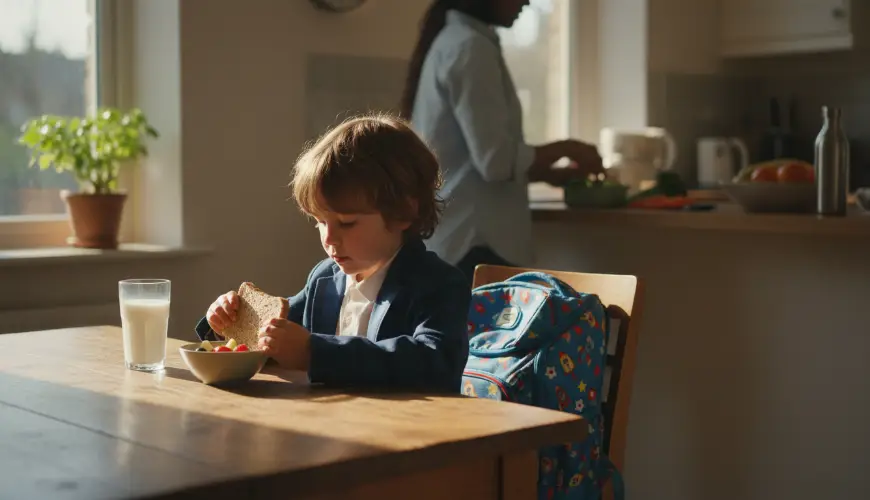
Starting first grade is one of those life moments that stays with parents as deeply as first steps or first words. There's joy in it, pride, but honestly – a fair amount of nervousness too. And what's interesting is that the nervousness doesn't only affect the child. The whole family goes through a transition that changes daily rhythms, priorities, and relationships. So how do you get through the first school year in a way that makes it more of an adventure than a source of exhaustion?
The answer isn't simple, but it certainly exists. The key lies in preparation that doesn't begin a week before school starts, but throughout the entire summer – and in setting realistic expectations for everyone involved.
Try our natural products





Preparation begins long before the bell rings
Many families underestimate how crucial the transition from the free summer routine to the school schedule really is. Children who spent the whole summer going to bed whenever they felt like it and waking up without an alarm suddenly find themselves in an environment where every minute has its order. This transition can be genuinely challenging for a six-year-old child – and their fatigue and irritability then spreads throughout the entire household.
Experts in child psychology recommend starting to shift the child's sleep schedule about two to three weeks before school begins. It's enough to move bedtime ten to fifteen minutes earlier each day until the child reaches a time appropriate for the school year. Morning wake-ups should follow similarly – gradually, without forcefully pulling them from sleep. This seemingly small step can significantly reduce stress levels during the first weeks of school.
It's equally important to prepare the child for the environment they're entering. If the school allows it, it's wonderful to visit it with the child before classes begin – walk through the classroom, look at the cloakroom, find the toilets. An unfamiliar environment is one of the greatest sources of anxiety for young children. When they get to "feel it out" in advance, the first day becomes much less stressful for them.
The practical preparation of school supplies shouldn't be merely a logistical matter, but also an opportunity for the child. Letting them choose a backpack or pencil case they like gives them a sense of control and something specific to look forward to. It's also worth investing in quality and ergonomic supplies – a properly shaped backpack that doesn't strain the child's back, or a pen suitable for beginning writers, aren't unnecessary luxuries but investments in comfort and health.
Parents who care about sustainability and mindful shopping will also appreciate that today there is a wide range of environmentally friendly school supplies – from notebooks made of recycled paper to pencils without plastic components. Such an approach can also serve as a natural introduction to a conversation with the child about why it's important to take care of the planet.
How to establish a healthy home routine that works
Once school starts, the home environment becomes a key factor in how the child manages the school year. And this is where perhaps the most difficult part comes in – consistency. Children at this age need predictability like air. Knowing what comes after getting home from school, when it's time for a snack, when for homework, and when for free play gives them a sense of security that directly affects their ability to learn.
Pediatricians and child psychologists agree that a regular daily routine reduces anxiety in children and improves their concentration. This is confirmed by research published in the journal Pediatrics, which long-term monitored the influence of family rituals on the emotional stability of preschool and early school-age children.
One of the most common mistakes parents make is trying to tackle homework immediately after coming home from school. After five hours at school, a child is mentally tired – they first need time for movement, a snack, and free play. Only after an hour to an hour and a half of rest is the brain ready for focused work again. This rhythm is worth maintaining even on more demanding days when it seems like there's "no time."
Parents should also keep in mind that first grade is an enormous burden for a child – socially, cognitively, and physically. It's not unusual for a child to come home from school irritable, tearful, or completely quiet. This doesn't mean something is going wrong. It means the child needs space to process their impressions. Instead of bombarding them with questions like "what did you do, what did you eat, who did you play with," a simple "I'm glad you're home. I'll get you a snack and then you can tell me whatever you want" can help.
Nutrition plays a bigger role than many parents realize. A first-grader's brain needs quality fuel – and this applies both to breakfast before school and to the snack after coming home. Wholegrain bread, fruit, nuts, or yogurt are simple but nutritionally valuable choices. Families who are interested in a healthy lifestyle know that investing in quality food pays off in the form of better mood, concentration, and resistance to illness – and at a time when a child first comes into contact with a collective full of new viruses, that's an additional argument.
Movement in fresh air should be part of every afternoon, weather permitting. Walking, cycling, playing in the garden, or simply a stroll through the park helps the child "let off steam" while also supporting healthy sleep. And good sleep is, as already mentioned, the foundation of everything else.
Parents shouldn't forget about themselves either. A child starting school changes the functioning of the entire family – work schedules, morning rituals, afternoon programs. It's normal for adults to also go through a certain adaptation phase. As Danish therapist and author Jesper Juul says: "A family is only as strong as the relationships within it." Taking care of your own wellbeing and your relationship with your partner isn't selfishness – it's the foundation of a stable environment in which a child can grow healthily.

Communication that brings together rather than separates
One of the most common traps of the first school year is silently taking over responsibility for the child in areas where the child should carry the responsibility themselves. Parents who pack backpacks instead of the child, remind them of every obligation, or resolve conflicts with friends on their behalf aren't actually helping – on the contrary, they're taking away the child's opportunity to learn independence and problem-solving.
A healthy degree of autonomy doesn't mean indifference. It means the parent is available as support, but lets the child experience minor failures and learn from them. Did they forget their snack at home? Next time they'll pack it themselves. Did they argue with a friend? The parent can help think through how to resolve the situation, but not intervene directly in the conflict.
An important part of healthy communication is also regular conversation about school – not as an interrogation, but as a natural part of the family evening. A shared dinner at the table without screens is one of the simplest yet most effective tools for maintaining open communication in the family. Children who have the habit of sharing their experiences with their parents cope better with difficulties and have higher emotional intelligence.
Take, for example, a family from Brno where the mother works full-time and the father runs his own business. Their son Tomáš started first grade, and the first weeks were challenging for the whole family – the morning rush, fatigue, Tomáš's tears when leaving school. They decided to introduce one simple rule: every evening at dinner, each family member shares one thing that made them happy that day and one thing that was difficult. Tomáš gradually began to open up more, the parents better understood what was troubling him, and the tension in the family significantly eased. It's not some therapeutic technique – just an intentionally created space for sharing.
School shouldn't be a source of daily stress for parents either. Regular but not excessive communication with the teacher – for example through a parent-teacher meeting or a brief email about a specific problem – helps maintain an overview without unnecessary anxiety. First-grade teachers are accustomed to parents' questions and concerns, and most of them see it as natural interest rather than a nuisance.
Choosing school supplies, clothing, and snacks can meanwhile be an opportunity to involve the child in decision-making in a way that develops their confidence. Letting a first-grader choose what to put in their snack box, or which water bottle to take to school, are small things that give them the feeling that their preferences matter. Eco-friendly and healthy alternatives don't have to be boring – colorful snack boxes made from natural materials or BPA-free bottles are now available in many attractive designs that children love.
The first school year is a marathon, not a sprint. It contains good weeks and challenging ones, days full of enthusiasm and days when you don't even want to get up. This is completely normal – for the child and for the parents. The important thing is not to succumb to the pressure of perfection and not to compare your child to others. Every child has their own pace, their own way of learning, and their own way of handling new situations. A family that accepts this and creates an environment full of patience, humor, and mutual support gives their first-grader the most precious foundation – and that won't fit in any backpack.