
# How to Get the Whole Family Involved in Outdoor Physical Activity
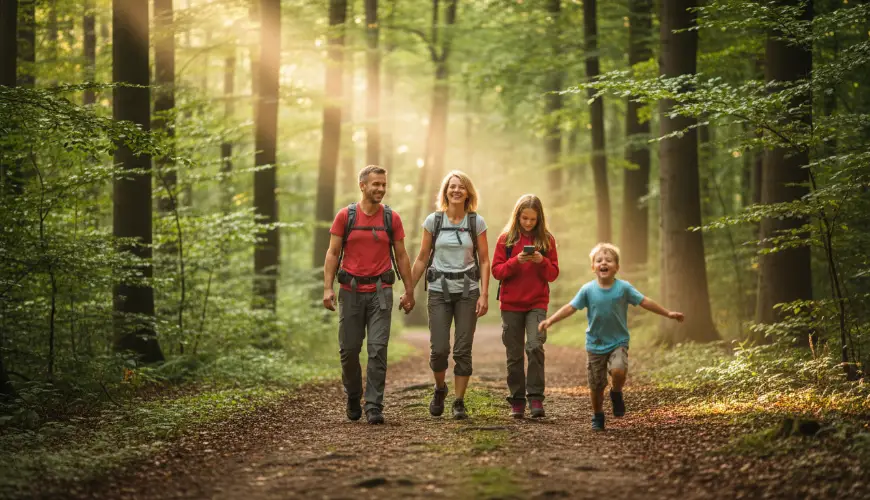
Weekends in nature, walks through the forest together, or afternoon bike rides – these are moments that families remember far longer than any evening spent in front of the television. And yet, for many families, regular outdoor activity is more of a wish than a reality. Children stick to their screens, adults are tired after the working week, and shared time shrinks to a minimum. So how do you get the whole family moving outdoors regularly – and actually enjoying it?
The answer lies not in strict rules or expensive equipment purchases. It lies in approach – in how you frame outdoor activity, how you adapt it to different age groups, and how you turn it into something everyone looks forward to. Physical activity doesn't have to look like organised sport or performance training. It can be an adventure, a game, an exploration of the local area, or simply time when the family has fun together without the distractions of everyday life.
Try our natural products





Why shared outdoor activity matters more than we think
Research consistently shows that children who regularly spend time outdoors and in motion have better concentration, healthier sleep, and lower levels of anxiety. According to World Health Organization studies, children aged 5 to 17 should have at least 60 minutes of moderate-intensity physical activity every day – and nature is the ideal environment for this purpose. Uneven terrain, natural obstacles, changeable weather, and the sensory stimuli offered by a forest or park stimulate the body and mind in ways that no gym can fully replicate.
For adults, a similar equation applies. Outdoor activity reduces cortisol levels, improves mood, and contributes to the prevention of lifestyle diseases. But beyond physical health, there is another factor that is mentioned less frequently in expert texts – the quality of family relationships. Shared outdoor activity creates shared memories, builds trust, and opens space for conversations that would never arise at the dinner table at home. As educator and author Richard Louv once said: "Nature is not a place to visit. It is home." And it is precisely this sense of a shared home in nature that makes family outdoor activity something more than just a healthy habit.
It is also important to recognise that outdoor family activity requires no special plan or club membership. Good footwear, willingness, and a little creativity are all it takes. The challenge arises, however, when a family consists of children of different ages, each with different needs, different paces, and different interests. A three-year-old cannot cover the same route as a teenager, and a teenager is unlikely to be enthusiastic about activities designed for nursery-age children. This is precisely where the key to success lies – finding activities that work for everyone simultaneously, or rotating them cleverly so that everyone feels included.
One of the simplest ways to start is to stop thinking of activity as a goal and start seeing it as a means. The goal is not to run ten kilometres – the goal is to spend an hour together outdoors. If along the way you stop by a stream, collect stones, or build a den from branches, so much the better. This approach works especially well with younger children, who need space for spontaneous play and exploration.
Activities that appeal to young and old alike
The key to shared activity for the whole family is variety and adaptability. No single activity works forever, and none works the same way for everyone. It is therefore worth having several tried-and-tested options in reserve and not being afraid to combine or adapt them according to mood, weather, and the current composition of the group.
Hiking and trips into nature are a classic for good reason. Trails can be chosen according to difficulty, route length can be adapted to the ages of the children, and every outing is different – a different season, a different place, a different surprise along the way. To make a trip appealing to older children or teenagers who might otherwise prefer to stay at home, it helps to involve them in the planning. Letting them choose the route, use a map application, or prepare their own packed rucksack gives them a sense of responsibility and ownership of the whole experience.
Family cycling is another excellent option that works across age groups. Small children can ride in a seat or a trailer, pre-schoolers on a balance bike or tricycle, and school-age children can manage a solid route on their own bicycle. Cycling routes across the Czech Republic offer everything from calm, flat rides along rivers to more demanding mountain trails – it simply depends on what the family can manage and what they enjoy. The Mapy.cz portal contains thousands of marked cycling routes with difficulty profiles, so finding a suitable route takes just a few minutes.
A less obvious but highly effective activity is geocaching – a modern form of orienteering in which families search for hidden containers using GPS coordinates. This activity combines movement, strategic thinking, and adventure, and works brilliantly for children from around six years of age upwards. Older children and teenagers are naturally engaged in geocaching because technology and mystery simply draw them in. The geocaching.com website contains a map of hiding places around the world and registration is free.
For families with younger children, or on days when there is no appetite for a big outing, simple activities in a park or meadow work wonderfully. Flying a kite, ball games, sack races, or simply a game of tag – these seemingly trivial activities are enormously valuable for children and offer parents a genuine opportunity to unwind without planning or logistics.
A practical real-life example illustrates well just how simple it can be. A family from Brno with three children aged four, eight, and fourteen introduced a tradition of a "Sunday adventure". Every Sunday morning they head out somewhere together – sometimes it is a one-hour walk through the forest near their home, other times a full-day trip to a castle or a cycle ride along the Svratka river. The fourteen-year-old daughter is in charge of photography and maintaining the family photo album on an old tablet, the eight-year-old collects natural materials and makes collages from them, and the four-year-old simply plays and runs around. Everyone has their role, everyone is involved, and after returning home the family gathers for lunch with stories to tell.
This example illustrates one of the most important principles – every family member should have their own part of the activity that they enjoy and can immerse themselves in. Outdoor activity then ceases to be an obligation and becomes a ritual that everyone looks forward to.
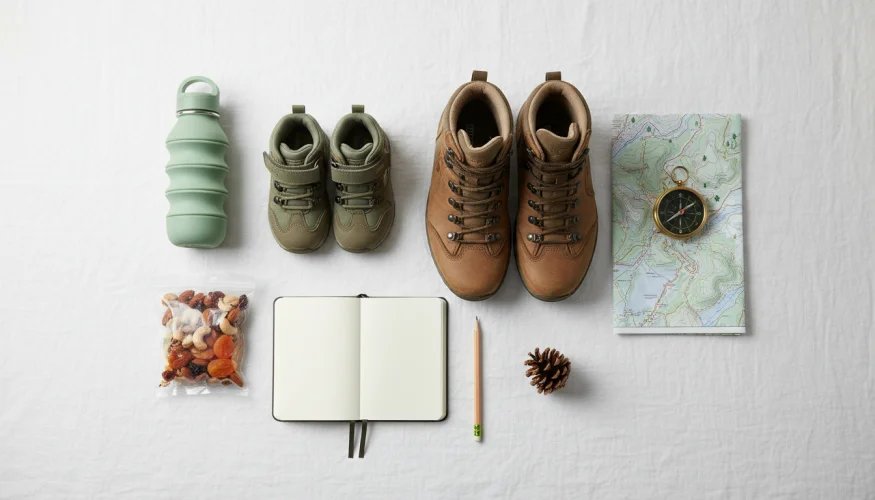
An often overlooked aspect of family outdoor activity is also the choice of appropriate equipment. This does not mean spending thousands on the latest outdoor clothing, but having basic equipment that is functional, comfortable, and suited to the weather. A good waterproof jacket, comfortable walking shoes, and a light rucksack with water and a snack are the essentials that will turn every outing into a pleasant experience rather than a battle with wet conditions and blisters. For children this applies doubly – a child with wet socks or ill-fitting shoes will not be an enthusiastic companion on the next trip.
An important part of getting the whole family involved in outdoor activity is also working with motivation. Young children respond well to rewards and rituals – a stamp in a little diary after each outing, a special snack that is only eaten outdoors, or the tradition of bringing home one stone from every trip. Older children and teenagers need more of a sense of autonomy and purpose – the opportunity to choose a route, take responsibility for navigation, or have a specific goal, such as reaching a particular summit or completing a hiking stamp collection. The Czech Tourist Club system offers various hiking badges and stamp booklets that serve as a powerful motivation for both children and adults to keep moving regularly.
Consistency also plays a major role. Setting out on a big trip once in a while is wonderful, but regular outdoor activity – even if it is just a short walk around the neighbourhood or a run to the nearby playground – builds a habit that endures. Research shows that regular activities carried out at the same time or on the same day of the week are more easily established as habits. For families, this means that Saturday morning or a Sunday outing does not always have to be a grand event – it simply needs to be regular and something everyone counts on.
Outdoor activity also has one side effect that parents often do not anticipate – it naturally reduces screen time without any need to even discuss it. A child who has spent a morning in the forest is far less likely to demand a tablet in the afternoon. The body is pleasantly tired, the mind is satisfied with new stimuli, and the need for passive entertainment naturally diminishes.
Finally, it is worth remembering that family outdoor activity is not about performance or how many kilometres the family can cover. It is about presence – about being together in a place that is neither home nor school nor work, where time slows down a little and where everyone can simply be themselves. Such places and such moments are irreplaceable for a family. And the sooner outdoor activity becomes part of a family's culture, the more naturally children will adopt it as their own – and one day perhaps pass it on to their own children.