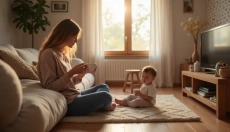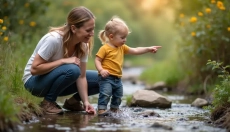

Movement for children should be a joy and a natural part of every day
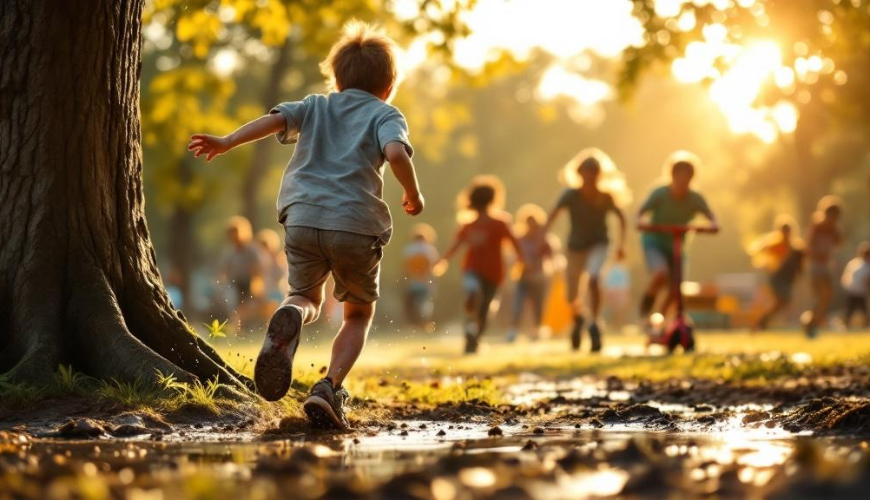
Do you remember the days when, as kids, you'd run outside after school and not come home until dark, out of breath and with scraped knees? Today, the world of children has changed dramatically. Tablet and phone screens have replaced trees for climbing, virtual worlds have displaced real ones, and spontaneous outdoor play has become the exception rather than the rule. Yet movement is absolutely essential for children – not only for their physical development, but also for their mental well-being, ability to concentrate, and building healthy habits for life. So how do we get children moving in a way that's fun and doesn't feel like a chore?
The World Health Organization states in its recommendations for physical activity in children and adolescents that children aged 5 to 17 should engage in at least 60 minutes of daily moderate-to-vigorous physical activity. The reality, however, is often quite different. According to numerous surveys, most children in the Czech Republic don't even come close to this threshold. And the point isn't for every child to train like a future Olympian – it's enough for them to move naturally, joyfully, and regularly.
Try our natural products





Why movement matters for children and what happens when it's missing
A child's body is literally made for movement. Bones grow, muscles form, coordination improves, and the brain creates new neural connections – all of this happens most effectively during physical activity. Regular movement strengthens the cardiovascular system, supports healthy weight, improves sleep quality, and helps build a strong immune system. These are things most parents intuitively sense. What's less well known, however, is the enormous impact of movement on children's mental health and cognitive functions.
Studies published in academic journals repeatedly confirm that children who move regularly demonstrate better concentration, have higher self-esteem, and cope better with stress. Movement triggers the release of endorphins and other neurotransmitters that naturally improve mood. At a time when there is increasing talk about rising anxiety and depression among school-age children, this finding is extraordinarily important. Movement isn't just obesity prevention – it's one of the most effective tools for the overall mental well-being of a young person.
And what happens when movement is missing? The consequences aren't visible immediately, but they gradually manifest. Children who spend most of their time sitting more frequently have problems with posture, back pain, weakened muscular systems, and reduced physical literacy. This means they lack basic movement skills – they can't run, jump, throw, or maintain balance properly. And paradoxically, it's precisely these children who then become afraid of physical activity because they feel clumsy doing it, creating a vicious cycle that becomes increasingly difficult to break out of.
Imagine an eight-year-old child who has never regularly played sports and suddenly has to vault over a pommel horse in PE class. While classmates who climbed trees and jungle gyms from an early age manage it without any problems, this child stands before the obstacle paralyzed with fear. It's not about laziness or lack of willpower – it's about missing movement experiences from early childhood. That's precisely why it's so important to start with natural movement as early as possible, ideally from toddler age, when a child is naturally curious and eager to explore the world with their own body.
Here it's worth recalling the famous quote from pediatrician and psychologist Benjamin Spock: "A child learns best by doing what they enjoy." And that's where the whole secret lies – movement should never be a punishment or an obligation, but a natural part of everyday life that brings joy.
When people say "sports for children," many parents immediately picture organized activities – football, swimming, gymnastics, or tennis. And of course, organized sports have their undeniable advantages: they teach discipline, teamwork, perseverance, and respect for rules. But it's not the only path to movement, and for many children, it's not even the best one. Especially for younger children up to six or seven years old, what's far more important is so-called free, unstructured movement. That means running around the garden, climbing trees, jumping over puddles, cycling around the neighborhood, building forts in the woods, or simply playing tag.
So what kind of movement is best for children? The answer is surprisingly simple – whatever they enjoy. For one child it will be football, for another dance, for a third nature walks with parents, and for a fourth jumping on a trampoline in the garden. The key is variety and voluntariness. A child's body needs diverse movement stimuli – a combination of activities focused on endurance, strength, coordination, and flexibility. But that doesn't mean you need to create a training plan for your child. It's enough to offer them plenty of opportunities and space for movement and let them find what brings them joy.
One of the most common mistakes parents make is putting too much pressure on performance and specialization at an early age. Research in sports medicine repeatedly shows that early sports specialization can be counterproductive – it increases the risk of overuse injuries and, above all, burnout. Children who are pushed to train in one sport five times a week from age five have a significantly higher probability of quitting sports entirely around age twelve. Conversely, children who tried multiple different activities at an early age build a more lasting and healthier relationship with movement.
How to guide children toward movement naturally and without pressure
The most effective way to get children moving is surprisingly simple – be their role model. Children are masters of imitation, and if they see their parents spending free time actively, they naturally accept it as the norm. A family that goes on a bike trip on the weekend, takes a walk in the forest, or plays badminton together in the garden does more for their children's movement habits than any expensive sports club. Shared physical activity also strengthens family bonds and creates memories that children will carry with them for life.
Let's take a concrete example. The Novák family from Brno decided two years ago that every Sunday they would set out on a "family adventure" – sometimes it was a walk along an educational trail, other times a paddleboard trip, occasionally just an outing to the nearest playground with a ball and frisbee. At first, ten-year-old Tomáš protested that he'd rather stay home on the computer. After a few weeks, however, he started planning the Sunday trips himself and suggesting routes. Today, two years later, he's an enthusiastic hiker who convinced his class to participate in an orienteering race. Nobody forced him into anything – he simply got the opportunity to experience that outdoor movement can be more fun than anything on a screen.
This is a key principle worth remembering: children don't need motivational lectures about a healthy lifestyle – they need experiences. They need to feel the wind in their hair while cycling downhill, the joy of climbing a rock for the first time, or the excitement of playing hide-and-seek in the park at dusk. These experiences create positive associations with movement that last a lifetime.
Another important aspect is environment. In today's cities, children often have limited opportunities for spontaneous movement. Playgrounds are monotonous, gardens are small, and streets are full of cars. That's why it's important to actively seek out spaces where children can move freely – forests, meadows, natural playgrounds, cycling paths. Some towns and cities have recently invested in so-called natural playgrounds that, instead of plastic climbing frames, offer tree trunks, rocks, sand, and water. These elements stimulate children's creativity and naturally develop motor skills far better than even the most sophisticated artificial play equipment.
We must not forget the role of schools either. Two hours of physical education per week is desperately insufficient, and moreover, for many children it represents a stressful situation rather than the joy of movement. Fortunately, more and more schools are introducing so-called movement breaks, active teaching, or morning warm-ups that help integrate movement into the entire school day. Parents can support this trend and, if necessary, initiate a dialogue with the school about greater incorporation of physical activities into teaching.
The approach of Scandinavian countries is also interesting, where the concept of "friluftsliv" – outdoor life in nature – is deeply rooted in the culture. Norwegian and Finnish children spend a significant part of the day outdoors in kindergartens and schools regardless of the weather, and this is positively reflected not only in their physical fitness but also in their psychological resilience. As the Norwegian proverb says, there's no such thing as bad weather, only bad clothing. This approach is inspiring for Czech parents too – just dress the children properly and head outside, whether the sun is shining or it's raining.
When thinking about how to guide children toward movement, it's useful to keep a few simple principles in mind:
- Be a role model – move yourself and together with your children
- Offer a variety of activities and let the child choose what they enjoy
- Don't push for performance, competitiveness, and results, especially with young children
- Create opportunities for unstructured outdoor play
- Limit screen time and offer attractive alternatives
- Praise effort and the joy of movement, not athletic performance
- Respect the child's individuality – not everyone has to be an athlete
Last but not least, the material side of things is worth mentioning. Children don't need expensive sports equipment to be able to move. But they do need comfortable clothing and footwear that allows movement and doesn't restrict them. Quality, ecologically produced children's clothing made from natural materials that wicks moisture well and allows free movement is an investment that pays off. Likewise, simple equipment – a jump rope, ball, hoop, or perhaps a slackline – can open the door to hours of fun and movement.
You might be wondering whether it's ever too late to make a change. The answer is: definitely not. Even though it's ideal to start building movement habits in early childhood, it's never too late to show a child that movement can be a joy. You might not start a teenager who spent their entire childhood sitting at a computer with football – but perhaps skateboarding, parkour, rock climbing, or geocaching will spark their enthusiasm. The important thing is to keep searching, trying, and above all, not giving up.
Movement is a gift that we can pass on to our children – not through lectures and commands, but through actively spent time together, through our own example, and by creating an environment where movement is a natural and joyful part of every day. At a time when a sedentary lifestyle threatens the health of an entire generation, it may be the most valuable gift we can give them.