
Eco-cooking that reduces kitchen waste without having to limit yourself
Cooking is often the biggest daily "factory" for waste in many households—and it's not just about imported packaging or exotic foods, but completely ordinary things: wilted vegetables, stale bread, yogurt cups, plastic bags from rolls, paper towels that could be replaced by a cloth. Yet eco-friendly cooking doesn't have to mean culinary asceticism or hours of planning. Just change a few habits, and suddenly it becomes clear that eco cooking is really a return to how households have always functioned: making the most of what's already at home, shopping thoughtfully, and cooking in a way that nothing ends up needlessly in the trash.
It might also be a question of calm. When cooking with an eye on zero waste cooking, the kitchen tends to be tidier, the fridge more organized, and food stops getting lost in forgotten containers. And who wouldn't want to open the fridge and immediately know what to make today—without stress, without running to the store, and without the feeling that something got thrown away again?
Try our natural products

Eco Cooking: How to Cook Without Waste Without "Restricting" Oneself
It starts with how we think about food. Cooking without unnecessary waste is largely about prevention: fewer "stock-up" purchases, more cooking with what's currently available, and smarter use of leftovers. According to FAO (Food and Agriculture Organization of the United Nations), a significant portion of food is discarded even before it's eaten—and in households, this is often due to poor planning, storage, or overly strict interpretation of expiration dates. In practice, this means the biggest "eco trick" isn't a secret ingredient, but simple attention.
A simple rule works well: cook first with what is already at home, and only then buy more. Sometimes it takes just five minutes: a quick check of the fridge and pantry, a note in the phone about what needs to be used first, and only then deciding what to cook. This is often the difference between a kitchen where waste is regular and one where almost zero waste meals happen naturally.
From real life: in an average household, it's easy to end up with half a cauliflower, two carrots, open cream, and a few slices of hardening bread. In a "classic" mode, this might lead to buying new ingredients for a specific recipe while pushing the leftovers further back. In eco cooking mode, it's the opposite: cauliflower and carrots go into creamy soup, the cream softens it, and the bread turns into croutons or breadcrumbs. The result? One complete meal, minimal waste, and often a pleasant saving.
And then there are the packages. Anyone who wants to cook ecologically quickly discovers that most waste is generated even before cooking—during shopping. Reusable bags for pastries and vegetables, deli containers, or your own cheese box work great. Perfection isn't necessary, but each reused bag is a small step towards ensuring eco cooking: how to cook without waste doesn't become just a nice phrase.
"The best waste is the one that never arises."
This sentence is often repeated in the zero waste community—and it makes exceptionally good sense in the kitchen.
Everyday Tips for Cooking Without Unnecessary Waste
When people hear "tips for zero waste cooking," they sometimes imagine complex procedures or extreme minimalism. In reality, it's about little things that can be introduced gradually. And mainly: the best ones are those that adapt to the specific household, its rhythm, and taste.
The first big helper is the freezer. Not as a storage for forgotten bags, but as a planning tool. Leftover cooked rice? Freeze it in portions, and next time it becomes quick fried rice with vegetables. A bunch of herbs left that won't make it? Chop, mix with a bit of oil, freeze in an ice cube tray, and you have aromatic "cubes" for soup or the pan. Overripe bananas? Into the freezer for smoothies or banana bread.
The second thing is working with peels and scraps. Not everything has to be eaten (and certainly not at any cost), but many parts that are often discarded have a place in the kitchen. Carrot or radish greens can be used in pesto, broth, or spreads. Well-washed potato peels can be baked into crispy chips. Vegetable scraps (onion, carrot, parsley, celery) can be collected into a freezer box and occasionally turned into homemade vegetable broth. It's a subtle change, but it's these habits that move eco cooking from theory to practice.
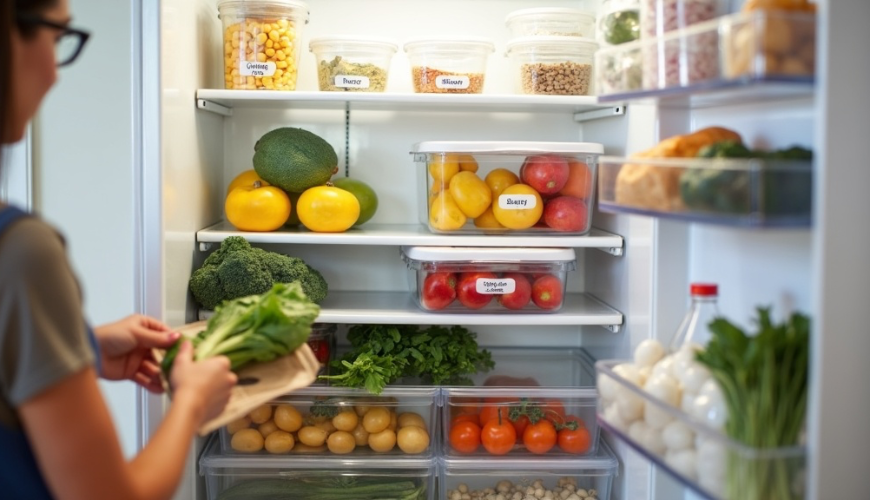
The third point is "smart" storage. How often is lettuce thrown away just because it was in plastic and got soggy? A simple solution helps: wash leaves, dry them, place them in a container, and add a paper towel or a clean cloth napkin to absorb moisture (which can then be washed). Similarly, herbs last longer in a jar with a bit of water, lightly covered with a bag—or chopped and frozen. And bread? Part in the bread box, part straight into the freezer, so it doesn't have to be "finished" just because it would harden tomorrow.
The fourth point is distinguishing "best before" and "use by" dates. Many people automatically throw food away after a date, even when it's still fine. For "best before," often using senses is enough: look, smell, taste. For broader context, explanations from European Food Safety Authority (EFSA) on food waste and safety can be useful. Of course, with meat and sensitive foods, caution is advisable – but with rice, pasta, legumes, or chocolate, reality is often more lenient than people fear.
And finally, the fifth point: cooking "for continuation." One cooking can set the stage for two more meals. Roast a tray of root vegetables? Part is a side dish, part is blended into creamy soup the next day. Cook lentils? Once with rice, another time as a spread with mustard and pickles. This is the core of what people search for under the query "eco cooking: how to cook without waste" – not perfection, but a system that saves time and resources.
The Only List Worth It: "Rescue" Combinations from Leftovers
- Wilted vegetables + broth/water + spices = creamy soup (softened with legumes, potato, or a touch of cream)
- Older bread = croutons, bread pudding, breadcrumbs, toast
- Leftover rice/potatoes/pasta = quick "whatever's around" pan (eggs, vegetables, tofu, anything)
- Overripe fruit = smoothie, compote, baked fruit, cake
- Legumes from the previous day = salad, patties, spread
Simple Tips and Recipes for Almost Zero Waste Meals
Recipes for cooking without unnecessary waste have one common trait: they are flexible. They don't require exactly 280 grams of something that must be bought in plastic but assume there is "something" at home—something that can be cooked well. That's their charm and practicality.
A great example is "fridge" risotto. The base can be rice (even from yesterday), onion, and any vegetable that needs to be used: a piece of leek, a few mushrooms, leftover pumpkin, the last handful of peas from the freezer. If there's broth at home, excellent, if not, water with a bit of miso paste or herbs will do. At the end, add what gives the dish "a finish": a spoonful of butter, a bit of cheese, a spoonful of mustard, or lemon juice. The result tastes different every time, but the principle is the same: make the most of what's already at home.
Similarly, patties and "leftover" burgers work. Cooked potatoes, leftover lentils or chickpeas, some grated vegetables, spices, and a binding agent (egg, flax "egg," a bit of flour). It becomes a meal that can be eaten hot or cold, taken along, and most importantly—uses up ingredients that would otherwise end up in the trash. And anyone who has ever wondered what to do with an open tub of sour cream will appreciate a simple dip: cream, garlic, salt, herbs, or leftover pesto.
A very "zero waste" approach is also homemade spread cuisine. Leftover roasted vegetables are blended with olive oil and lemon, leftover legumes with garlic and cumin, leftover harder cheese is grated and added to cottage cheese. A spread is an ideal way to save small amounts of ingredients—and it can easily be eaten with bread that's no longer completely fresh.
When it comes to sweets, eco cooking often surprisingly aligns with the most common home baking. Banana bread, pourable gingerbread, apple pie—these are all recipes that were also created as a response to surpluses. Overripe bananas, apples that are no longer crunchy, leftover nuts from the bottom of the bag. And if one learns to see "imperfect" fruit as an ingredient, not a problem, waste is almost automatically reduced.
Eco cooking isn't just about food. It's also about how energy and water are handled in the kitchen. A lid on a pot isn't a detail—it shortens cooking time and saves energy. A kettle for boiling water for pasta is often more economical than heating a large pot of cold water. And instead of disposable napkins, one can opt for washable towels. These are small things that collectively make a noticeable difference without requiring any heroics.
Naturally, this includes composting or a worm composter if there's room for it. Not everyone has a garden, but even in an apartment, bio-waste can be managed better than with a mixed waste bin. And when something really can't be used, it's fair to at least return it to the cycle as nutrients. After all, even the European Commission on the topic of food waste consistently emphasizes that prevention is the first step, but meaningful handling of leftovers is right behind it.
One might wonder: does a household have to be perfectly "zero waste" for it to make sense? It doesn't. In the kitchen, the approach "a bit better than yesterday" often works. One week succeeds in reducing single-use packaging, the next week planning improves, and herbs stop being thrown away, then the magic of the freezer and leftover soups are discovered. And suddenly it turns out that simple tips and recipes for almost zero waste meals aren't a special discipline, but a normal, smart way to cook and eat.
When eco cooking becomes a habit, the shopping cart changes too: more seasonal ingredients, more loose products in personal containers, fewer impulsive "deals" that then sit in the fridge without a plan. And most importantly, the relationship with food changes—it stops being taken for granted that something "didn't turn out" and so it gets thrown away. Creativity reappears in the kitchen, which isn't about complicated recipes, but about making something good from ordinary things. And that might be the most pleasant part of the entire change: waste decreases, but the joy of cooking often grows.