
# Home Knife Sharpening Without a Sharpener Step by Step
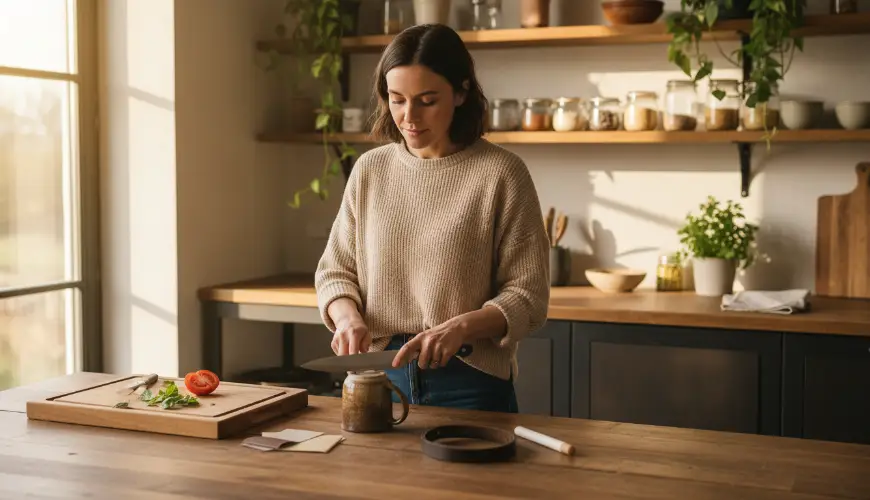
A dull knife is not only an annoying kitchen companion, but also a safety hazard. Paradoxically, the more force you have to exert when cutting, the greater the likelihood that the knife will slip and cause injury. Yet most households don't have a professional sharpener or quality whetstone on hand, making the question of how to sharpen knives at home without a sharpener a very practical dilemma. The good news is that there are several methods anyone can master without professional training or expensive equipment.
Knife sharpening is an old craft skill that has been passed down from generation to generation in various cultures. Japanese chefs devote almost ritualistic attention to knife care, while European butchers swear by the traditional honing steel. But what does an ordinary person do at home when their favourite kitchen knife fails them on a Thursday evening before cooking? They reach for whatever is at hand – and that's exactly what this article is about.
Try our natural products
-1-m.jpg)
-1-m.jpg)
-1-m.jpg)
-1-m.jpg)
-1-m.jpg)
Why knives go dull and how to tell
Before we get into the methods themselves, it's worth understanding why a knife loses its sharpness in the first place. At a microscopic level, a knife blade is formed by a very fine edge that slightly bends or chips with each use. This process is accelerated by contact with hard surfaces – ceramic tiles, glass cutting boards, or the dishwasher are literal killers for a knife's edge. According to experts from the American organisation America's Test Kitchen, a kitchen knife should be sharpened approximately once every few months depending on the intensity of use, while regular honing with a steel helps extend the interval between sharpenings.
Recognising a dull knife is easy. Simply try slicing a ripe tomato – if the knife crushes and slides across the skin rather than making a clean cut, it's time to act. Another classic test is placing the blade against the thumbnail: a sharp edge will catch and "grip", while a dull one will slide across the nail without resistance. These simple tests require no equipment and instantly reveal the condition of the knife.
Home sharpening methods that actually work
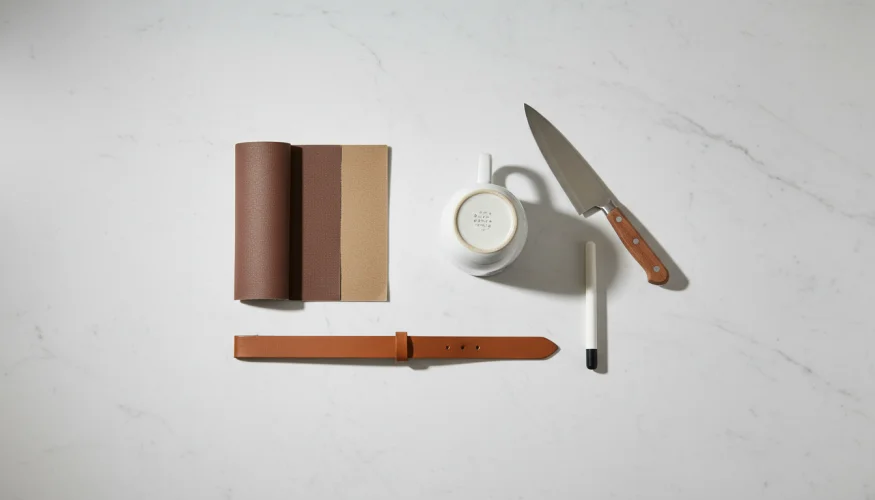
The best-known improvised sharpening method is using the bottom of a ceramic mug or plate. This technique works because the unglazed part of the ceramic is sufficiently abrasive to restore a knife's edge. Simply turn the mug upside down, place the blade at an angle of approximately 15 to 20 degrees, and draw it away from you several times across the rough edge. The motion should be smooth and even, and it's important to maintain a consistent angle throughout the sharpening process. After a few strokes on each side of the blade, the results come surprisingly quickly.
The sandpaper method follows a similar logic. If you have a piece of sandpaper left over from a home project, it can serve as an improvised sharpening surface. Place the paper on a flat surface, such as a kitchen worktop, and draw the knife across it using the same technique as with the ceramic. For better results, it's advisable to start with a coarser grit and finish with a finer one. This method is somewhat less elegant than professional sharpening, but it is perfectly adequate for restoring basic sharpness.
A lesser-known but very effective option is using a second knife. Placing two blades together and drawing them against each other at the correct angle can at least partially realign both edges. This method is more of a maintenance technique than a deep sharpening one, but it does the job in a pinch. A similar principle applies to a leather belt strap – the leather side helps polish and realign minor imperfections in the edge without removing too much material.
One of the most practical home alternatives is a ceramic rod, which, technically speaking, is a sharpening tool, but far less expensive or specialised than a professional whetstone. Ceramic rods are available in any larger kitchenware shop and are intuitive to use. The blade is drawn along the rod from heel to tip at an angle of around 20 degrees, with light and consistent pressure.
Electric knife sharpeners also deserve a special mention. While not an improvised method, they represent a very accessible and user-friendly solution for home use. Modern models handle both coarse sharpening and fine edge finishing, and the entire process takes just a few seconds. Their downside is that they remove a relatively large amount of material, which can shorten the lifespan of quality knives over time.
Consider a specific situation: Jana is preparing a Sunday lunch for the whole family and needs to chop a kilogram of onions, carrots, and chicken breasts. She reaches for her favourite kitchen knife, but after months of use it is almost completely dull. She has no professional sharpener, no whetstone. She turns an old mug upside down, twenty strokes on each side of the blade – and the knife is usable again. The whole process took less than three minutes and lunch was saved.
What to keep in mind when sharpening and how to maintain sharpness
Sharpening a knife is only half the battle. Knowing how to keep the edge sharp for as long as possible is equally important. Choosing the right cutting board plays a crucial role – a wooden or plastic board is much gentler on a knife's edge than glass or stone. Bamboo is a popular eco-friendly choice, but experts point out that its hardness is quite demanding on knife edges. When it comes to sustainability and being gentle on utensils at the same time, classic beech or acacia wood remains the best choice.
Proper knife washing is another key factor. The dishwasher is a true disaster for quality knives – high temperatures, aggressive chemicals, and contact with other items in the machine cause microscopic damage to the edge that accumulates over time. Hand washing in lukewarm water with a little washing-up liquid and immediate drying are simple habits that can extend the life of a knife by years.
As the legendary French chef Jacques Pépin once noted: "A good knife that you take care of is the best investment you'll make in the kitchen." This thought holds true regardless of whether you have a professional Japanese gyuto worth thousands, or an ordinary kitchen knife from a department store.
Proper knife storage is also important. A drawer where knives move freely and knock against each other is another source of unnecessary edge damage. A magnetic wall strip or a dedicated knife block are not only more aesthetically pleasing, but also more functional solutions. For those who prefer a drawer, special protective sleeves or inserts are available to separate and protect the knives.
As for sharpening frequency, the general recommendation is: the more intensively you use a knife, the more often it should be sharpened. For the average household that cooks every day, this means roughly one sharpening every two to three months, supplemented by regular edge realignment with a honing steel or ceramic rod approximately once a week. The British research portal Good Housekeeping Institute has repeatedly confirmed in its tests that regular maintenance extends the intervals between necessary sharpenings significantly more than any other variable.
It is worth bearing in mind that sharpening knives at home without professional equipment is not a substitute for an occasional visit to a real knife sharpener. Improvised methods can restore basic sharpness and extend the usability of a knife, but deep resharpening of a damaged or deformed blade requires skilled hands and proper tools. It is therefore sensible, once every year or two, to entrust your favourite knives to a professional – this investment will pay off in the form of knives that perform like new.
Today's kitchenware market offers a wide range of products that make knife care easier even without specialist knowledge. Quality dual-grit whetstones, simple electric sharpeners, or ceramic rods are available at reasonable prices, and purchasing them is worthwhile for any household that takes cooking at least somewhat seriously. This is not a luxury, but basic kitchen equipment that will repay itself many times over in the form of more comfortable and safer cooking.
Sharpening knives at home thus ceases to be a mystery reserved for craftsmen and professional chefs. With a little patience, the right technique, and a willingness to experiment with what is at hand, anyone can keep their knives in condition that makes cooking a pleasure rather than a struggle.