

Master Freezer Defrosting Quickly and Without Puddles
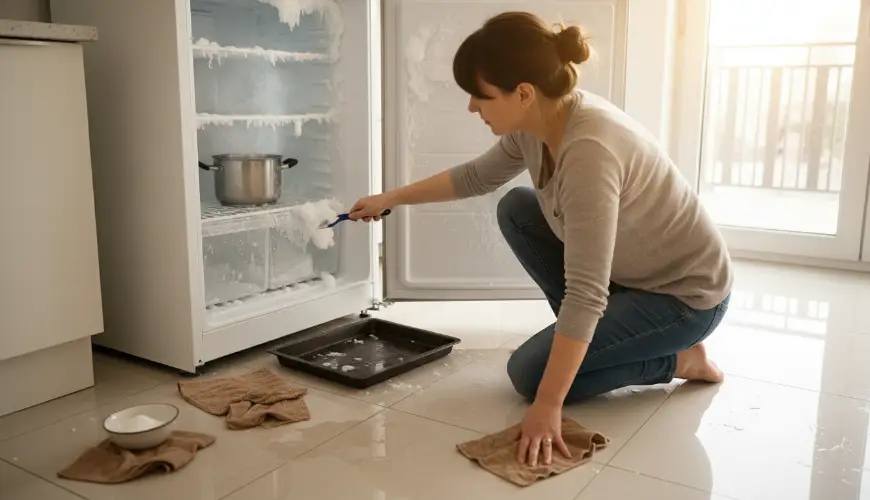
Everyone who has ever put off defrosting their freezer indefinitely knows the feeling. The layer of ice is suddenly so thick that the drawers can barely be pulled out, the appliance's power consumption increases and with it the electricity bill. And then the day comes when you finally summon the courage and get to it – only to end up with a wet floor, a pile of towels and hours of waiting. Yet defrosting a freezer doesn't have to be either time-consuming or chaotic. You just need to know the right procedure and a few tricks that will significantly speed up the whole process.
The average freezer in a Czech household should be defrosted approximately once or twice a year – or whenever the layer of ice exceeds one centimetre in thickness. The ice layer acts as an insulator that forces the compressor to work much harder. According to the ADEME energy agency, a three-centimetre layer of ice can increase the appliance's energy consumption by up to thirty percent. That's a figure worth paying attention to – especially at a time when energy prices are anything but pleasant.
Many people think that defrosting necessarily takes a whole day. In reality, the entire process can be completed in two to three hours, without half the kitchen ending up underwater. The key is preparation, choosing the right method and a little patience at the right moment.
Try our natural products
Preparation is half the battle
Before even touching the plug, it pays to think through the logistics. The food from the freezer needs to be stored somewhere – ideally in a cool bag with ice packs, in a neighbour's freezer, or simply on the balcony if the outside temperature stays below freezing. This is the moment to check what's actually in the freezer – and perhaps get rid of things that have been surviving in there for too long.
Once the food is safe, the freezer is unplugged and left open. Old towels or absorbent cloths are placed underneath and in front of it – these are the first line of defence against puddles. A very practical solution is eco-friendly absorbent cloths made from bamboo or recycled cotton, which absorb far more water than standard paper towels and don't burden the waste stream. Such a cloth can be washed and reused – an ideal choice for a household that cares about sustainability.
If the freezer is part of a combined fridge-freezer, it's worth checking whether the manufacturer supplied special drainage caps or hoses for draining defrost water. Many modern appliances have this function built in, but few people actually use it. Simply attach the hose and lead it into a bowl or directly into the sink – and the problem of puddles is largely solved right from the start.
One of the most common mistakes is trying to chip or break off ice by force. A sharp object can permanently damage the freezer's cooling system – and the repair will then cost incomparably more than an extra hour spent on natural defrosting. Appliance manufacturers therefore strongly recommend using only plastic scrapers or wooden alternatives, if anything at all.
Fast methods that actually work
Natural defrosting at room temperature is the safest but also the slowest method. For those who need to get their freezer back up and running as quickly as possible, there are several tried-and-tested ways to speed up the process – without damaging the appliance or turning the kitchen into a lake.
Hot water in containers is one of the most effective methods. One or two pots of hot (not boiling) water are placed inside the freezer, the door is closed and left to work for ten to fifteen minutes. The steam inside significantly speeds up the melting of ice without any need for mechanical removal. Once the door is opened, the ice can be carefully loosened by hand or with a plastic scraper – it comes away in whole pieces, making clean-up easy.
A handheld steam cleaner works similarly, if the household has one. A jet of steam directed straight at the ice layer will dissolve it within minutes. This method is quick, hygienic and gentle on the freezer's surface. The steam cleaner can also be used for other cleaning tasks – whether disinfecting bathroom grout or cleaning the hob.
A lesser-known but surprisingly effective method is using a fan. If a desk fan is placed in front of the open freezer blowing warm room air inside, the air circulation significantly reduces defrosting time. It's not a dramatic reduction, but combined with other methods it can save a third of the total time.
As the British consumer magazine Which? noted: "A combination of warm steam and good air circulation is the most effective way to reduce defrosting time without risking damage to the appliance." This simple advice holds true regardless of how old or modern the freezer in the household is.
Consider the situation of Markéta from Brno, who owns an older combined fridge-freezer and had been putting off defrosting it all winter. When she finally took the plunge, she used a combination of a pot of hot water and a fan – and the entire freezer was clean and plugged back in within just under two hours. She also discovered that two packets of meat more than a year old were sitting at the back of the freezer. Defrosting thus became an opportunity to take stock of supplies as well.
How to prevent puddles and keep things tidy
The battle with water is often the worst part of the whole process for most people. The ice melts, water runs down and before you know it the floor is wet. There are, however, several ways to minimise this drama.
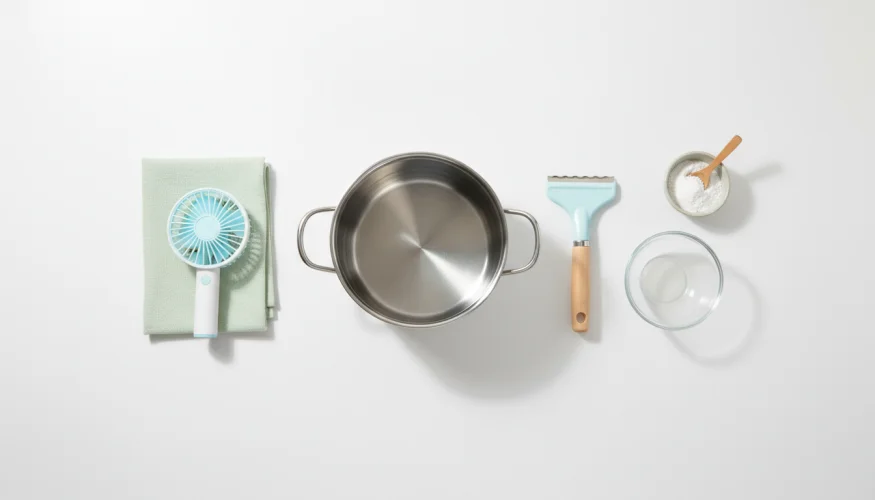
The foundation is a properly laid absorbent layer. Old towels or terry towelling sheets are folded into several layers and placed directly under the freezer and inside on the bottom. If the freezer has a drain hole, simply place a bowl or shallow tray underneath it. Some households use an old baking tray for this purpose – it holds a surprising amount of water and is easy to pour into the sink.
For those looking for more eco-friendly alternatives to a pile of towels, absorbent mats made from natural materials – such as hemp or organic cotton – are an excellent choice. These materials are not only highly absorbent but also durable and easy to wash. Compared to single-use paper products, this is a significantly more sustainable approach that also saves money in the long run.
Another practical trick is progressively removing loosened ice using a plastic spatula or scraper. As soon as large chunks of ice come free, it's better to remove them immediately and place them in the sink or a bucket rather than waiting for them to melt on the bottom of the freezer. This significantly reduces the total amount of water that needs to be dealt with.
Once defrosting is complete, the cleaning phase begins – and this is just as important as the defrosting itself. The interior walls of the freezer should be wiped down with a solution of water and baking soda (approximately one tablespoon per litre of water), which removes any dirt and odours without the use of harsh chemicals. Baking soda is a classic natural cleaning agent that works reliably, is inexpensive and doesn't burden the environment.
Before the freezer is plugged back in, it is essential to thoroughly dry all interior surfaces. Any residual moisture would immediately turn into a new layer of ice – and all the work would have been in vain. A dry cloth or microfibre towel will do this job in just a few minutes.
A question worth considering: why does ice form in the freezer so quickly in the first place? The answer is actually simple. Every time the freezer door is opened, warm, moist air enters. This immediately condenses and freezes on the walls. The more often the freezer is opened and the longer the door is left open, the faster the ice layer grows. A good preventive measure is therefore to minimise the time the door is left open and always check that it has closed properly.
Modern freezers with No Frost technology solve this problem automatically – they regularly remove moisture and prevent ice from forming. However, if the household has an older appliance without this feature, regular defrosting is simply part of caring for it. And with a little preparation, it's something that doesn't even take a whole morning.
Defrosting a freezer is one of those household chores that is easy once you know how – and unnecessarily unpleasant when tackled without a plan. With absorbent mats at hand, a pot of hot water and a plastic scraper, what was once an unwelcome obligation becomes a routine task that extends the freezer's lifespan, reduces energy consumption and saves the household money. And that is certainly worth a few hours of work once a year.