
# Get Rid of Blood Stains on Laundry and Mattresses Easily
Blood is one of the most treacherous stains we encounter in the home. Whether it's a scratched finger, menstruation, or an unexpected minor injury, the result is always the same – a dark stain on a sheet or mattress that seems almost impossible to wash out. Yet the correct approach is surprisingly simple, if you know what you're doing and – crucially – act quickly.
Blood stains are unique in that they contain proteins, specifically haemoglobin, which binds very quickly to fabric fibres upon contact with heat. This is why the first and most important rule, which applies without exception, is: never use hot water. Hot water causes the protein in the fabric to literally "cook" and the stain becomes permanent. Cold water, on the other hand, does not coagulate the protein and allows it to be gradually washed out of the fibre.
Try our natural products
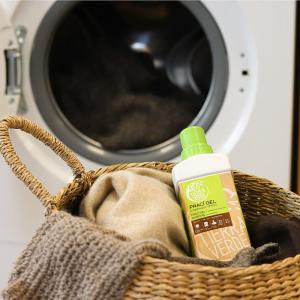
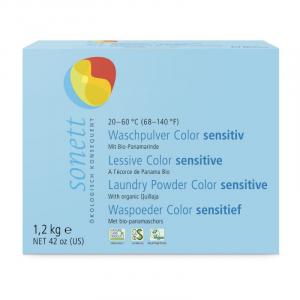

Blood stains on laundry – what actually works
When it comes to laundry – sheets, pillowcases, pyjamas or underwear – the situation is relatively favourable, because textiles can be washed in a machine and are easier to treat. Nevertheless, there are significant differences in how to approach stains depending on how fresh they are.
A fresh stain is essentially an easy opponent. Simply rinse the area immediately under cold running water and gently rub with your fingers or a soft brush. Much of the blood will come out on its own. It is then advisable to soak the laundry in cold water with a tablespoon of salt or baking soda added and leave it to work for at least thirty minutes. Salt helps break down the protein structure of the stain and baking soda further neutralises it. After soaking, the laundry can be placed in the washing machine on a cold programme.
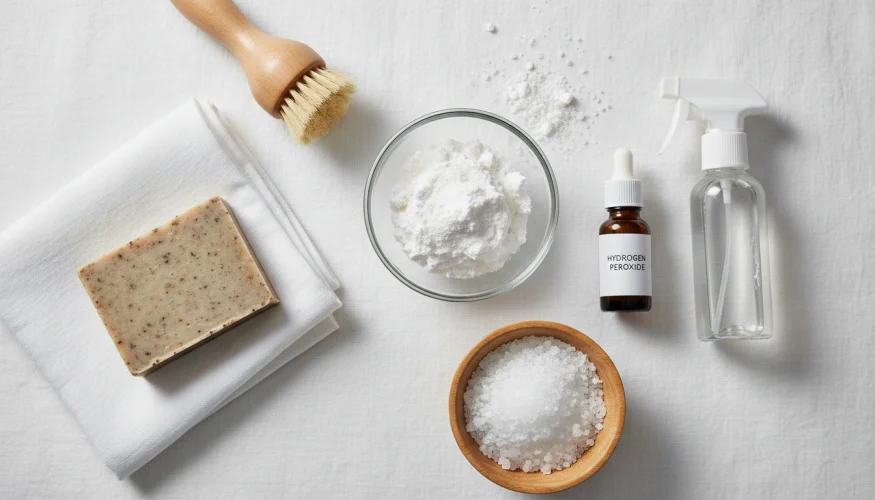
A different situation arises when the stain dries. Dried blood is significantly more stubborn and requires a little more patience. First, the stain must be "revived" – moistened with cold water and left to soften. Then more effective agents come into play. One of the most popular home methods is a paste made from baking soda and cold water, which is applied directly to the stain, left to work for twenty minutes, then scraped off and rinsed. Hydrogen peroxide (3% solution), which can be purchased at a pharmacy, works similarly – it is carefully dropped onto the stain, where it begins to foam and break down the haemoglobin. With coloured fabrics, however, caution is needed, as peroxide can cause the fabric to lighten. It is always recommended to test on an inconspicuous area first.
Another popular option is cold salted water combined with a little washing-up liquid or other detergent. The detergent helps break down the fatty components that may be part of a biological stain, and together with salt forms a fairly effective cleaning duo. After treatment, the laundry is washed normally on a cold programme – 30°C is recommended as the maximum temperature to avoid heat-setting any remaining traces of the stain.
It is also important to mention what should definitely not be done. Drying in a tumble dryer or ironing laundry with a stain that has not yet been completely washed out is one of the most common mistakes. Heat will permanently set the stain. Similarly, vigorous rubbing is inadvisable, as it can damage the fabric fibres and merely spread the stain over a larger area.
For those who prefer ecological and natural solutions, there are excellent alternatives to chemical cleaning agents. Enzyme-based cleaners made from natural enzymes are specially designed to break down protein stains – they work on exactly the principle that is ideal for blood. These products are environmentally friendly, biodegradable, and yet very effective. Combined with an eco-friendly washing powder free from phosphates and synthetic fragrances, excellent results can be achieved without aggressive chemicals.
Blood stains on a mattress – a different challenge, a different approach
A mattress is an entirely different story in material terms. It cannot be put in a washing machine, it is bulky and absorbs liquids deep into its core. A blood stain on a mattress is therefore a significantly more complex problem and requires a different approach – but it is by no means hopeless.
The basic principle remains the same: cold water, no heat, no aggressive scrubbing. First, any excess liquid must be absorbed as quickly as possible using a clean cloth or paper towels – working from the outside inward so the stain does not spread. Then comes the cleaning phase.
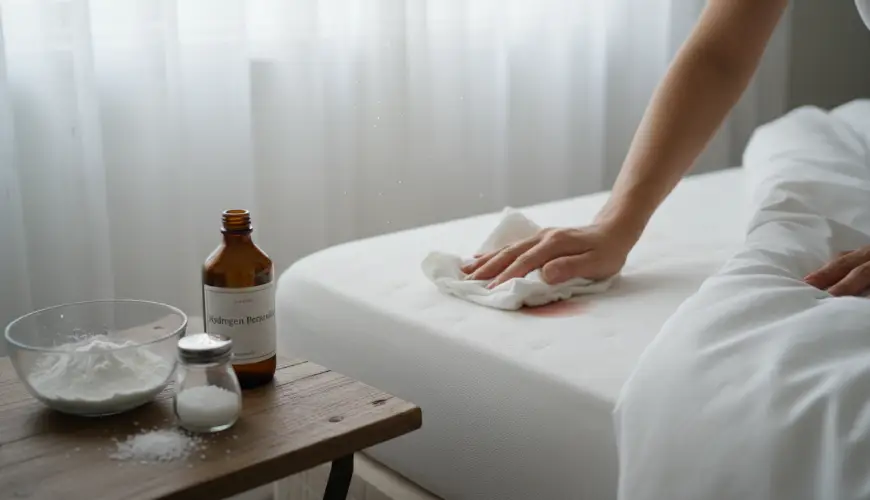
One of the most effective methods for mattresses is a paste made from baking soda and cold water, or a combination of baking soda with a little washing-up liquid and hydrogen peroxide. This mixture is applied to the stain, left to work for thirty minutes to an hour, and then carefully wiped off with a damp cloth. The whole process can be repeated if the stain does not disappear completely the first time. The mattress should not be soaked too much in the process – the less moisture that penetrates deep inside, the better, because a damp mattress is an ideal environment for the growth of mould and dust mites.
Cold salt water applied to the stain using a spray bottle or sponge also works very well. Salt helps draw the biological material to the surface, from where it can be removed more easily. After application, it is left to work for a while and then gently wiped with a clean cloth.
A dried stain on a mattress is without doubt the greatest challenge. If the blood has dried, it must first be carefully softened with a minimal amount of cold water, left until it loosens, and only then should a cleaning agent be applied. Enzyme cleaners are truly the gold standard in this case – their enzymes break down proteins even in a dried state and are safe for most types of mattress covers. As noted by the American Sleep Foundation, regular mattress care, including prompt stain treatment, significantly extends its lifespan and contributes to sleep hygiene.
After cleaning, it is essential to let the mattress dry thoroughly – ideally in the open air, preferably by an open window or outside in the sun. Sunlight also has natural disinfectant properties thanks to UV radiation, which helps eliminate any bacteria. If the mattress cannot go outside, a fan can be used, or it can be carefully dried with a hairdryer set to cool air.
To prevent such situations from occurring as often as possible, or at least to make their consequences easier to manage, investing in a waterproof mattress protector is one of the most practical decisions you can make for your home. Modern protectors are made from breathable materials, are comfortable and capture all moisture before it reaches the mattress itself. Then you simply remove the protector, wash it, and the mattress stays clean.
As Antoine de Saint-Exupéry said: "Perfection is achieved not when there is nothing more to add, but when there is nothing left to take away." This principle applies to home care as well – the best solutions are those that are simple, natural and preventive.
Consider a specific situation: Jana, a mother of two children, woke up one morning to find that her ten-year-old son had had a nosebleed during the night. The stain on the mattress was large and seemingly hopeless. Jana, however, let common sense guide her – she did not reach for hot water or an aggressive cleaner. Instead, she took baking soda from the kitchen, added a little cold water and washing-up liquid, applied the paste to the stain and left it to work for an hour. The result? The stain disappeared almost without a trace. A simple procedure, no chemicals, no additional costs.
This example shows that knowing the correct procedure is worth more than an expensive cleaning product. Nature offers enough effective tools – baking soda, salt, hydrogen peroxide and natural enzyme-based products are sufficient for the vast majority of situations we encounter in the home.
Caring for the home in an ecological way does not mean compromising on effectiveness. On the contrary – natural approaches are gentle on fabric, on the mattress and on the environment, and they work. The key is always to act quickly, use cold water and reach for the right product. Blood stains on laundry or a mattress are not the end of the world – they are simply challenges that, with a little patience and the right knowledge, can be managed without stress and without unnecessary chemicals.