

Clean mattress without scrubbing and without chemicals

Most people regularly change their bedding, vacuum the carpet, and polish kitchen appliances. But the mattress? It tends to be overlooked year after year, hidden beneath the sheet, quietly accumulating everything that a night's rest brings. And yet it is one of the most important pieces of furniture in the entire home – the place where a person spends approximately one third of their life. The method of cleaning a mattress that is most often forgotten is not particularly complicated. It's just rarely talked about.
Over ten years of use, the average mattress can absorb up to ten kilograms of dead skin cells, sweat, dust mites, and their faeces. Does that sound unpleasant? Perhaps that is precisely why people prefer not to think about it. Yet ignoring the condition of a mattress has a direct impact on sleep quality, skin health, and the respiratory tract. Allergists warn that dust mites, which multiply in mattresses, are among the most common triggers of allergies and asthma in the home environment – as confirmed, for example, by the American Academy of Allergy, Asthma and Immunology.
Try our natural products


What contaminates a mattress and why changing the bedding alone is not enough
Bedding catches some of the dirt, but far from all of it. Sweat penetrates through the sheet, skin cells work their way into the fibres of the mattress, and the warmth of the human body creates an ideal environment for microorganisms to multiply. Add to this pets that share a bed with their owners, the occasional breakfast in bed, or illnesses during which a person spends entire days lying down – and you have a rather complex hygiene problem.
Changing the bedding once a week is, of course, the basic minimum, but the mattress itself needs deeper care. The problem is that most people do not know how to go about it properly. They either limit themselves to a superficial vacuum, or they reach for aggressive chemical products that can damage the material. And then there is a third group – those who never clean their mattress at all, simply because they do not know where to begin.
A telling example from everyday life: Jana, a thirty-year-old teacher from Brno, suffered for several months from morning headaches and a blocked nose. She visited a doctor, ruled out various causes, and it eventually emerged that the problem lay in dust mites nesting in a seven-year-old mattress that had never been thoroughly cleaned. After the mattress was properly treated and an anti-mite cover was fitted, her symptoms disappeared within two weeks. Her story is not exceptional – it plays out in thousands of households.
The forgotten method of cleaning a mattress that actually works
There is a method that combines natural ingredients with a simple procedure, yet is almost never mentioned in connection with mattress care. It involves no industrial product or expensive professional service. The key is bicarbonate of soda, essential oils, and patience.
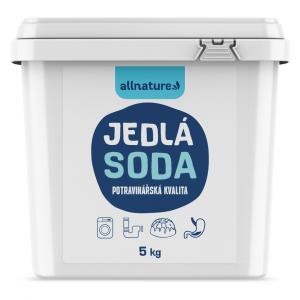
Bicarbonate of soda is a natural absorbent that can neutralise odours, absorb residual moisture, and disrupt the environment in which dust mites thrive. It has been used in households for centuries for a wide variety of purposes, yet its potential for cleaning mattresses remains surprisingly little known. And yet it is one of the gentlest and most effective ways to freshen a mattress without the use of chemicals.
The procedure is as follows: first, all bedding must be removed from the mattress and it should be thoroughly vacuumed – ideally with a machine fitted with a HEPA filter, which captures even the finest particles. A thin, even layer of bicarbonate of soda is then spread across the entire surface, optionally mixed with a few drops of lavender or tea tree essential oil, both of which have natural antimicrobial properties. The mixture is left to work for a minimum of two hours, but ideally for an entire day. The longer the soda is left to act, the more moisture and odours it absorbs. Finally, everything is thoroughly vacuumed away.
This procedure should be repeated at least twice a year – in spring and autumn, when bed linen and duvets are changed. In households with allergy sufferers or pets, cleaning the mattress every three months is recommended.
Alongside bicarbonate of soda, there is another forgotten ally – sunlight. UV radiation naturally destroys bacteria and mould while also helping to air the mattress. Where technically feasible, it is ideal to take the mattress outside occasionally and leave it in direct sunlight for several hours. This was common practice in households decades ago, but today almost nobody does it.
Another overlooked step is treating stains with enzymatic cleaning products. Unlike conventional cleaning sprays, enzymatic preparations break down organic matter – blood, sweat, urine – at a molecular level, rather than simply masking it or spreading it around. Eco-friendly variants are available on the market that are safe for both the mattress material and the human body. One basic rule applies when dealing with stains: never saturate the mattress with too much liquid, as moisture penetrating deep into the material can cause mould to develop, which is then virtually impossible to remove.
As leading British sleep hygiene expert Matthew Walker once remarked: "The quality of your sleep depends not only on how many hours you spend in bed, but also on the environment in which you sleep." A clean mattress is the cornerstone of that environment.
How to incorporate mattress care into a regular domestic routine
Knowing that a mattress needs care is one thing. Actually cleaning it regularly is another. Most people encounter the same obstacle – time and motivation. Yet a small shift in approach to household chores is all it takes for mattress cleaning to become a natural part of seasonal tidying.
A dust mite-proof cover is a practical aid, forming a physical barrier between the body and the mattress. Good-quality covers are breathable, removable, and washable at high temperatures – dust mites do not survive washing above 60 °C. Investing in a good cover significantly extends the time between deep cleans and also protects the mattress material itself from damage.
Regularly rotating the mattress is also important. Manufacturers recommend rotating the mattress every six months – alternating end-to-end and side-to-side – so that it wears evenly and does not develop hollows. Each time it is rotated is an ideal opportunity to give it a quick vacuum and, if needed, apply bicarbonate of soda. In this way, cleaning becomes an automatic part of mattress care rather than an exceptional event.
Ventilating the bedroom also plays a significant role. Humidity encourages the proliferation of dust mites and mould not only in the mattress but throughout the interior. Brief, intensive airing each morning – ideally ten to fifteen minutes with an open window – helps maintain an optimal microclimate in the room. Indoor air quality experts recommend keeping relative humidity in the bedroom between 40 and 50 percent, as noted, for example, by the World Health Organization in its guidelines for healthy housing.
It is also worth mentioning the ecological dimension of the matter. Mattresses are among the largest and most problematic waste items from the home – they are difficult to recycle and their disposal in landfill burdens the environment. Extending the life of a mattress through regular care is therefore not only a hygienic but also an ecological decision. A well-maintained mattress can remain fully functional for eight to ten years, whereas a neglected one may deteriorate in half that time.
For those seeking a sustainable approach to selecting new household care products, natural cleaning products based on plant-derived ingredients are an interesting alternative – equally effective as conventional chemicals, but gentler on the environment and on the materials to which they are applied. Such products can be found, for example, in shops focused on eco-friendly household goods, where both enzymatic sprays and natural fragrance additives suitable for homemade cleaning mixtures are available.
It is quite remarkable how much care we devote to surfaces we can see – floors, windows, kitchen worktops – and how little attention is paid to the place where we spend so many hours. Cleaning a mattress need not be complicated or expensive. Bicarbonate of soda, sunlight, an enzymatic stain treatment, and a dust mite-proof cover – these are tools available to everyone and whose effectiveness is well documented. All that is needed is to overcome the habit of neglect and give the mattress the same care we devote to the rest of the home.