
# What Belongs and Doesn't Belong in the Dryer ## ✅ What CAN go in the dryer - **Cotton** – t-shir
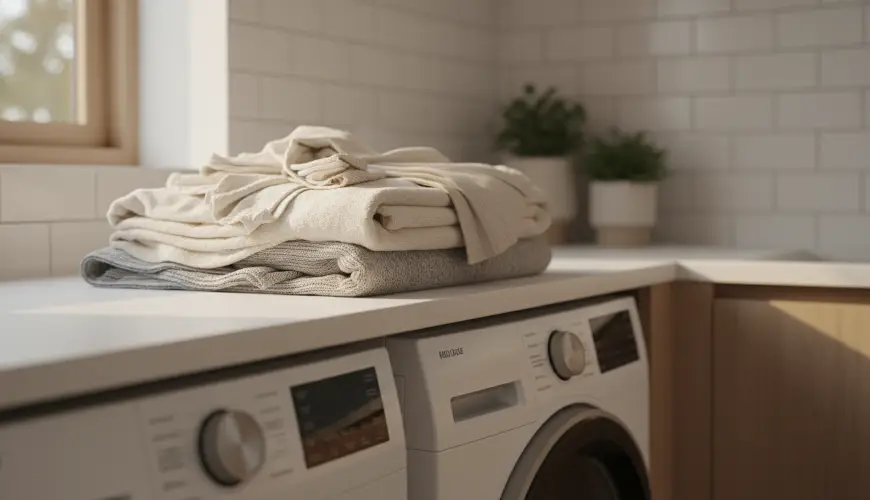
A clothes dryer is one of those appliances you try once and can never imagine living without. No hanging wet laundry all over the flat, no waiting for a jumper to finally dry on the balcony – you simply load the laundry, press a button, and an hour later you have dry, fluffy items ready to put away in the wardrobe. But that apparent simplicity can be deceptive. Many people toss everything that comes out of the washing machine straight into the dryer, without paying attention to the symbols on the care labels or thinking about the fabric composition of their clothes. The result? Shrunken jumpers, misshapen bras, damaged sportswear, or in worse cases, a ruined appliance.
The good news is that understanding what belongs in the dryer and what definitely does not is no great science. You just need to know the basic rules and learn to read the symbols on care labels, which are internationally standardised. Once you memorise them, you will recognise them automatically – just as you can tell at a glance when something needs ironing.
Try our natural products
Care label symbols are your best guide
Every item of clothing is legally required to contain information about its composition and care instructions. This information is expressed using internationally recognised symbols, an overview of which can be found on the website of GINETEX, the international association for textile care labelling. The symbol for a tumble dryer looks like a square with a circle inside – roughly resembling the drum of a dryer seen from the front. If this symbol is crossed out, the matter is clear: that item should not go in the dryer. If the symbol contains one dot in the centre of the circle, low-temperature drying is recommended. Two dots indicate that a higher temperature can be used.
The problem arises when people ignore labels or cut them out after the first wash because they are scratchy. That is understandable, but before you do so, it is worth at least photographing the symbols or writing them down. Losing information about the correct care method can quite literally cost a garment its shape.
Take a specific example: Jana bought a new woollen jumper for two thousand crowns. After wearing it for the first time, she put it in the washing machine on a delicate cycle – so far, so good. But then she tossed it into the dryer without a second thought, along with the rest of the laundry. The result? The jumper shrank to a size suitable for a ten-year-old. Wool is one of those materials that is extremely sensitive to heat and mechanical stress.
What belongs in the dryer and what has no place in it
Cotton laundry, bed linen, terry towelling, cotton T-shirts, and jeans – the dryer handles all of these without any trouble, and the result is pleasantly fluffy and soft. Terry towelling is practically at home in the dryer, because the heat and drum movement restore the volume it would lose when air-dried. Synthetic materials such as polyester or nylon also fare well in the dryer, provided a lower temperature is used – these fabrics are resistant to water, but they respond poorly to high heat and can become deformed or lose their shape.
On the other side are materials that should never go in the dryer under any circumstances. Wool and cashmere top the list – they shrink and felt, even on a gentle programme. Silk is another material that responds very badly to heat; it loses its lustre, can shrink, and its delicate fibres become damaged. Linen is a natural material like cotton, but it reacts differently to heat – in the dryer it creases excessively and can shrink. If you have linen clothing or bed linen, it is better to air-dry it and smooth it out while still slightly damp.
Sports clothing with functional properties forms a special category – materials such as Gore-Tex, Coolmax, or various types of membranes are designed to wick away perspiration and regulate body temperature. High heat in the dryer can permanently damage these technical properties, meaning an expensive trekking jacket or cycling jersey will no longer serve its purpose. The same applies to swimwear and underwear with underwiring or shaping inserts – mechanical stress and heat deform the elastic parts and damage the structure of the material.
We must not forget items that could actually cause danger in the dryer. Clothing contaminated with oil, petrol, or other flammable substances should not be tumble-dried until it has been thoroughly washed – residues of these substances can ignite at high temperatures. The U.S. Consumer Product Safety Commission (CPSC) repeatedly warns of the risk of fires caused by improper use of dryers. Similarly, be cautious with rubber or latex elements on clothing – these break down under the influence of heat.
A useful overview of the basic rules might look like this:
- Suitable for the dryer: cotton, terry towelling, polyester, nylon, blended fabrics (with reference to the care label symbol)
- Not suitable for the dryer: wool, cashmere, silk, linen, functional sportswear, underwired bras, garments with flammable stains, rubber and latex components, garments with embroidery or bead embellishments
How to extend the life of your clothing through proper drying
Knowing what belongs in the dryer and what does not is only the first step. It is equally important to know how to use the dryer correctly so that laundry lasts as long as possible. One of the most common mistakes is overfilling the drum. When the dryer is packed to capacity, the laundry does not dry evenly, it takes longer, and items crease unnecessarily. The ideal is to fill the drum to roughly two thirds of its capacity.
Temperature is another factor. Most modern dryers offer several programmes – from delicate drying at low temperatures to intensive drying for workwear or bed linen. Lower temperatures are generally gentler on fabric fibres, even if drying takes a little longer. If you are unsure which programme to choose, the rule of "less rather than more" applies almost universally.
Dryer balls are a very practical aid – whether wool or plastic. Placed in the drum along with the laundry, they improve air circulation, shorten drying time, and help keep laundry fluffy. Wool dryer balls are a popular eco-friendly alternative to single-use dryer sheets, which contain synthetic fragrances and chemical softeners. As writer and environmental activist Michael Pollan puts it: "Every small decision we make in everyday life has its impact on the world around us." And the choice between a single-use product and a reusable alternative is precisely that kind of decision.
Do not forget about regular maintenance of the dryer itself. The lint filter should be cleaned after every cycle – a clogged filter not only prolongs drying time and increases energy consumption, but in extreme cases can cause the appliance to overheat. Dryer manufacturers such as Bosch, Miele, and Siemens also recommend regular cleaning of the condenser and checking the exhaust hose on vented models.
If you have delicate items of clothing you want to protect but still need to dry quickly, a mesh laundry bag can help. Delicate laundry placed inside is protected from direct mechanical stress in the drum. This method is particularly appreciated by owners of fine underwear or lightweight blouses made from synthetic materials, which might otherwise take on an unwanted shape.
Caring for clothing properly is not merely a matter of aesthetics or being careful with money. It is also a question of sustainability. The textile industry is globally one of the largest polluters, and extending the life of every garment is one of the simplest ways to reduce your own ecological footprint. When a jumper or shirt lasts two years longer simply because you dry it correctly, you do not need to buy a replacement – and that means fewer resources consumed, less waste, and fewer emissions associated with the production of new textiles. According to data from the Ellen MacArthur Foundation, which focuses on the circular economy, the average garment is worn just seven to ten times before ending up as waste. Increasing that number is not complicated – it simply takes a few seconds to check the care label and select the right dryer programme.
A dryer is an excellent helper that makes everyday household care easier. But like any other tool, it works best when you know how to use it correctly. A few minutes spent understanding care label symbols and the basic rules of drying pays off many times over – in the form of clothing that retains its shape, colour, and functionality for far longer.