

Besan chilla as an egg-free chickpea omelette in 10 minutes
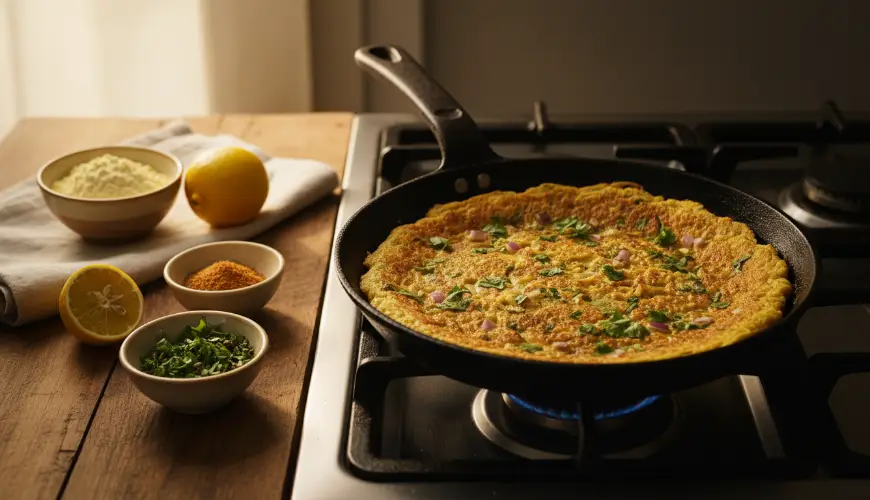
There are dishes that cross cultural and culinary boundaries so naturally that you barely notice when an exotic specialty becomes an everyday staple. The eggless chickpea omelette – known in Indian tradition as besan chilla – is exactly such a dish. Understated, quick, nutritious and surprisingly versatile. And yet most people in Czech households still don't know it, or only know it from vegan blogs and social media.
And yet this is a recipe centuries old. On the Indian subcontinent, besan chilla is one of the most common breakfast dishes, prepared by mothers for their children just as naturally as eggs are fried in butter here. The base is chickpea flour – besan – mixed with water, spices and various additions according to taste and ingredient availability. The result is then cooked in a pan similarly to a pancake or omelette, which is where the name it has earned in the English-speaking world comes from: chickpea omelette.
Try our natural products

What a chickpea omelette without eggs actually is and why it's so special
To be clear from the outset: besan chilla contains no eggs, even though its appearance and texture closely resemble eggs. This illusion is created by the properties of chickpea flour itself. Chickpeas are a legume rich in protein and fibre, and when their flour is mixed with water and exposed to heat, it behaves similarly to egg protein – it coagulates, firms up and creates an elastic, slightly springy structure. The resulting omelette holds its shape, can be folded, filled and cut without falling apart.
It is precisely this property that makes it a popular alternative for vegans, people with egg allergies or those trying to reduce animal products for ethical or ecological reasons. But it would be a mistake to limit besan chilla to only these groups. It is simply a tasty dish that deserves a place in the kitchen of anyone who enjoys quick, nutritious and adaptable recipes.
From a nutritional standpoint, chickpea flour is a true treasure trove. It contains approximately 20 grams of protein per 100 grams, is naturally gluten-free and has a low glycaemic index, meaning that eating it doesn't cause sharp fluctuations in blood sugar levels. According to data published by, for example, the Harvard T.H. Chan School of Public Health, chickpeas are generally among the most beneficial legumes for human health, helping to lower cholesterol levels, supporting digestion and contributing to a feeling of fullness.
It is also important to mention the ecological dimension. Growing chickpeas is among the most environmentally friendly methods of protein production. Legumes in general fix nitrogen in the soil, require less water than cereals and their cultivation does not require as much chemical fertiliser. Choosing chickpea flour instead of eggs or meat is therefore not just a matter of personal health, but also of a conscious approach to the planet.
Consider a specific example. Jana, a thirty-year-old graphic designer from Brno, started making chickpea omelettes after discovering that her daughter had an allergy to egg whites. At first she was sceptical – how could something without eggs taste like an omelette? After the first attempt, however, she admitted she wouldn't have noticed the difference had she not known what had been put in front of her. Today, besan chilla is a regular part of breakfasts and quick dinners in their household.
How besan chilla is prepared and what makes it so versatile
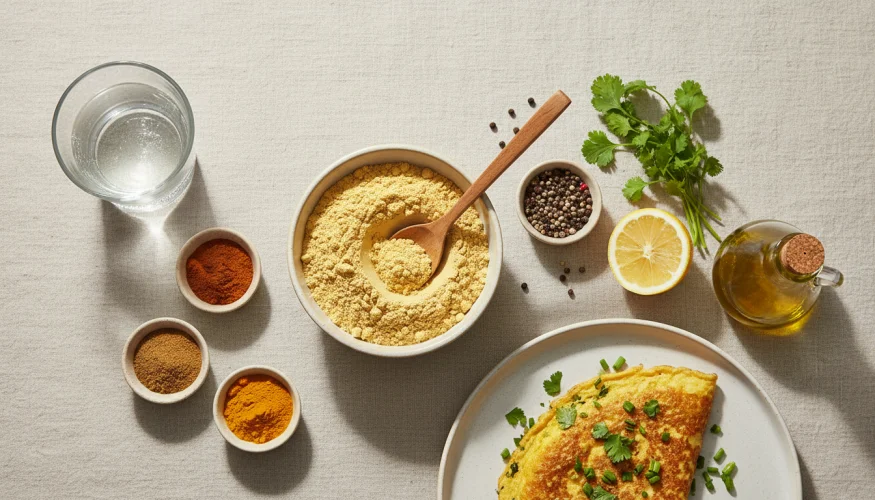
The basic recipe is surprisingly simple. Chickpea flour is mixed with water in a ratio of approximately 1:1 to 1:1.5 depending on the desired batter consistency, then salt, ground cumin, turmeric and optionally a little freshly ground pepper are added. The batter is left to rest briefly and then poured onto a heated pan lightly greased with oil. After a few minutes, when the edges begin to set and the surface looks matte, the omelette is flipped and cooked on the other side.
But the possibilities don't end there – quite the opposite. Practically anything can be mixed into the basic batter: finely chopped onion, fresh coriander, green chilli, grated ginger, tomatoes, spinach, carrot or pepper. Some add a spoonful of tahini or coconut milk for a creamier flavour, while others experiment with different spices – from garam masala and curry to smoked paprika. Every variation is different, every one is good.
In Indian cuisine, besan chilla is most commonly served with coriander and mint chutney, with yoghurt or with chopped vegetables. In a European context, however, it also pairs excellently with avocado, hummus, fresh herbs or simply with a squeeze of lemon juice and olive oil. It can be made as small mini-omelettes – ideal for children or as finger food at a party – or as a larger pancake into which a filling is wrapped similarly to a wrap.
An interesting variation that has gained popularity outside India in recent years is the so-called moong dal chilla – a version made from mung bean flour. It has an even more delicate flavour and lighter colour, but the preparation method is identical. For those who want to experiment, this variation can be a pleasant change.
As Indian chef and writer Madhur Jaffrey said: "Indian cooking is not about complexity. It's about understanding flavours and allowing simple ingredients to speak." Besan chilla perfectly embodies this philosophy – it is a dish where simple chickpea flour is given the space to show what it's capable of.
It is worth noting that preparation takes no more than fifteen minutes from mixing the batter to the finished dish on the plate. This makes it an ideal choice for a busy morning when there's no time to stand at the stove for an hour, yet you don't want to reach for industrially processed foods full of additives. A chickpea omelette is real food, prepared from a single basic ingredient, seasoned to your own taste.
Where to find chickpea flour? It is usually available in regular supermarkets in the gluten-free section or on the legume shelves. Increasingly, it is also offered by specialist health food shops and e-shops focused on sustainable living. Good quality chickpea flour should have a fine golden colour and a pleasant nutty aroma – these are signs of freshness and good quality.
For those who want to go even further and have maximum control over their ingredients, it is possible to prepare chickpea flour at home: all you need is dried chickpeas, which are ground in a blender or grain mill into a fine powder. The result is comparable to store-bought flour, while you know exactly what is in your flour – no added starch, no stabilisers.
The eggless chickpea omelette is also an example of how traditional dishes from other cultures can naturally enrich our everyday eating, without us having to dramatically change our habits or invest in expensive ingredients. Besan chilla requires no special equipment, no rare spices that need to be ordered from abroad and no culinary skills beyond ordinary cooking. Yet it brings something new – a different perspective on what an omelette can be, what breakfast can be and what nutritious and sustainable food even means.
At a time when more and more people are interested in the origin of their food, its impact on health and the planet, and when demand is growing for simple recipes made from natural ingredients, it makes sense that besan chilla is having its global moment. This is not a trend that will come and go. It is a dish with a deep tradition, excellent nutritional properties and endless versatility – precisely the kind of combination that deserves lasting popularity.
Next time you're thinking about what to make for breakfast or what to give the children for a quick dinner, try reaching for chickpea flour instead of the usual eggs. You may discover, like Jana from Brno and millions of people around the world, that what you've been looking for – quick, nutritious, tasty and sustainable food – has been literally within your reach all along.