
We will advise you on how to manage pregnancy when you have a toddler at home
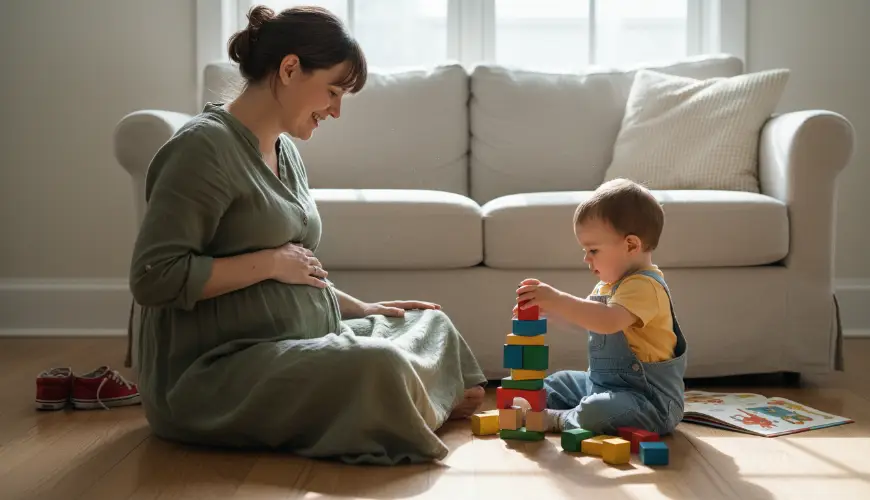
You're expecting your second baby and you have a toddler at home who doesn't quite understand what's happening yet? You're not alone. Thousands of Czech families go through exactly this situation every year – and even though it looks like an unsolvable puzzle at first, most of them manage it better than they expected. Pregnancy with a toddler by your side is a challenge that will test your organisation, patience and physical fitness, but it also brings moments that are priceless.
The key isn't to be a perfect mother or father who has everything under control. The key is learning to accept help, adjusting your pace and protecting your health – physical and mental – at a time when the demands on you are truly great.
Try our natural products





Fatigue as an everyday reality
The first trimester of a second pregnancy is often surprisingly more demanding for many women than the first one. And the reason is simple: back then, they could lie down whenever they wanted, take an afternoon nap or simply rest. But now there's a two-year-old living hurricane who needs lunch, wants to play, demands attention and definitely won't understand why mum is lying on the sofa and doesn't feel like playing with building blocks.
Fatigue in pregnancy is not laziness – it is a physiological phenomenon that the body experiences completely naturally. As the Czech Gynaecological and Obstetric Society points out, in the first weeks of pregnancy the body works at full capacity to create the placenta and manage hormonal changes that are extremely energy-intensive. Add to that caring for an active toddler and the result is clear – exhaustion that can't simply be "slept off".
What can you do about it? First and foremost, it's important to stop comparing yourself to how things were the first time. Every pregnancy is different and every life situation is different. If at all possible, use the time when the toddler is sleeping for your own rest – even if it seems like you "should" be doing something productive. Rest is the number one useful thing in pregnancy.
A well-thought-out daily routine can also be a practical help. Families who have been through similar situations often describe how establishing a more structured daily rhythm helped them – not just for the toddler, but for themselves too. When a child knows that after lunch it's time for quiet activities or sleep, the mother or father can take a breather. It doesn't sound like a big deal, but in everyday reality it's a lifesaver.
An interesting strategy is described by Markéta, a mother from Central Bohemia who was expecting her second child when her son was just under two years old: "I started watching short cartoons or audiobooks with him, which we had never used before. At first I felt guilty, but then I realised that a rested mum is a better mum than an exhausted mum trying to be perfect." This experience is very typical and shows how important it is to let go of unnecessary feelings of guilt.
How to prepare a toddler for the arrival of a sibling
One of the biggest concerns for parents in this situation is the question of how the toddler will accept the arrival of a sibling. And honestly – reactions can vary greatly. Some young siblings are thrilled, others are jealous, defiant or revert to behaviour they had seemingly already overcome – such as thumb-sucking or waking up at night.
Experts in child psychology agree that preparation should begin with reasonable lead time and be tailored to the child's age. Toddlers between two and three years old don't yet have a fully developed sense of time, so telling them about a sibling six months in advance doesn't make much sense. It's more realistic to start about two to three months before the due date, when the bump is already visible and the child can physically sense that something is happening.
According to the World Health Organisation, a stable and safe environment is essential for the healthy emotional development of young children – and this applies during periods of change too. Parents can help by allowing the toddler an appropriate level of involvement: looking at books about babies together, preparing the nursery, choosing a toy for the sibling, or having simple conversations about what it will be like when the baby arrives.
It's also important to reassure the toddler – in words and actions – that the arrival of a sibling doesn't mean their parents will love them any less. This seemingly obvious thing is often the most important of all for a young child. Setting aside regular "special time" just with the toddler – such as reading before bed or going for a walk together – can make a big difference.
The mother's physical health must not be neglected
Caring for your body during a second pregnancy with a toddler is a chapter in itself. While during the first pregnancy a woman could pay attention to every signal her body sent, the situation is now more complicated. A toddler simply doesn't wait – they want to eat, want to go outside, want to be picked up and carried, even when the doctor has recommended limiting strenuous lifting.
Lifting heavy objects during pregnancy – and a toddler is certainly a heavy object – should be discussed with a gynaecologist. In an uncomplicated pregnancy, it's not necessary to stop carrying the child entirely, but it's advisable to adjust the technique: lift from a squat, not by bending forward, and gradually reduce the frequency. At the same time, it's worth starting as soon as possible to teach the toddler more independent movement – climbing into the car seat on their own, getting out of their sleeping bag, getting up from the floor with assistance.
Exercise is generally beneficial during pregnancy, but it must be adapted to the current condition. Walks with a pram, swimming or prenatal yoga are among the activities that pregnant women with toddlers can safely incorporate into their week. Physical activity helps not only the body but also the mind – it reduces anxiety, improves sleep and boosts energy.
Diet is another factor to keep in mind during this period. A pregnant woman who is caring for a toddler has only limited time for cooking – and that is completely understandable. Simple, nutritious and quick recipes can help, as can eco-friendly products that make meal preparation easier while also contributing to a healthier lifestyle for the whole family. Choosing quality foods and ensuring adequate intake of folic acid, iron and omega-3 fatty acids remains a priority during pregnancy regardless of how many children you have at home.
Don't forget about mental health either. A second pregnancy can bring a greater degree of anxiety – worries about childbirth, about managing two children, about the financial situation or about the older child's reaction. If these concerns go beyond the usual level and affect everyday functioning, it's time to seek professional help. Psychological support during pregnancy is not a weakness – it is a wise decision.

Practical organisation of the household and everyday life
One of the things that will significantly ease a second pregnancy with a toddler is reconsidering what truly needs to be done and what can wait. Or what someone else can do.
Partnership in the household plays a key role during this period. If at all possible, it's ideal to divide responsibilities clearly and realistically as early as possible. Who takes the toddler to nursery? Who cooks? Who handles the shopping? These seemingly trivial questions become crucial in everyday reality. As the popular saying goes: "If you want to go fast, go alone. If you want to go far, go together." And in family life, this is doubly true.
Help from extended family or friends should not be declined out of politeness. If a grandmother or a friend offers to look after the toddler so that mum can rest – accept it. Without guilt. In fact, it's good to plan such help in advance and ask for it actively, rather than waiting for someone to offer. People are happy to help, but they don't always know what specifically you need.
A practical step is also simplifying the household before the second child is born. Fewer toys in the living room that need to be tidied up. Simple meals in the weekly menu. Clothes that don't require complicated washing or ironing. Every little thing that saves energy has its purpose during this period. Choosing sustainable and quality products – from eco-friendly cleaning supplies to multi-purpose household tools – can meanwhile be part of a conscious and healthy approach to life that goes beyond merely surviving a demanding period.
The financial side of things is a topic that deserves an open discussion in every family. A second child brings additional expenses, but at the same time, a large proportion of items – clothing, a pram, toys, furniture – can be reused or purchased second-hand. A sustainable approach to shopping is not only ecologically responsible, but in this case it is also economically advantageous.
There's no need to have everything perfectly prepared and planned down to the last detail. Families who welcomed a second child with a toddler at home almost unanimously say that the biggest lesson they learned was to be flexible and to forgive themselves for imperfections. The toddler will eventually figure things out with their sibling. The household will survive a little more mess. And parents – even when they are tired and sometimes at their wit's end – will find within themselves a capacity they never knew they had.
A second pregnancy with a toddler by your side is not about survival. It's about learning to reset your priorities, accepting help and realising that being a good enough family is more than enough.