

Washing without fabric softener works better than you think
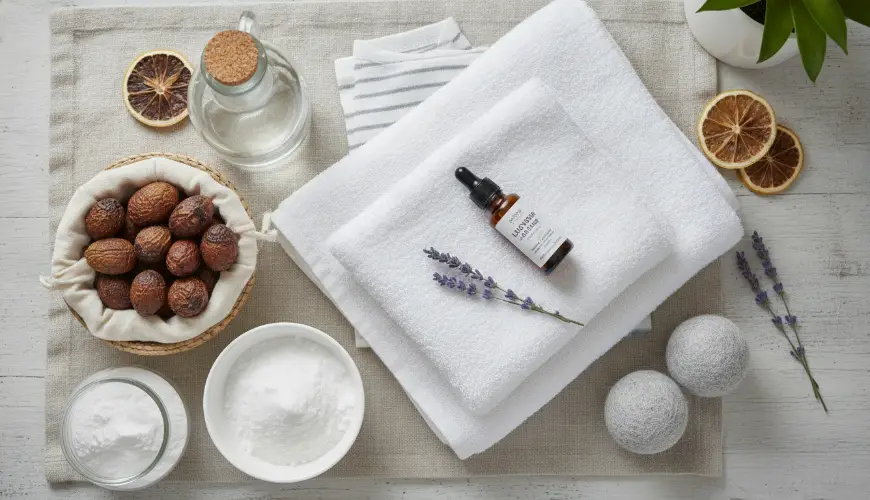
Fabric softener is one of those products that most households buy automatically, without stopping to consider whether it is truly necessary. Soft laundry, a pleasant scent, easy ironing – these are arguments that manufacturers have been successfully selling for decades. But behind this fragrant façade lies a number of questions: What does fabric softener actually contain? How does it affect skin, the environment, and the fabrics themselves? And most importantly – are there alternatives that can achieve the same results without the side effects?
The answer is surprisingly simple: yes, there are. And many of them are cheaper, gentler on nature, and better for human health. You just need to know where to look.
Try our natural products
Why think about what you wash with at all?
Conventional fabric softeners work on the principle of cationic surfactants, which settle on fabric fibres and create a thin film that gives a feeling of softness. This sounds harmless enough, but the problem is that this film simultaneously reduces the absorbency of textiles – which is critical for towels, children's clothing, or sportswear. Furthermore, a wide range of fabric softeners contain synthetic fragrances, preservatives, and other chemical compounds that can irritate sensitive skin or cause allergic reactions.
From an environmental perspective, the situation is even less favourable. According to a report by the European Chemicals Agency (ECHA), some ingredients in fabric softeners are among the substances that are difficult to biodegrade, placing a burden on wastewater treatment plants and aquatic ecosystems. The plastic packaging in which fabric softeners are sold then contributes to the growing problem of household waste.
It is little wonder that more and more people are looking for ways to avoid fabric softener or at least replace it with something more meaningful. And this is precisely where the truly interesting part of the story begins.
6 alternatives to fabric softener that make sense
## White vinegar – the oldest trick in the laundry room
If there were one universal favourite among fabric softener alternatives, it would most likely be white distilled vinegar. Its use is entirely straightforward: simply add approximately 100 ml to the fabric softener compartment and let the washing machine do its work. Acetic acid naturally softens fibres, neutralises alkaline residues from detergent, and also acts as a natural disinfectant.
Many people worry that their laundry will smell like salad dressing after washing. The opposite is true – once dried, vinegar leaves no odour whatsoever. This method works excellently on cotton, linen, and mixed fabrics, and is completely safe for septic systems and wastewater treatment plants. Moreover, white vinegar is one of the cheapest products available in shops, so the savings compared to regularly buying fabric softener are noticeable from the very first month.
## Baking soda – a helper that surprises
Baking soda (sodium bicarbonate) is another natural helper that deserves a firm place in every eco-friendly laundry room. Added directly to the washing machine drum – roughly two tablespoons per wash – it helps soften water, neutralise odours, and keep colours vibrant. Unlike fabric softener, it does not impair the absorbent properties of fabrics, so towels and bath sheets retain their functionality.
Baking soda is also an excellent complement to eco-friendly detergents, as it increases their effectiveness in hard water. This effect is particularly appreciated by households in areas where water is rich in calcium and magnesium – and there are surprisingly many such places in the Czech Republic.
## Wool dryer balls – an investment that pays off
A lesser-known but highly effective alternative is wool dryer balls. These are firm balls of pressed wool that are placed in the dryer along with the laundry. During drying, they move between items of clothing, mechanically loosening fibres, shortening drying time, and naturally softening textiles – all without any chemical additives whatsoever.
A good set of wool dryer balls can last several years of regular use, so the initial investment pays off quickly. For those who like their laundry to have a scent, there is a simple trick: just add a few drops of a favourite essential oil to the balls – lavender, eucalyptus, or citrus, for example – and the result is pleasantly aromatic laundry without synthetic fragrances.
## Soap nuts – a gift from nature
Soap nuts (the fruit of the Sapindus mukorossi tree) are one of the oldest and most natural alternatives to both laundry detergent and fabric softener combined. Their shells contain natural saponins, which lather and clean when in contact with water, while simultaneously leaving fabrics naturally soft.
Use is simple: just place 4–6 shells in a small cotton bag and add it to the washing machine drum. After washing, the bag is removed, dried, and can be used again – one batch lasts approximately 4–5 wash cycles. Soap nuts are fully biodegradable, hypoallergenic, and suitable even for very sensitive skin or children's laundry. Their only drawback is that they have no scent – laundry washed with them has no distinctive fragrance, which some people see as a disadvantage, while others view it as a benefit.
## Citric acid – a natural softener
Citric acid, a natural component of citrus fruits, works similarly to white vinegar. In the laundry room, it has proven itself primarily as a water softener and natural fabric softener – added to the fabric softener compartment (approximately one tablespoon dissolved in a little water), it helps neutralise detergent residues, soften fabrics, and prevent limescale build-up in the washing machine itself.
Citric acid is readily available, inexpensive, and genuinely effective in the laundry room. Unlike vinegar, some people prefer it because it has no specific smell or taste – it is a purely neutral substance that does its job quietly and reliably.
## Eco-friendly fabric softeners without harmful substances
For those who do not want to give up conventional fabric softener entirely but are still looking for a gentler option, there is a growing range of eco-friendly fabric softeners made from natural or biodegradable ingredients. These products contain no synthetic fragrances, parabens, or substances that burden aquatic ecosystems, while still being able to deliver a similar effect to conventional fabric softeners.
As the German consumer testing institute (Stiftung Warentest) noted: "The best fabric softener is one that does its job without leaving a trace where we don't want it." This is precisely the principle followed by most ecologically certified products bearing designations such as Ecocert, EU Ecolabel, or Nordic Swan. When choosing, it is advisable to check the ingredients and avoid products with long lists of chemical names that are unreadable to the average consumer.
How to make the transition in practice?
Switching from conventional fabric softener to natural alternatives need not be a dramatic step. Many households approach it gradually – first trying white vinegar, then adding baking soda, and eventually discovering that their laundry is clean, fresh-smelling, and pleasant to the touch without a single drop of synthetic chemicals.
An interesting example is provided by a family from Brno who decided to transition to a more eco-friendly household after their child began suffering from eczema. After discontinuing conventional fabric softener and switching to soap nuts and wool dryer balls, the child's skin condition improved significantly. Of course, it cannot be claimed that fabric softener was the sole culprit – but the change produced a visible result, and for many parents that is sufficient reason to reconsider.
It is also important to think about correct dosing of laundry detergents. One of the most common mistakes is adding too much washing powder or gel, which leads to residues remaining in fabrics that cause stiffness and skin irritation. Correctly dosed washing with a quality eco-friendly detergent and one of the fabric softener alternatives mentioned above yields surprisingly good results – even at lower temperatures, which are gentler on both fabrics and energy consumption.
Washing without fabric softener or with a natural substitute is not a step backwards – it is rather a return to a simplicity that worked long before industry convinced consumers that a modern household cannot manage without chemicals. Textile fibres, skin, and waterways all deserve this change. And the household owner's wallet will certainly welcome it too.