

Why not use fabric softener in the dryer if you want towels to absorb well and not smell
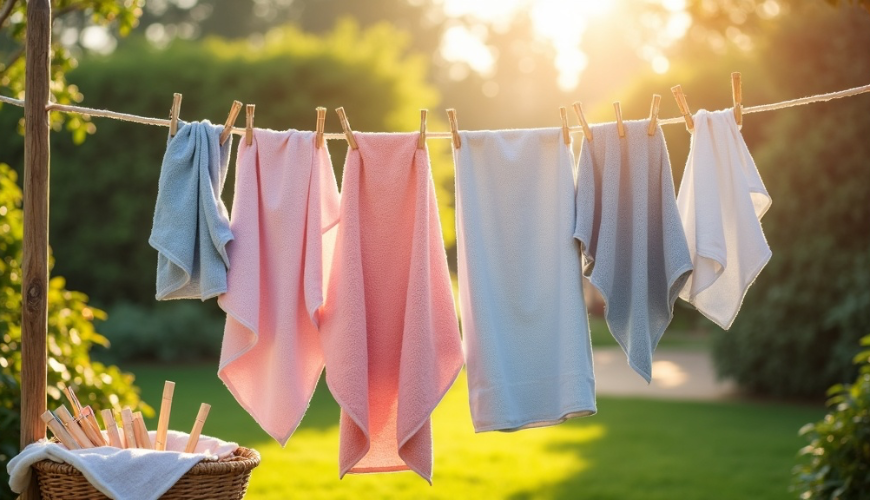
Fabric softener holds a special place in Czech households. For some, it is a small luxury that turns ordinary laundry into a "fragrant ritual," for others, it is a redundancy kept at home out of habit. Then there is a third group: people who use fabric softener but also have questions. When does the washing machine take the fabric softener, why is laundry sometimes "hard" even after using it, why not use fabric softener in the dryer, and most importantly how to replace fabric softener when wanting to wash more gently for the skin, fabrics, and the environment. These are the questions worth untangling—without fear-mongering, but clearly and practically.
Fabric softener (more accurately, fabric conditioner) works simply: it creates a fine film on the fibers, reducing friction, thus making the laundry feel softer. It often contains fragrances that linger in textiles longer than regular detergents. It sounds innocent, but the "film effect" is also why fabric softener sometimes doesn’t get along with modern materials and technologies. And why it generates so much debate.
Try our natural products

What Fabric Softener Really Does to Laundry (And Why It Sometimes Doesn’t Pay Off)
The feeling of softness is often the main argument. Yet, for some textiles, softness can become a disadvantage. The film from the fabric softener can reduce absorbency—which is unpleasant for towels, cloths, napkins, cloth diapers, or functional clothing. A towel might "smell like a hotel," but it absorbs less. Functional shirts may lose their ability to wick sweat. And with sports fabrics, this often leads to odors lingering longer, as the fiber surfaces aren’t cleaned as effectively.
It’s also important to note that fabric softener is not synonymous with cleanliness. If the laundry is poorly washed (too much gel, overloaded drum, short program), fabric softener only masks it with fragrance. And sometimes another problem arises: fabric softener residues can accumulate in textiles and the washing machine over time. The result? A musty smell, a "greasy" feel on towels, or impaired rinsing.
The topic of sensitive skin is a chapter of its own. Some people are not bothered by fabric softener, while it can irritate others’ skin—typically due to fragrances or preservatives. It doesn’t mean that fabric softener is automatically "bad," but it makes sense to be aware that fragrance is not free: something remains on the fiber, which then touches the skin all day (or night).
Adding an ecological dimension gives fabric softener another question mark. It's not just about the packaging, but also what flows into the water. A meaningful orientation in the impacts of washing and conditioning products can be offered by, for example, the European Environment Agency (EEA) in the broader context of household chemicals and their environmental footprint, or practical information on composition and labeling provided by the European Commission in topics related to consumer product safety and chemistry. These aren’t "laundry guides," but a good compass for why to consider more eco-friendly alternatives.
Then there’s a simple rule that often holds true in practice: the more modern and "smarter" the textile, the more cautiously fabric softener should be used. The effect may be pleasant on old cotton t-shirts. For towels, sportswear, or children's clothing, it’s more a matter of priorities.
When the Washing Machine Uses Fabric Softener and How to Handle It: Tips That Save Nerves and Laundry
One of the most common household mysteries is: when does the washing machine take the fabric softener and why does it sometimes remain in the compartment. The principle is similar in most washing machines: fabric softener is added in the final phase, during the last rinse. In the detergent drawer, there's usually a compartment marked with a flower or star symbol, containing a plastic insert/siphon. This is important—it helps ensure the fabric softener is "drawn in" at the right moment. When the siphon is missing or clogged, the fabric softener either drains immediately or remains in the compartment.
Practically speaking, this means several things. First: if the fabric softener disappears too early, the laundry often doesn’t "notice" it because it's rinsed out during subsequent rinses. Second: if it remains in the drawer, it’s not a sign of "strong fabric softener," but more likely a clogged compartment, poor water flow, overly thick fabric softener, or an unsuitable program.
And now the most important part: how to handle fabric softener—tips that are surprisingly effective even though they are simple. Most issues don’t arise because fabric softener "doesn’t work," but because too much is used or it’s used inappropriately.
The Only List That Makes Sense to Keep Handy
- Use less than habit dictates: often, half the recommended dose is enough. The laundry won't be "hard," just not as perfumed—which is actually an advantage for many people.
- Don’t overfill the compartment: if fabric softener goes above the MAX mark, it can drain prematurely or clog the siphon.
- Occasionally clean the detergent drawer: warm water, a brush, a few minutes. Lodged gel and fabric softener residues cause more problems than a "bad brand."
- Dilute thick fabric softener (if very concentrated): a drop of water in the compartment can help it be absorbed correctly.
- Avoid using fabric softener on towels, functional clothes, and membranes: it’s better to choose other solutions for softness and fragrance there.
- Be careful with the dryer combination: this is where most misunderstandings arise (and sometimes unnecessary expenses for new towels).
In real life, it often looks like this: a family washes towels "to make them soft," adds a generous amount of fabric softener, and then throws them in the dryer. The towels feel nice to the touch, but after a few weeks, they start to smell strange and mainly stop absorbing well. The cycle follows: more washing gel, more fabric softener, longer programs. Yet the solution is often the opposite—reduce, clean, occasionally wash towels without conditioner, and give them space to really rinse.
This also includes a small detail that can surprise: some short programs or eco modes work with less water and a different rinsing logic. It can then happen that the washing machine "takes" the fabric softener, but the laundry isn’t well rinsed. If someone has sensitive skin, this is exactly the moment when itching or an unpleasant feeling on the body can occur—and the fabric softener often gets the blame, even though it’s more a mix of factors.
How to Replace Fabric Softener and Why Fabric Softener Often Doesn’t Belong in the Dryer
The question how to replace fabric softener has two facets: how to achieve softness and how to achieve a pleasant scent (or rather freshness). These two things are often confused. Laundry can be soft without strong fragrance—and it can be fresh without leaving a strong film.
Very often, vinegar is mentioned as an alternative. In reasonable amounts, it can help remove detergent and mineral residues from hard water, which can subjectively soften the laundry. However, it's not a universal trick for everything, and some people dislike the smell during washing (it usually dissipates after drying). If a household is concerned about seals or the washing machine, it is fair to say that regular use of a small amount of vinegar in rinsing is widespread in practice, but it always depends on the specific appliance and the manufacturer's recommendations.
It’s often more practical to change the routine itself: less detergent, better rinsing, don’t overload the drum, and occasionally run a warmer program for machine maintenance. It’s the detergent residues that often make laundry "stiff" rather than the lack of fabric softener.
Those who want to go the route of a more eco-friendly household often opt for alternatives that make sense in the long run: wool dryer balls (for the dryer) that mechanically "fluff" the laundry and shorten drying time, or fragrance-free rinses designed for sensitive skin. In the context of sustainability, it is important that some products focus more on function (softness, reducing static) rather than making the laundry smell "distantly" for the third day. This is also a shift: seeking comfort without unnecessary burden.
And now to the dryer, because here a crucial topic emerges: why not use fabric softener in the dryer (or rather on laundry heading to the dryer). There are several reasons, and they are interconnected.
Firstly, fabric softener can worsen absorbency and breathability—and the dryer often "reveals" these properties more quickly because laundry is soft to the touch even without fabric softener after drying. One can then easily conclude that fabric softener isn’t really needed, especially true for towels. The dryer can soften them mechanically, without the film.
Secondly, some fabric softener residues can accumulate not only in textiles but also in the appliance (filters, condenser, internal parts). This doesn’t mean the dryer will "break" immediately, but it can contribute to reduced efficiency and odors. And anyone who has dealt with a musty dryer knows it’s not exactly a pleasant weekend task.
Thirdly, for functional and sports materials, the combination of fabric softener and dryer is often the quickest way for clothing to stop functioning as it should. Membrane jackets, sports leggings, quick-drying shirts—all of these require more gentle handling and the right detergent rather than perfumed softening.
When discussing "replacing fabric softener," it’s worth recalling simple air drying. Laundry dried outdoors is often fresh on its own, and if hung with space (not on an overcrowded rack), it can be pleasantly soft without any additives. Indoors, airing and not letting laundry dry "damp" for too long helps—this is often a common source of mustiness, which people then mask with fabric softener.
Within all this fits a simple sentence, which sometimes comes from dermatologists and allergists in various variations: "Less fragrance often means more peace for the skin." It doesn’t apply to everyone, but as an orienting rule, it works surprisingly often, especially for children or people with eczema.
Finally, it’s good to admit that fabric softener can have its place—perhaps for bed linen if someone likes the feeling of softness and scent, or for regular cotton that wrinkles and "scratches" without it. However, it makes sense to use it purposefully, not automatically. Once fabric softener becomes a mandatory item for every wash, it’s easy to overlook that some materials react worse to it and that the dryer already does a large part of the "softening work."
Thus, the originally simple question of "to use or not to use fabric softener" becomes more a small domestic strategy: knowing when the washing machine takes the fabric softener, using it sparingly, understanding why fabric softener doesn’t belong in the dryer, and having a few options for replacing fabric softener when the laundry needs genuine freshness rather than perfume. At that moment, laundry doesn’t feel like alchemy but rather quite a calm routine that makes sense for the laundry, skin, and household.