

# Try Recipes for Using Stale Bread in Ways Other Than Toast ## Bread Soup (Ribollita) Classic Ita
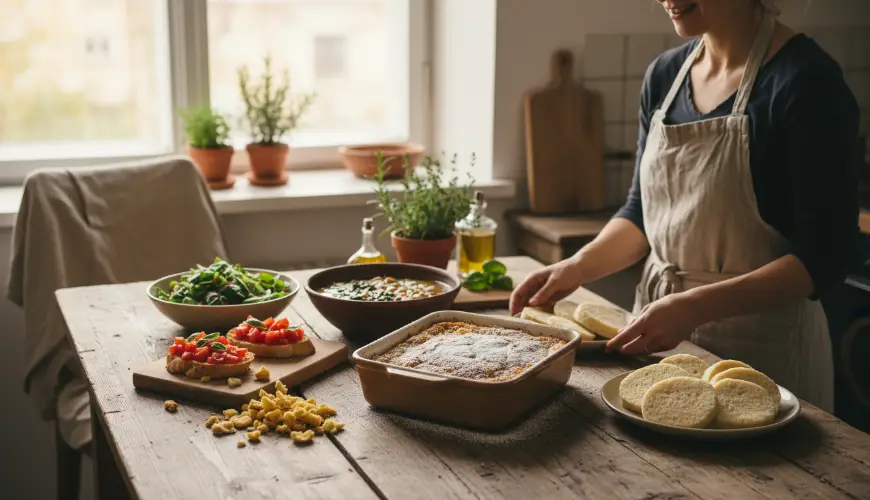
A hard roll lying on the kitchen counter the next morning. Half a baguette that hardened overnight. A slice of bread that nobody ate in time. Everyone knows this situation and most people reach for the same solution – toast. But the options for dealing with stale bread are far richer than most households realise. And particularly at a time when food waste is a globally discussed topic, it is worth thinking about how to get the most out of every last crust.
According to data from the Food and Agriculture Organization of the United Nations (FAO), approximately one third of all food produced ends up as waste. Bread and baked goods are among the most frequently discarded foods in European households. Yet a little creativity is all it takes for a hard roll to become the basis of a delicious dish that would not be out of place in a fine restaurant.
Try our natural products




Stale bread as the foundation of famous recipes
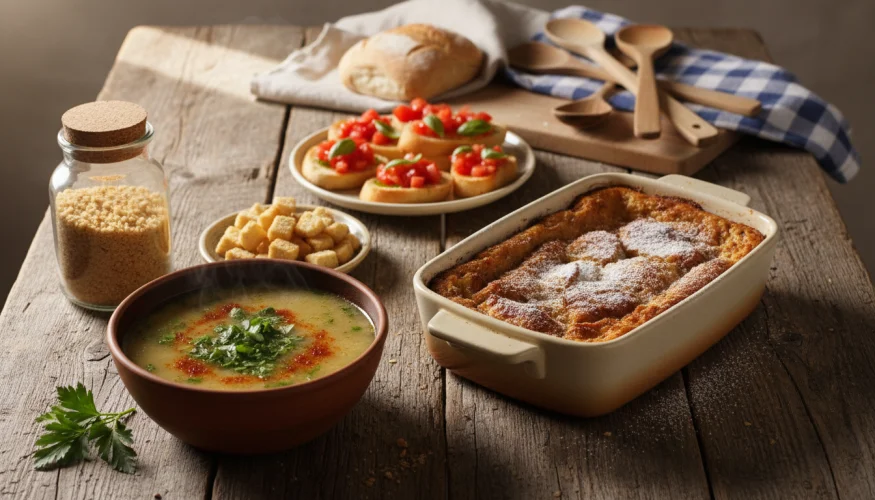
It is no secret that many classic dishes from world cuisine came about precisely from the desire not to waste stale bread. Italian panzanella – a refreshing summer salad made from soaked bread, tomatoes, red onion, basil and olive oil – is a perfect example of how scarcity inspires culinary ingenuity. The same is true of Tuscan ribollita, a thick soup full of vegetables and white beans, to which pieces of old bread are added to thicken the dish and give it a velvety consistency. Or Spanish gazpacho, whose base is precisely soaked bread blended with tomatoes, peppers and garlic.
These recipes did not originate in starred restaurants. They were born in poor rural kitchens, where people understood that food does not equal waste. And today it is precisely these dishes that enjoy success at international culinary festivals and in prestigious cookbooks.
Czech cuisine follows a similar logic. Bread dumplings (houskový knedlík) – one of the pillars of traditional Czech gastronomy – are made from stale bread soaked in milk. Likewise, bread dumplings with poppy seeds (šišky z tvrdého chleba), which generations of Czech grandmothers served with poppy seeds, sugar and butter as a sweet supper, are essentially a brilliant solution for using up leftovers. Anyone unfamiliar with this recipe is missing out on something truly special.
Another excellent way to use up stale bread is making breadcrumbs. Simply break the bread into pieces, let it dry out completely, then blend or grate it. The resulting breadcrumbs are a perfectly good substitute for the shop-bought variety and, when stored correctly in a sealed container, will keep for weeks. They can be used for coating schnitzel, as a topping for baked pasta dishes or as a base for stuffed vegetables.
Hot dishes, soups and desserts made from stale bread
One of the simplest yet surprisingly delicious ways to use stale bread is making bread soup. In Czech cuisine, this dish has deep roots – a thick, fragrant soup made from toasted bread, garlic, caraway and stock can warm and satisfy like few other things. French onion soup plays a similar role, with slices of old bread baked under a layer of cheese directly in the pot.
An interesting variation is also bread pudding, which is considered a classic dessert in English-speaking countries. Pieces of old white bread are soaked in a mixture of eggs, milk, sugar and vanilla, poured into a baking dish and baked until golden. The result is fluffy, gently sweet and completely different from what one might expect from a stale roll. Raisins, pieces of chocolate, cinnamon or seasonal fruit can be added to the mixture.
Consider the story of Markéta, a thirty-year-old mother of two from Brno, who began experimenting with bread pudding after reading about food waste. "At first I didn't believe anything good could come of it. But the children love it and I have a clear conscience," she described her experience. Today she makes it every weekend, varying the flavours depending on what she has at home.
French toast, which many people know as a sweet breakfast, is also actually a way of rescuing stale bread. Slices are soaked in egg whisked with milk and a little sugar, then fried in butter until golden. They are served with fruit, maple syrup or soured cream. This simple technique works equally well with a white baguette as with wholegrain bread.
For those who prefer savoury flavours, crostini or bruschetta are ideal – slices of old bread toasted in the oven or in a pan, rubbed with garlic and olive oil, then topped with any ingredients you like. Avocado with lemon, hummus with vegetables, tomatoes with basil or simply good-quality cheese – the possibilities are practically endless. Crostini can be prepared in advance and stored in a dry place, making them an excellent standby for unexpected guests.
A less well-known but very practical technique is making croutons for salads and soups. Simply cut the bread into cubes, season with olive oil, salt, pepper and your favourite herbs, and bake in the oven at 180°C for about ten minutes until golden. The resulting croutons are crispy, fragrant and significantly better than those from a bag at the shop. They are perfect in soup, salad or simply alongside a glass of wine.
It is also worth mentioning bread dumplings in various forms – whether as a side dish for sauces, or in a filled version with smoked meat and egg in the centre. The base is always soaked bread mixed with egg, flour and seasoning, with the proportions varying from recipe to recipe. Every experienced Czech cook knows this way of using up old bread, yet younger generations are increasingly overlooking it – which is a shame.
The ecological dimension of using leftovers
The effort not to waste stale bread is not merely a matter of thrift or culinary creativity. It also has a clear ecological dimension that has been gaining in importance in recent years. Food waste contributes significantly to greenhouse gas emissions – according to a report by Project Drawdown, reducing food waste is among the most effective strategies in the fight against climate change.
As French chef Alain Ducasse once remarked: "Respect for ingredients begins with not throwing them in the bin." And this is precisely the philosophy behind the entire zero-waste cooking movement – an approach that is increasingly gaining ground in Czech households as well.
The shift towards more mindful handling of food does not have to be complicated or costly. It is enough to start with small things – for example, not throwing a stale roll straight into the bin, but soaking it in water or milk and working it into the mixture for meatballs or meatloaf. Old bread blended into breadcrumbs can replace the shop-bought variety and save money too. And bread pudding made from leftovers can be a delicious dessert that the whole family will enjoy.
Sustainable cooking and caring for an eco-friendly household go hand in hand. Just as it is worth choosing products with minimal packaging or reaching for natural cleaning products, it makes sense to think about what ends up in the bin. Every saved crust of bread is a small but real step towards reducing one's own ecological footprint.
Interestingly, interest in recipes that make use of leftover bread has been growing in recent years among young people, who actively seek out these topics on social media and in culinary podcasts. Communities sharing tips on zero-waste cooking have hundreds of thousands of followers on platforms such as Instagram or Pinterest, and their popularity continues to rise. This is no fringe trend – it is part of a broader transformation in how people think about food, consumption and responsibility towards the planet.
Bread and baked goods remain one of the most universal food staples in existence. They have accompanied human civilisation for thousands of years, and in every culture countless recipes, traditions and stories are bound up with them. It would be paradoxical if this food, with such a rich history, were to end up uselessly in the bin. Instead, it can serve as the foundation for new dishes, new flavours and new habits – ones that are good not only for the taste buds, but also for the conscience.