

Use roots and greens to the fullest in every soup
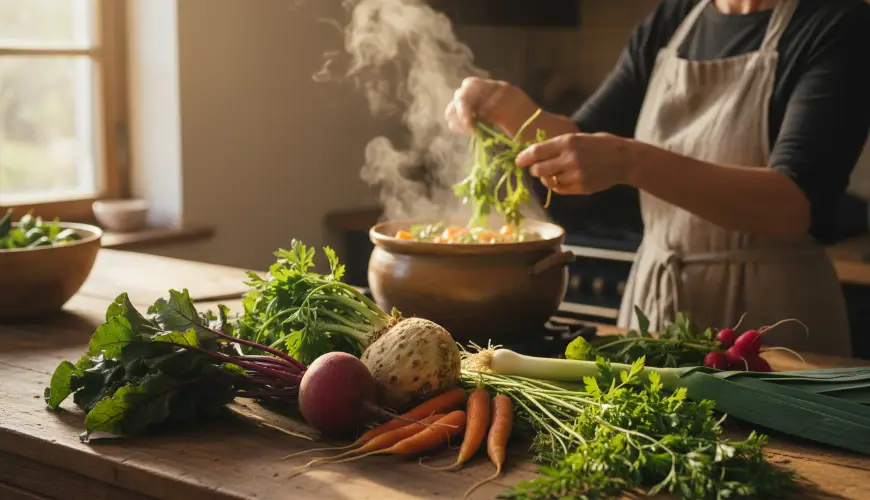
Every week, enormous amounts of vegetables end up in household bins across the country that are not actually waste at all. Carrot tops, beetroot leaves, parsley stems, celery leaves, or root vegetable peelings – these are all parts of plants that most of us automatically cut off and throw away without giving it a second thought. Yet these "scraps" can not only be edible, but significantly tastier and more nutritious than the very vegetables we bought.
Food waste is a huge problem in Europe. According to data from the Food and Agriculture Organization of the United Nations (FAO), approximately one third of all food produced worldwide is thrown away. A large portion of this waste is generated directly in households – not only because food goes sour or mouldy in the fridge, but also because we consciously discard parts of vegetables that we have been taught "are not eaten." But who actually taught us that?
Try our natural products

Why We Got Used to Throwing Away the Most Valuable Parts
Historically, this was not always the case. Our grandmothers and great-grandmothers knew the value of every part of a vegetable, because they had to grow it themselves or pay for it with hard-earned money. Whole plants were used from root to leaf, nothing went to waste. It was only with the advent of the modern food industry and supermarkets, where vegetables are sold already cleaned, packaged, and ready to use, that we got used to receiving food as a finished, "perfect" product – and treating everything else as unnecessary waste.
Today, however, the tide is slowly turning. The concept of the so-called zero waste kitchen, meaning cooking without waste, is gaining popularity not only among ecologists and advocates of sustainable living, but also among ordinary households looking for ways to save money while cooking more deliciously and diversely. And knowing which parts of vegetables are edible and how to prepare them is one of the simplest steps towards getting started.
Take a typical household as an example. Every week, Mrs Hana buys carrots, parsley, celeriac, and beetroot. She peels the carrots and throws away the tops, uses only the parsley leaves and tosses the stems in the bin, chops the celeriac and discards its leaves, boils the beetroot and never thinks to use the leaves. Over the course of a year, she throws away kilograms of edible, nutritious, and tasty ingredients. And this is a story that repeats itself in millions of households.
Yet all it takes is a slightly different perspective on what we have in our hands before we start cooking.
Carrot tops are one of the most frequently discarded parts of vegetables, yet they are a fully-fledged ingredient with a slightly bitter, herby flavour. They contain B vitamins, vitamin C, calcium, and chlorophyll, which has beneficial effects on the body. The tops can be added to salads, blended into a pesto-like sauce with olive oil, garlic, and nuts, or used as a garnish and flavouring for soups. Many chefs compare them to parsley – and substituting these two types of greens in recipes works surprisingly well.
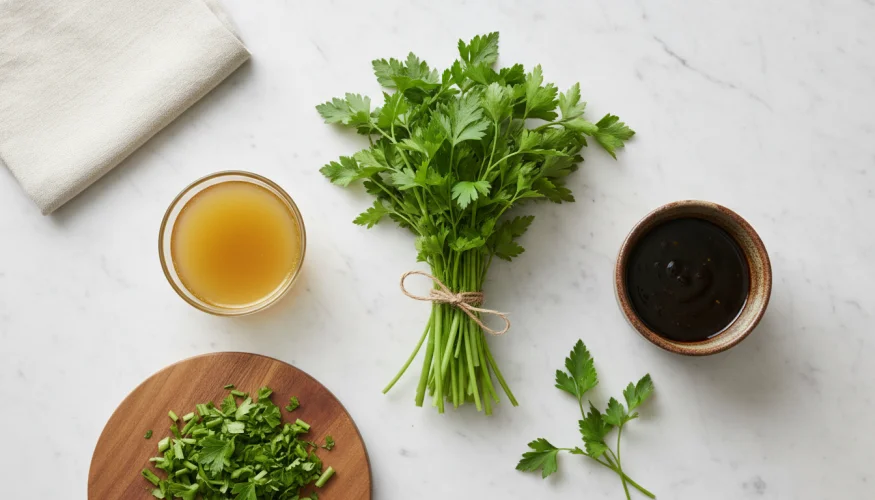
Parsley stems are another example of an unnecessarily discarded ingredient. While parsley leaves are a completely common ingredient in cooking, the stems usually end up in the bin. Yet they contain the same aromatic compounds as the leaves, just at a slightly different intensity. They are ideal as a base for stock – simply add them to the pot along with other vegetables and the stems will impart a distinctive aroma. They can also be finely chopped and added to sauces or marinades.
Vegetables That Are More Valuable Than They Appear
Celery leaves are often overlooked, despite being highly aromatic and full of flavour. The whole celeriac plant – the bulb, the stem, and the leaves – comes from the same plant and all its parts are edible. Celery leaves have a stronger, more concentrated flavour than the bulb itself and are suitable for soups, sauces, salads, or as a garnish for meat dishes. Dried celery leaves can be used as a seasoning – simply spread them on a baking tray and let them dry in the oven at a low temperature.
Beetroot leaves are a case that surprises most people. Beetroot is very popular, yet almost nobody uses its leaves. And yet they are more nutritious than the root itself – they contain high amounts of iron, calcium, vitamin K, and antioxidants. In terms of flavour, they resemble chard or spinach, with which they are related, as both plants belong to the same family. Beetroot leaves can be sautéed in butter with garlic, added to soups, or prepared as a simple side dish similar to spinach. Young leaves are also suitable for salads when eaten raw.
Likewise, radish tops will surprise anyone who tries them for the first time. Radish leaves are slightly hairy, but soften after cooking and develop a pleasant, mildly spicy flavour. They can be sautéed, added to soups, or blended into green smoothies. Yet most people buy radishes, cut off the tops, and throw them away – and then perhaps separately buy spinach or other leafy greens.
A wise guiding principle for the world of zero waste cooking was expressed by British chef Fergus Henderson, founder of the "nose to tail" cooking concept: "If you're going to kill an animal, it is your duty to eat it all." The same principle can be applied without exception to vegetables – if we buy or grow them, they deserve to be used in their entirety.
Vegetable roots that we normally discard also have their potential. The ends of carrots, parsley, or celeriac that we cut off before cooking can form the basis of a homemade vegetable stock. Simply collect them gradually in a container in the freezer and occasionally cook them into a stock – the result is more aromatic and flavourful than stock made from cubes. And it costs absolutely nothing, made from ingredients that would otherwise end up in the bin.
Peelings from root vegetables are another hidden treasure. Carrot or potato peelings can be fried in oil with a little salt and seasoning to make crispy chips – a great alternative to classic potato crisps. Celeriac or parsley peelings can be added to stock or dried and ground into a powder that then serves as a distinctive seasoning.
Leek tops, meaning the dark green parts of leeks that are commonly cut off and discarded, are fully edible and very aromatic. It is true that they are tougher than the white part of the leek, but they soften during cooking and impart a strong onion flavour to the dish. They are ideal for soups, ragouts, or as part of a base for sauces. Leek tops are also an excellent addition to stock – precisely because of their intense flavour.
How to Get Started: Practical Tips for Everyday Cooking
Starting to use parts of vegetables that we have previously discarded does not have to be complicated. It requires no special equipment or culinary skills – just a slightly different perspective on the ingredients we have available. A good first step is introducing a so-called "stock container" in the freezer, where we gradually store peelings, tops, stems, and vegetable ends. Once the container is full, simply tip the contents into a pot, cover with water, and let it simmer for an hour – and you have a stock that would cost you a significant amount in the shops.
Another step can be experimenting with top pesto. Classic basil pesto can easily be replaced or supplemented with carrot tops, beetroot leaves, or celery leaves. The recipe is simple:
- a handful of fresh tops (carrot, beetroot, or celery)
- a handful of nuts (walnuts, pine nuts, or cashews)
- a clove of garlic
- olive oil
- salt, and optionally lemon juice and Parmesan
Blend everything together and the pesto is ready. It goes well with pasta, as a spread on bread, or as a dressing for grilled vegetables.
It is also important to adapt your shopping to what you will actually use. Buying vegetables with their tops – meaning carrots or parsley with their leaves still attached – and then consciously incorporating these tops into your meals is a simple way to immediately reduce the amount of food waste. The tops are often the freshest indicator of how old the vegetables are – fresh tops are turgid and bright green, while wilted tops signal that the vegetables have been sitting on the shelf or in the fridge for too long.
Inspiration for using whole vegetables can also be found in various foreign cuisines that never adopted the habit of discarding parts of plants. In Italian cuisine, for example, fennel fronds are added to salads and sauces; in Japanese cuisine, daikon – a large white radish – is consumed whole including its leaves; and in Indian cuisine, coriander leaves, along with its stems and roots, are used as a fully-fledged part of dishes. This tradition stems from respect for food as a whole and from an awareness that every part of a plant has its value.
Changing our approach to vegetables and their "waste" parts is ultimately one of the simplest ways to contribute to a more sustainable way of life – without having to invest in expensive products or radically change our lifestyle. All it takes is pausing for a moment at the chopping board, looking at what we are about to throw away, and asking ourselves: does this really belong in the bin?