

Try Steamed Fried Eggs According to Asian Chefs
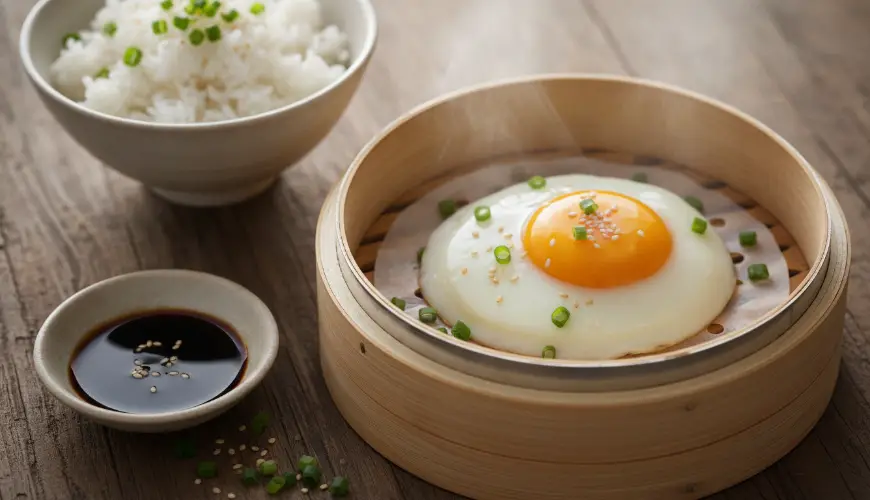
There are dishes that you try once and never forget. Steamed fried eggs belong precisely to this category. At first glance, it may seem like a mere variation on the classic fried egg, but as soon as you take your first bite, you'll understand why this technique, originating from Asian cuisines, is winning the hearts of chefs and food lovers around the world. The egg white is silkily smooth, almost trembling, the yolk remains perfectly runny, and the overall result feels like something between street food and haute cuisine. And yet the preparation is surprisingly simple.
Asian cuisine has a long tradition of working with eggs in ways that European culinary arts long overlooked. While in the West eggs are typically fried in a pan with butter or oil, in China, Japan, Vietnam, and Thailand there are dozens of techniques for extracting maximum flavour and texture from an egg with minimal fat. Steaming is one of the oldest and healthiest methods of cooking food in existence. The World Health Organization has long noted that the way food is prepared has a fundamental impact on its nutritional value, and steaming is among those methods that naturally preserve vitamins, minerals, and protein structure.
Try our natural products





Why is steam better than a pan?
When eggs are fried in a pan, they come into direct contact with hot oil or fat. The temperature on the pan's surface can easily exceed 180 to 200 degrees Celsius, meaning the egg white quickly sets on the bottom and may even burn in places, while the centre remains undercooked. The result is textural unevenness and the need to add fat, which increases the caloric value of the dish. Steam works differently. It surrounds the egg evenly from all sides, the temperature hovers around 100 degrees Celsius, and the entire process unfolds gradually, so the egg white sets into a silkily smooth consistency without burning or turning rubbery anywhere.
This evenness is precisely why steamed fried eggs look so perfect. The egg white is a matte white, without brown edges, without a crispy crust, without a greasy sheen. The yolk glows golden and is visible through the thin, translucent layer of egg white covering it. The result is elegant, almost minimalist, yet rich in flavour. It is little wonder that this technique has been experiencing a renaissance in recent years, not only in Asian restaurants but also in modern bistros and health-conscious cafés across Europe.
The fact that steam preparation requires virtually no added fat also plays a significant role. For those interested in a healthy lifestyle and mindful eating, this is a crucial advantage. One large egg contains approximately 70 calories, of which roughly 5 grams are fat naturally present in the yolk. Frying in oil can easily double this value. Preparing eggs by steam leaves the caloric value of the dish unchanged, while the egg retains all its nutritional benefits, including quality proteins, B vitamins, and choline, a substance essential for proper brain function.
Imagine Lucie, a young mother from the Central Bohemian region, who was looking for a way to prepare healthy breakfasts for her whole family without spending a long time standing at the stove. She came across a video of a Japanese chef preparing eggs in a bamboo steamer in under five minutes. She tried it with a pot and a plate she already had at home, and the result impressed her so much that this technique almost entirely replaced the classic fried egg in her household. Her children took to the delicate texture, her husband appreciated that breakfast was ready before he had time to get dressed, and Lucie herself was happy that she no longer had to degrease the pan every morning.
How to do it: the basic technique and tips from abroad
Preparing steamed fried eggs is truly easy, but a few small details determine whether the result will be average or perfect. The most important thing is having the right equipment. A bamboo steamer is ideal — it is a traditional part of Asian kitchens and can now be purchased in many health lifestyle shops or online. Bamboo is a natural material that absorbs excess moisture and prevents condensation from dripping back onto the eggs, which is crucial for the final texture. If you don't have a bamboo steamer, a metal colander with a lid or a simple setup using a pot and a plate will also work.
The process is straightforward. About two centimetres of water are poured into a pot and brought to a boil. The egg is cracked into a shallow plate or bowl, which is placed above the surface of the boiling water without touching it. The pot is covered with a lid and the egg is left to steam for approximately four to six minutes, depending on how firm you prefer the yolk. The key is not to exceed the cooking time, because once the yolk sets, the magic is gone. Japanese chefs recommend covering the egg with cling film or a damp paper towel before placing it in the steamer, which prevents drops of condensation from falling directly onto the surface of the egg white and disrupting its silky texture.
As American culinary writer Harold McGee once wrote in his book On Food and Cooking: "Heat is the most important ingredient in the kitchen, but it is the way we apply it that determines the outcome." This thought perfectly captures the essence of steam cooking. It is not about any revolution in ingredients or exotic additions, but about changing one's approach to heat itself.
Serving steamed fried eggs is just as important as preparing them. In Asian cuisines, the eggs are served on a bowl of rice, drizzled with a drop of soy sauce and sesame oil, and sprinkled with spring onions or sesame seeds. The Vietnamese version adds a little fish sauce and fresh chilli. The Japanese style involves dashi broth poured directly over the egg, creating a dish somewhere between a soup and a main course. Each of these variations is not only delicious but also nutritionally balanced, light, and yet filling.
For those who want to experiment at home, the Korean way of serving is also an interesting source of inspiration, where steamed eggs are prepared directly in small ceramic bowls with the addition of cheese, vegetables, or kimchi. The result is a kind of hybrid dish that combines tradition with modernity and works wonderfully as a breakfast, snack, or light dinner. This versatility is one of the reasons why the technique of steaming eggs has spread so quickly beyond the borders of Asia.
The choice of eggs plays an equally important role. Fresh eggs from free-range hens have a firmer egg white and a more intensely coloured yolk, which is clearly reflected in the final dish. Eggs from intensive farming have a more watery egg white that spreads more easily in the steam and does not achieve the right silky consistency. If you decide to try this technique, it is therefore worth investing in quality ingredients. Eggs from local farmers or from certified organic farming are not only tastier but also a more ethical choice in keeping with the principles of a sustainable lifestyle.
It is worth noting that interest in traditional Asian cooking techniques has grown significantly in the Czech Republic in recent years. According to data from various culinary platforms and recipe viewership on Czech websites, recipes involving steam cooking are among the fastest-growing categories. People are looking for ways to eat more healthily without complicated diets and expensive ingredients, and simple techniques like steaming offer them precisely what they need: healthy, tasty, and quick food without compromise.
Cooking eggs by steam also has a practical dimension that anyone will appreciate in everyday life. The pan does not need to be cleaned of burnt fat, the kitchen does not smell of scorched oil, and the whole process is calmer and less stressful than watching over a fried egg that burns the moment you turn away to fetch a plate. Steam cooking is in this sense also a more meditative approach to cooking, one that aligns with the modern emphasis on mindfulness and intentionality in everyday rituals, including food preparation.
Bamboo steamers, quality ceramic bowls, and eco-friendly kitchen equipment that support this technique are available in various formats and price ranges. When choosing equipment, it pays to opt for products made from natural materials that are not only functional but also environmentally friendly. Bamboo is one of the fastest-growing plant materials in the world and its cultivation requires neither pesticides nor artificial fertilisers, as noted by the WWF in its materials on sustainable materials.
Steamed fried eggs are therefore far more than just a culinary trend. They are a symbol of how a simple change in technique can make a fundamental difference to the quality of food, health, and the everyday experience of cooking. Asian cuisine discovered this principle centuries ago and today reminds the world of it at a time when people are seeking a path back to simplicity, naturalness, and a mindful relationship with what they eat. A bamboo steamer, a fresh egg, and five minutes of patience — that is all you need.