

How to Use Sesame Seeds in the Kitchen to Make Food Taste Better and More Nutritious
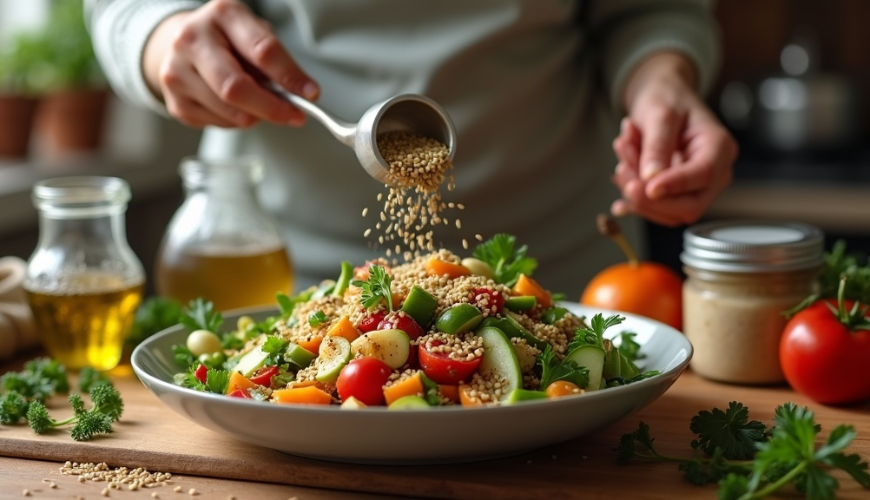
Sesame seeds are one of those ingredients that many people have at home "for baking," yet they can be used much more frequently and wisely. They are inconspicuous, easy to store, last a long time, and can enhance the flavor of even an ordinary dinner—from salads to soups to homemade spreads. When you add their health benefits and the fact that sesame can replace some salt or unnecessarily heavy sauces in the kitchen, it's a shame to let them go unused. The question isn't whether to use sesame, but how to use sesame seeds in the kitchen in a way that makes sense and tastes good.
Try our natural products




What Sesame Seeds Are and Their Health Benefits
Sesame seeds are the seeds of the Indian sesame plant (Sesamum indicum), one of the oldest oilseeds cultivated by humans. In the kitchen, you most often encounter white sesame (milder, "nutty"), black sesame (more aromatic, slightly earthy), and then hulled or unhulled sesame. The difference is not just in color: unhulled seeds tend to have a slightly higher content of certain minerals, but they can feel "rougher" to bite and have a more pronounced flavor.
From a nutritional standpoint, sesame is interesting because it offers a lot of "concentrated" values in a small volume: it contains fats (mostly unsaturated), proteins, fiber, and also minerals that people often seek—particularly calcium, magnesium, zinc, iron, and selenium. Sesame is also known for containing lignans (like sesamin), which are studied in connection with oxidative stress and fat metabolism. For a general context on seeds and their nutritional role, you can refer to overviews on sites like Harvard T.H. Chan School of Public Health—though sesame isn't a "miracle pill," it is certainly among the nutritionally rich seeds.
Practically speaking, sesame seeds can be a small but regular helper in one's diet—especially when used as a seasoning and "sprinkle" that adds nutrients without needing to completely change one's eating style. However, it's also worth noting that sesame is calorie-dense: a tablespoon of seeds is a small thing, but when it becomes half a jar in granola, the energy balance can change quickly. This is also part of the answer to the question, what to be cautious about.
One more important point: sesame often appears in the form of tahini (sesame paste) or sesame oil. In these forms, its use can be even easier—and sometimes tastier—than sprinkling seeds on bread.
How to Use Sesame Seeds in the Kitchen: What to Use Them In and How
Sesame has a big advantage: it acts as a detail that makes a dish "complete." When added correctly, it enhances flavor, adds crunchiness, and often a subtle nutty aroma. It's also good to know that sesame behaves differently when raw compared to when toasted. Toasting on a dry pan (just a few minutes until it starts to smell and slightly golden) makes a huge difference—the flavor deepens, and the seeds become crunchier. Just be sure to watch the time: sesame burns quickly and then turns bitter.
In an ordinary week, sesame is suitable for a surprisingly wide range of dishes. It adds texture to vegetable salads, can be used as a "final touch" in soups, and can be stirred into rice or couscous just before serving. It's also excellent in homemade dressings: just a teaspoon of tahini, lemon, water, a pinch of salt, and suddenly an ordinary salad becomes a meal that feels "restaurant-quality."
Sesame naturally pairs with Asian cuisine but also works great in a Czech context. Imagine roasted root vegetables: carrots, parsley, sweet potatoes. When sprinkled with toasted sesame after baking and lemon juice is added, you get a combination of sweetness, acidity, and nutty flavor that doesn't need a heavy sauce. Similarly, potatoes—even simple mashed potatoes with sesame and spring onions can surprise.
Furthermore, sesame seeds can be used as a "coating" instead of part of the breadcrumbs. It works on tofu, fish, and vegetable patties. And if sesame is mixed with a bit of salt and herbs, it makes a simple seasoning that can be sprinkled on bread, into spreads, or on eggs. In some cuisines, mixtures similar to dukkah or gomasio are common; at home, it's enough to start simply and gradually find your ratio.
To avoid just theory, here’s a small real-life example. In many households, the same scenario repeats: a quick dinner after work, half a cucumber, a few tomatoes, a piece of cheese, or tofu left in the fridge, and one doesn't want another "boring" salad. But when you add a tablespoon of tahini, lemon, a bit of water, garlic, and finally sesame seeds on top, in five minutes, ordinary ingredients become a meal that tastes like it's from a bistro. And importantly—here, sesame isn't just decoration but a flavor anchor.
Specific Tips and Recipes with Sesame (Easy and Without Complexity)
Below is a single but practical list that answers the question "what to use sesame seeds in and how" with specific steps:
- Quick Sesame Dressing (tahini dressing): 1–2 tablespoons of tahini, juice from half a lemon, 1 small clove of garlic, 2–4 tablespoons of water, a pinch of salt. Mix to a creamy consistency. Suitable for salad, roasted vegetables, and wraps.
- Toasted Sesame as a "Finish": toast on a dry pan for 2–3 minutes, stirring continuously. Sprinkle on finished dishes (soup, rice, noodles, hummus) to keep it crispy.
- Sesame Crust on Tofu or Salmon: coat slices with mustard or soy sauce, coat in sesame, briefly fry in a pan or bake in the oven. Creates a strong flavor without frying in breadcrumbs.
- Homemade "Sesame Salt": 2 tablespoons of toasted sesame + 1 teaspoon of quality salt (possibly dried herbs). Crush in a mortar. Sprinkle on eggs, avocado, spreads, or vegetables—often less salt is needed.
- Simple Sesame Cookies: sesame, oats, banana or apple puree, cinnamon. Mix, shape, bake. Sesame adds flavor and crunch without complex ingredients.
Anyone who wants to really incorporate sesame into their kitchen should give tahini a chance. Sesame paste is the base for hummus but can also handle sweet things: a teaspoon of tahini in oatmeal or on a toast with banana creates a flavor reminiscent of nut butter, just with a slightly different character. And then there's sesame oil—it's worth distinguishing between light (suitable for cooking) and dark roasted (primarily for seasoning). Roasted sesame oil is intense, just a few drops in finished dishes are enough.
Sesame pairs well with flavors common in Czech cuisine: garlic, lemon, honey, mustard, yogurt, horseradish. Try a yogurt dip with tahini (yogurt, tahini, lemon, salt, dill) with roasted potatoes or vegetable fries. The result is lighter than mayonnaise dips, yet full of flavor. In this simplicity, sesame feels at home.
"Sometimes a small change is all it takes to turn routine into a meal to look forward to." Sesame seeds are often exactly that kind of change.
What to Watch Out For: Allergies, Storage, and Small Kitchen Mistakes
Sesame is a great helper, but like any food, it's good to know a few rules. The first and most important is sesame allergy. In recent years, it has been discussed more frequently, and in many countries, sesame is considered a significant allergen. If someone in the family has allergies to nuts or seeds, caution and reading labels are advisable—sesame appears in bread, bars, sauces, and "healthy" mixes. Authorities like the European Food Safety Authority (EFSA) address this clearly in materials on allergens and food risks (sesame is simply an ingredient often used in the food industry, sometimes unexpectedly).
The second topic is storage. Sesame contains fat, and fat can go rancid—especially in heat, light, and humidity. It's best to keep seeds in a well-sealed container, ideally in the dark, and if buying a large package, it makes sense to store some in the fridge. Milled sesame and tahini are even more sensitive: after opening, it's good to stir tahini (oil separates naturally) and store it according to the manufacturer's instructions, often in the cold. If sesame or tahini starts to smell "musty" or bitter, it's not a gourmet nuance—it's a sign that it's time to say goodbye.
The third thing is temperature and timing. Toasted sesame tastes great but burns easily. Therefore, it's worth toasting it over medium heat, stirring, and pulling it off as soon as it smells. And if sesame is sprinkled on food that will be baked for a long time, the crunchiness can disappear, and the flavor can flatten. It's often better to add sesame at the end or just before finishing baking.
It's also worth noting the question of "how much is just right." Sesame seeds are nutritious, but also calorie-dense, and for some people, a large amount of seeds can affect digestion (especially if a lot of fiber is suddenly added). A practical approach is simple: start with one to two teaspoons in food, see how it fits, and gradually add more.
Finally, there's a small but common kitchen mistake: sesame is sometimes taken as a substitute for missing flavor due to lack of salt or fat. But sesame isn't magic dust—it works best in a well-seasoned base. When the dressing has acidity (lemon/vinegar), a pinch of salt, and maybe a bit of sweetness (honey/maple), sesame complements it beautifully. But when everything is "just so," sesame alone can't save it. This is its strength and limit: it's an enhancement, not a mask.
Thus, sesame seeds can be viewed as a small, sustainable step toward a more varied kitchen. They don't require complex procedures, suit both savory and sweet dishes, and often help turn ordinary ingredients into meals with flair. And next time, when a few tablespoons of sesame are left in the kitchen, a simple question arises: sprinkle it on a bun, or perhaps try a dressing, crust, dip—and discover how much difference such small seeds can make?