

# How to Slow Down Hair Loss Naturally Step by Step ## 1. Adjust Your Diet - **Increase protein in

We all know it – a few extra hairs on the pillow in the morning, a clogged comb when brushing, or a shower drain that looks more like a nest than a drain. Hair loss is a topic that is being discussed more and more, and not just among older people. Increasingly younger generations are looking for ways to slow down hair loss naturally, without aggressive chemical products or expensive clinical procedures. And the good news? Nature has a surprisingly large amount to offer.
Before we get into specific solutions, however, it is worth understanding why hair actually falls out. A human hair is not a static structure – it goes through a natural cycle of growth, transition and rest that lasts several years. On average, we lose 50 to 100 hairs per day, which is completely normal. The problem arises when this natural cycle is disrupted by external or internal factors. And there can be many of these: chronic stress, an unbalanced diet, hormonal imbalance, lack of sleep, or excessive heat and chemical stress on the hair. Understanding the cause is crucial – without it, any treatment will miss the mark.
Try our natural products
Nutrition as the foundation of healthy hair
Hair is made up primarily of a protein called keratin, so it is no surprise that its health begins on your plate. A lack of iron, zinc, biotin, vitamin D and protein is among the most common nutritional causes of increased hair loss. Research published in the specialist journal Dermatology and Therapy has repeatedly confirmed that micronutrients play a crucial role in the life cycle of the hair follicle.
Take Klára, a thirty-year-old graphic designer from Brno, as an example. After switching to a strict elimination diet, she began to notice that her hair was falling out to a greater extent than before. It was only after visiting a dermatologist and having blood tests done that it emerged she had a significant deficiency of iron and vitamin B12. Adjusting her diet and supplementing the missing nutrients produced visible results within a few months.
So what should you include in your diet? Eggs, legumes, nuts, seeds (especially pumpkin and flaxseed), dark leafy vegetables, fish and wholegrains are great allies for healthy hair. If it is difficult to cover all the necessary nutrients through diet alone, quality dietary supplements can help – such as biotin or products containing marine collagen. However, it is important not to overdo it: an excessive intake of certain vitamins can be just as harmful as a deficiency.
Hydration also plays a significant role. A dehydrated scalp is less supple, has poorer circulation and does not provide hair follicles with an optimal environment for growth. Adequate water intake – ideally two litres per day – is one of the simplest and most natural steps you can take.
Stress, sleep and their effect on hair
You may be surprised by how strong an influence the mind has on the condition of hair. There is even a medical term – telogen effluvium – which describes a condition where stress causes a large number of hair follicles to enter the resting phase all at once, and hair begins to fall out en masse. This typically manifests two to three months after a severe stressful event, illness or surgery, meaning people often do not even connect the cause with the effect.
As dermatologist and trichology specialist Dr. Shilpi Khetarpal of the Cleveland Clinic says: "Hair is like a barometer of the body's overall health. When the body is under stress, hair is one of the first places where it shows." These words should serve as a reminder that hair care is not just a matter of shampoo and conditioner, but of an overall approach to life.
Regular, quality sleep is one of the most underestimated tools in the fight against hair loss. During sleep, the body regenerates, produces growth hormone and renews cells – including those in the hair follicles. Chronic sleep deprivation disrupts these processes and indirectly contributes to weakening of the hair. Seven to nine hours of sleep per day is not a luxury, but an investment in health – including the health of your hair.
Techniques such as meditation, yoga, regular walks in nature or simple breathing exercises have proven effective for reducing stress. These are not passing trends, but scientifically supported methods that demonstrably reduce levels of cortisol – the stress hormone whose elevated levels negatively affect hair follicles.
Natural care for the scalp and hair
When it comes to direct hair care, nature offers a wide range of effective solutions that are also gentle on the skin and the environment. Scalp massage is one of the simplest yet most effective techniques. Regular massage – ideally five to ten minutes per day – improves blood circulation to the scalp, stimulates hair follicles and promotes the growth of new hair. A Japanese study published in the journal ePlasty showed that just four minutes of daily scalp massage over 24 weeks led to a measurable thickening of hair.
Natural oils with proven effects on hair health can be used for massage. Castor oil is one of the most popular – it contains ricinoleic acid, which promotes blood circulation and has anti-inflammatory properties. Coconut oil penetrates the hair shaft more deeply than most other oils and helps reduce breakage and mechanical damage. Argan oil is rich in vitamin E and fatty acids that nourish both the hair and the scalp. Black seed oil contains thymoquinone, a substance with powerful antioxidant and anti-inflammatory effects that has been used in traditional medicine for centuries.
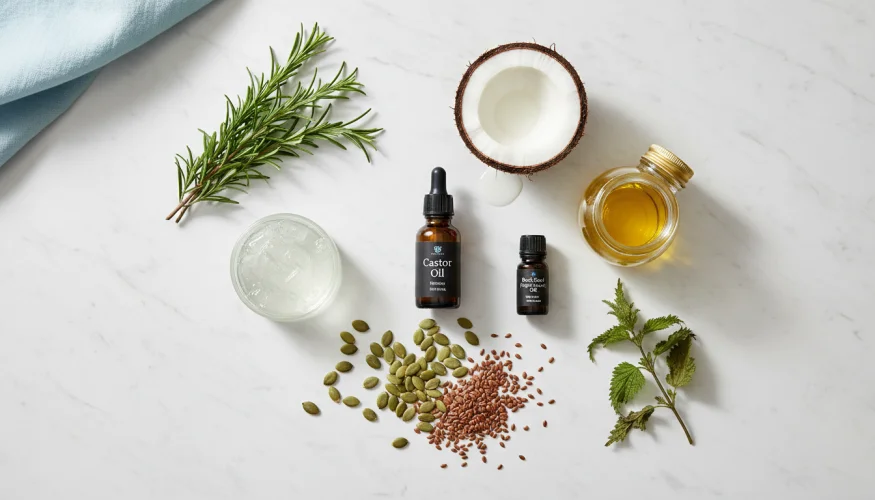
Natural helpers for healthy hair include, for example:
- Aloe vera – soothes an irritated scalp, hydrates and supports an environment conducive to hair growth
- Nettle tea or extract – rich in iron, silicon and other minerals that nourish hair follicles
- Rosemary oil – a study published in the journal Skinmed demonstrated that rosemary oil is comparably effective to minoxidil in the treatment of androgenetic alopecia, while causing fewer side effects
- Beer or brewer's yeast – contains B-group vitamins and amino acids that strengthen the structure of the hair shaft
Just as important as what we apply to our hair is what we do not expose it to. Excessive heat from a hairdryer, curling iron or hair straightener weakens the hair shaft and increases its brittleness. If you cannot do without these tools, use them at a lower temperature and always apply a heat protection product. Aggressive chemical processes are similarly harmful – colouring, highlighting, perming or chemical straightening. The less chemistry involved, the more grateful your hair will be.
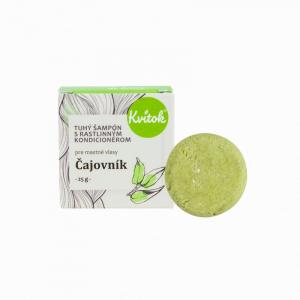
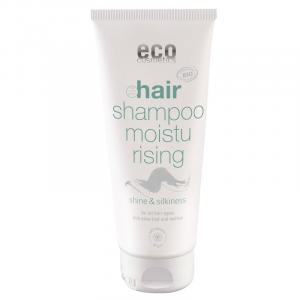
The choice of shampoo and conditioner also plays a role. Products containing sulphates, silicones and parabens can, with prolonged use, disrupt the natural balance of the scalp. Natural alternatives free from these substances are gentler and help maintain a healthy environment for hair growth. Eco-friendly and natural cosmetic products today offer comparable or even better results than their conventional counterparts.
The way we comb and style our hair also deserves attention. Overly tight hairstyles – braids, buns or ponytails secured with an elastic – cause so-called traction alopecia, i.e. hair loss as a result of mechanical pulling. If you tie your hair up, opt for looser styles and vary the position where you attach the elastic. When combing, always start from the ends and work towards the roots to minimise tearing and breakage.
The influence of the environment should not be overlooked either. Air pollution, hard water and UV radiation are factors that slowly but surely damage hair. A shower filter that softens the water, or using products with UV protection, can be surprisingly effective steps. When spending time in the sun, it is worth protecting your hair with a scarf or hat – just as we protect the skin on our bodies.
Regular trimming of the ends is an important, but often overlooked, part of natural hair care. Although trimming itself does not speed up hair growth, removing split ends prevents further breakage of the hair shaft and makes hair look thicker and healthier.
Hair loss is a topic that affects the self-confidence and quality of life of many people. It is important to realise, however, that in the vast majority of cases it is not an inevitable fate. Natural approaches – a balanced diet, sufficient sleep, stress management, gentle care and natural products – can have a significant and long-lasting positive impact on hair density and health. The key is patience and consistency: hair grows slowly and the results of natural care generally become apparent after three to six months of a regular approach. However, if hair loss persists or significantly worsens, it is always sensible to consult a dermatologist or trichologist, who can rule out more serious causes and propose an individual solution.