
Dance heals the body and mind regardless of experience
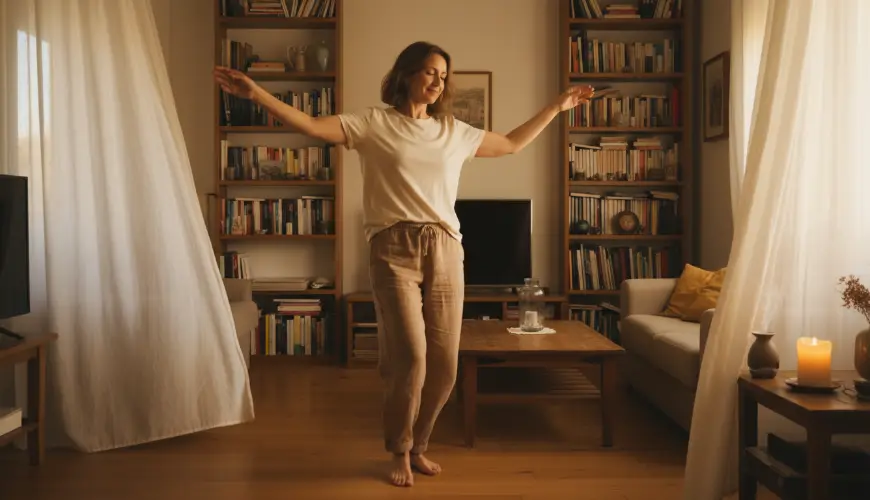
There is a moment that most people know. A favourite song comes on, feet start moving on their own, the body naturally sways to the rhythm – and then the thought arrives: But I can't dance. And the movement stops. Yet in that spontaneous impulse lies something very precious – a natural need of the body to express itself through movement, to release tension and reconnect with oneself. Dance as movement therapy has nothing to do with technical perfection. It doesn't matter whether someone has taken salsa or ballet lessons. All that matters is that they move.
In recent years, movement therapy through dance has been gaining increasing awareness among both professionals and the general public. It is not a passing trend – it is an approach with deep roots in psychology and physiotherapy, finding application in everything from treating depression to working with trauma to supporting cognitive function in older adults. And the best part? The whole thing can be practised at home, in the living room, in pyjamas, without an audience and without any prior dance training whatsoever.
Try our natural products



What actually happens in the body and mind when we dance
Dance is one of the few activities that simultaneously engages motor skills, emotions, memory and creativity. When moving to a rhythm, the brain releases dopamine – a neurotransmitter associated with feelings of reward and joy. At the same time, levels of cortisol, the stress hormone, decrease, and the body enters a state resembling meditation in motion. It is no coincidence that many cultures around the world use dance as a ritual tool for releasing emotions, processing grief or celebrating life.
Research confirms this. A study published in the journal Frontiers in Psychology showed that regular movement to music significantly reduces symptoms of anxiety and depression, comparably to traditional forms of aerobic exercise. But dance adds one further dimension – emotional expression. Movement becomes a language that bypasses the rational mind and reaches directly into what a person is experiencing. This is why clinical practice refers to dance and movement therapy as a fully valid psychotherapeutic method.
For people who have never attended dance classes, this idea may come as a surprise. Most of us associate the therapeutic potential of dance with professional dancers or with guided group therapy led by a specialist. In reality, however, the basic principle works equally well during independent movement at home – and for beginners, the home environment may be the ideal place to shed inhibitions and get started without worrying about other people's eyes.
Consider Jana, a forty-four-year-old accountant from Brno, who after a demanding period at work was suffering from chronic tension in her shoulders and insomnia. She didn't want to go to the gym, yoga didn't appeal to her, and seeing a psychologist felt like too big a step. She started by chance – one evening she put on a playlist of favourite songs from the nineties and simply moved around the kitchen. After three weeks of regular "kitchen dancing", she noticed she was sleeping better and that the tension in her body was slowly easing. No technique, no lessons – just movement and music.
How to start dancing at home without experience: A practical perspective
Starting to dance at home without any dance experience is actually simpler than it seems, but here too, a slightly more mindful approach will help you get the most out of movement. It's not about learning steps or copying a choreography from YouTube. It's about creating a space where the body can freely respond to music.
The first step is choosing music. Rhythm and tempo play a key role – slower melodies support introspection and relaxation, while faster rhythms help vent frustration or energy. Ideally, put together a playlist that contains both, and let the body naturally respond to the changes. There is no right or wrong movement – every movement that arises from an inner impulse is the right one.
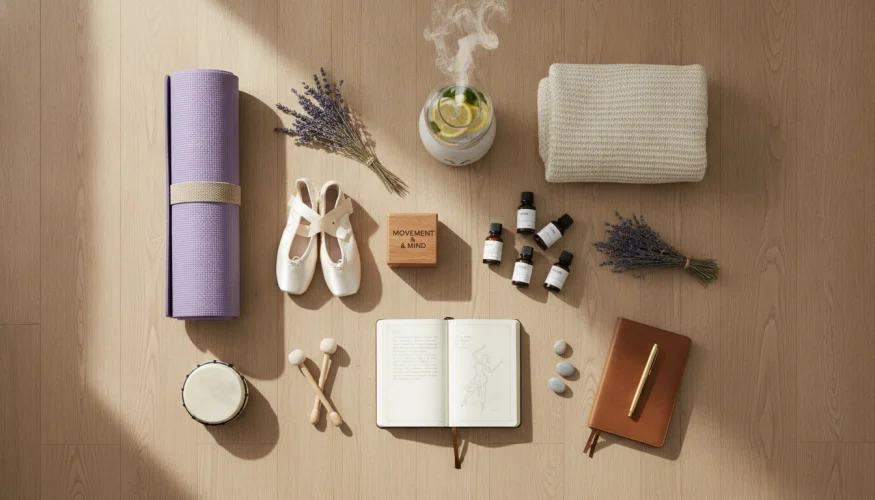
Space also matters. You don't need a large hall – a cleared coffee table in the living room or an open area in the bedroom is enough. But even the symbolic act of "preparing the space" has its psychological effect. Putting the phone away, switching off the overhead light and turning on a lamp, perhaps lighting a candle or using a natural diffuser with essential oils – all of this helps the brain shift into a different mode and separate time for movement from the daily rush.
Some experts recommend starting with what is called free improvisation – movement without any intention or goal. Simply close your eyes, put on some music and move however the body wants to. At first it may feel clumsy and awkward, but it is precisely in that awkwardness that the therapeutic value lies – confronting self-criticism and gradually releasing the need to look good. As dance therapy pioneer Marian Chace said: "Dance is communication between people, deeper than words." And this communication can also take place with oneself.
For those who need a little more structure, there are freely available online programmes focused on movement improvisation, or the so-called 5Rhythms – a method developed by Gabrielle Roth that works with five rhythmic patterns (flowing, staccato, chaos, lyrical, stillness) as a map of inner states. This method requires no dance background and is designed precisely for people who want to use dance as a tool for self-discovery and release.
The body that remembers: Movement as a path to health
One of the most fascinating aspects of movement therapy through dance is working with body memory. The body stores emotional experiences just as the mind does – tension in the neck, a clenched jaw or stiff shoulders are not merely physical symptoms, but often reflections of long-term psychological burden. Conscious, felt movement can release these areas in ways that verbal therapy cannot.
This principle is the foundation of somatic psychology, which has been experiencing a renaissance in recent years. Therapists such as Bessel van der Kolk, author of the influential book The Body Keeps the Score, emphasise that processing trauma and chronic stress must involve the body, not only the mind. Dance and movement therapy are among the tools for reaching this integration – and the home environment can be a safer place for this journey than any group class.
The practical impact on physical health is equally remarkable. Regular dancing – even just twenty minutes a day – improves cardiovascular fitness, strengthens balance and coordination, increases flexibility and helps maintain a healthy weight. In older adults, research repeatedly confirms that dance slows cognitive decline and reduces the risk of dementia. A study published in the New England Journal of Medicine found that dance is more effective at protecting against dementia than most other physical activities, precisely because it combines movement with decision-making and emotional experience.
For people seeking a path to movement that is neither boring nor exhausting nor associated with a sense of failure, dancing at home without dance experience is a surprisingly accessible alternative. It requires no equipment, no gym membership and no special clothing – although comfortable clothing made from natural materials that doesn't restrict movement can significantly enhance the experience. It requires neither a fixed schedule nor discipline in the way we typically understand it in relation to conventional exercise. All it takes is music, a little courage and a willingness to stop monitoring how we look for a moment.
A culture of performance and comparison with others has taught us to move away from natural movement. Social media filled with perfect choreographies and professional dancers can create the impression that dance is for other people, for the "gifted" ones. But dance and movement therapy rests on precisely the opposite premise – every movement has value, every body is capable of dance and every person carries within them a natural rhythm that simply needs to be rediscovered. Perhaps all it takes to begin is next Friday evening, with a favourite song and a pushed-aside coffee table. No audience, no judgement, just for yourself.