

Your own electrolyte drink will replace sports drinks
Anyone who has ever finished a marathon, spent a whole day in the garden in summer heat, or was recovering from the flu knows that feeling of exhaustion that can't be quenched by a simple glass of water. The body isn't calling for liquid alone at that moment – it's calling for the minerals it lost through sweat or illness. That's precisely why electrolyte drinks exist. But most of what we find in stores labelled as isotonic drinks or sports drinks has surprisingly little in common with genuine nutrition. Bright colours, sweet taste and marketing slogans conceal an ingredient list that gives many people pause.
More and more people are therefore asking whether it might be simpler – and healthier – to prepare an electrolyte drink at home. In most cases, the answer is clear: yes, it is.
Try our natural products
What are electrolytes and why does the body need them?
Electrolytes are minerals that carry an electrical charge in the body and enable the functioning of cells, muscles and the nervous system. They include primarily sodium, potassium, magnesium, calcium and chlorides. Their levels in the blood must be maintained within a very narrow range – once disrupted, the result is cramps, fatigue, headaches or heart rhythm disorders. During intense physical activity, heat, diarrhoea or vomiting, the body loses these minerals along with fluids far more quickly than one might think.
Sodium is key from a hydration perspective, as it regulates the movement of water between cells and surrounding tissue. Potassium works alongside sodium and is essential for the proper function of the heart and muscles. Magnesium is involved in more than three hundred enzymatic reactions in the body, and its deficiency manifests itself, among other things, in night cramps or insomnia. Calcium plays a role not only in bone health but also in the transmission of nerve signals. This quartet forms the foundation of what every quality electrolyte drink should contain.
The World Health Organization has therefore been recommending the so-called oral rehydration solution (ORS) for decades as first aid for dehydration caused by diarrhoea or vomiting. Its composition is simple: water, salt, sugar and potassium. No artificial colourants, no preservatives. Exactly as nature intended.
What's hiding in commercial sports drinks?
Let's be honest about this. Popular sports drinks available in every supermarket do contain electrolytes – that's true. But along with them comes a number of things the body doesn't need. High sugar content is the first problem: one large bottle of a sports drink can contain as much as 30 to 50 grams of sugar, which approaches the sugar content of a sweet fizzy drink. For an average person who worked up a mild sweat on a walk or rode out a fever at home in bed, this is certainly not the ideal way to replenish minerals.
The next problem is artificial colourants and flavourings. Many of these have come under scientific scrutiny in recent years, and their safety is not always clear-cut, particularly with regular and long-term use. Preservatives such as benzoic acid or potassium sorbate extend the product's shelf life, but bring no benefit to the body. And finally, the price: premium electrolyte drinks from the shop are among the more expensive items, while a homemade version costs a fraction of the price.
It's not that commercial sports drinks are necessarily harmful. For a professional athlete who trains twice a day and loses litres of fluid through sweat every day, consuming them may be justified. But for most of us who go for an hour's run or are dealing with a spring flu, a better alternative exists.
How to prepare a homemade electrolyte drink?
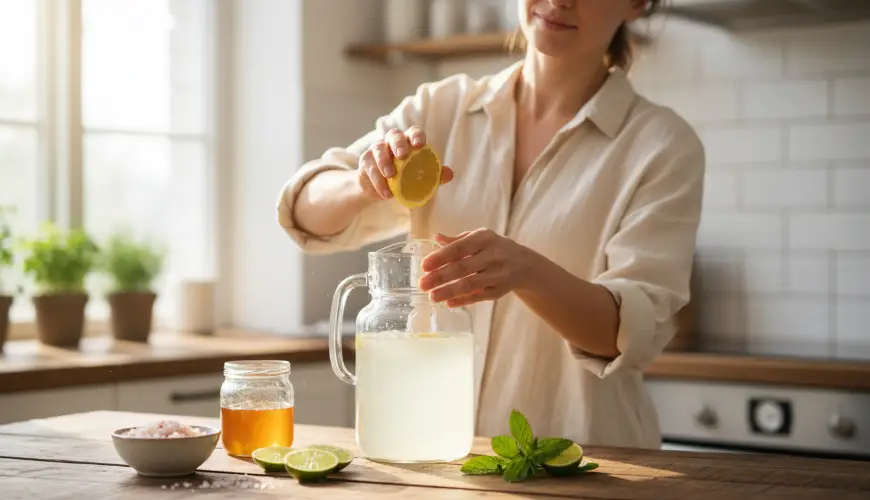
The basic recipe for a homemade electrolyte drink is surprisingly simple and requires no special equipment or ingredients. It is based on the scientifically verified composition of the oral rehydration solution recommended by the WHO.
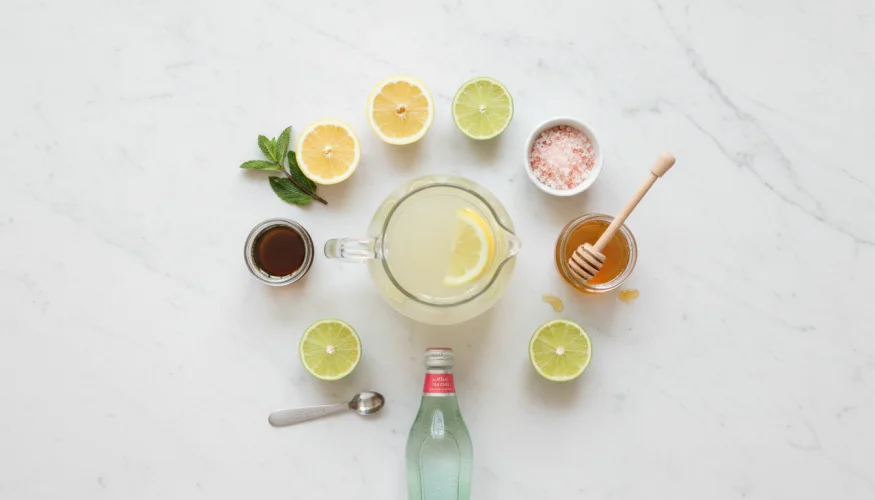
The simplest version consists of:
- 1 litre of clean water (ideally filtered or boiled)
- 1/4 teaspoon of Himalayan or sea salt (source of sodium and chlorides)
- 1/4 teaspoon of salt substitute containing potassium chloride (source of potassium)
- 2 tablespoons of lemon or lime juice (natural source of potassium and vitamin C)
- 1 teaspoon of honey or maple syrup (natural source of sugar for better electrolyte absorption)
The result is a drink that is slightly salty, mildly acidic and pleasantly sweet – and whose composition is close to what the body actually needs. If you want to increase the magnesium content, you can add a pinch of natural magnesium powder or use mineral water with a higher magnesium content as a base instead of tap water.
Take Markéta as an example, a thirty-year-old mother of two from Brno, who started preparing homemade electrolyte drinks after one of her children went through a stomach virus. The paediatrician recommended an oral rehydration solution, but the child refused the pharmacy product because of its unpleasant taste. Markéta therefore tried the homemade version with honey and lemon juice – and the child drank it without any problem. Since then, she has been preparing it for the whole family after every major physical exertion or during summer heat waves. "I stopped buying sports drinks from the shop altogether," she says. "It takes me five minutes and I know exactly what's in it."
Markéta's experience is not unique. Communities focused on healthy living and minimalist households around the world share similar recipes and experiences. The website Healthline, for example, analyses the composition of various electrolyte drinks in detail and confirms that homemade versions can be a fully adequate substitute for commercial products, provided they are properly formulated.
When does a homemade electrolyte drink actually help?
A homemade electrolyte drink is not just for athletes. Its uses are far broader than might appear at first glance. Dehydration affects a large proportion of the population to varying degrees every day – and yet many people don't recognise it at all. Afternoon fatigue, headaches, difficulty concentrating or dryness in the mouth are its common symptoms.
During physical activity, electrolyte replenishment is particularly crucial when training lasts longer than an hour or takes place in high temperatures. Scientific studies repeatedly show that losing just two percent of body weight through sweating can significantly reduce physical performance. Adding electrolytes to your fluid intake helps the body retain water more efficiently and replenish minerals on an ongoing basis.
During illness – particularly diarrhoea, vomiting or fever – a homemade rehydration solution is one of the most effective and safest first aid tools available. The WHO and UNICEF jointly promote oral rehydration as one of the most important public health interventions, not only in developing countries but globally.
In summer heat or when working in the garden, on a building site or in another physically demanding environment, regular electrolyte replenishment prevents heat exhaustion. Older people and young children are particularly vulnerable to dehydration, as the thirst mechanism in them does not function as reliably as in young adults.
And then there are situations that are less often thought about: long-haul flights, where the cabin air is extremely dry, or the day after alcohol consumption, when the body loses electrolytes through increased urination. Even in these cases, a homemade electrolyte drink can bring faster relief than water alone.
As leading American physician and hydration expert Dr Andrew Huberman said: "Hydration is not just about water – it's about the balance of minerals that allow cells to do their work." This idea underpins the entire philosophy of electrolyte drinks, whether commercial or homemade.
The quality of ingredients matters
If someone decides to prepare homemade electrolyte drinks regularly, it is worth paying attention to the quality of the ingredients used. Not all salt is the same: refined table salt has undergone industrial processing that removes most of the naturally occurring trace minerals. Himalayan pink salt or unrefined sea salt, by contrast, contain dozens of natural minerals in small quantities, making them a better choice for electrolyte drinks.
The choice of sweetener matters equally. White refined sugar will fulfil its function – helping the body absorb sodium and replenish energy – but honey or maple syrup additionally provide antioxidants and enzymes that industrially processed sugar lacks. For those monitoring their sugar intake, there are also versions without sweetener or with the addition of coconut water, which is a natural source of potassium and magnesium.
Coconut water has earned a reputation as a natural sports drink in recent years, and to some extent deservedly so. It naturally contains high amounts of potassium and moderate amounts of sodium, magnesium and calcium. On its own, however, it may not be sufficient as a complete electrolyte drink during intense physical activity, as the sodium content is relatively low. A combination of coconut water with a pinch of sea salt and lemon juice, however, makes an excellent and tasty base for a homemade sports drink.
Switching from commercial sports drinks to homemade electrolyte drinks is one of those small steps that require no great effort but can have a real impact – on health, on the wallet and on the amount of plastic waste each of us produces. Fewer plastic bottles in the bin, fewer artificial colourants in the body and a more mindful approach to what we drink. That is precisely the kind of change that makes sense – and what's more, it tastes surprisingly good.