

How to Properly Wash Fruits and Vegetables to Ensure They Are Clean, Safe, and Tasty Every Day
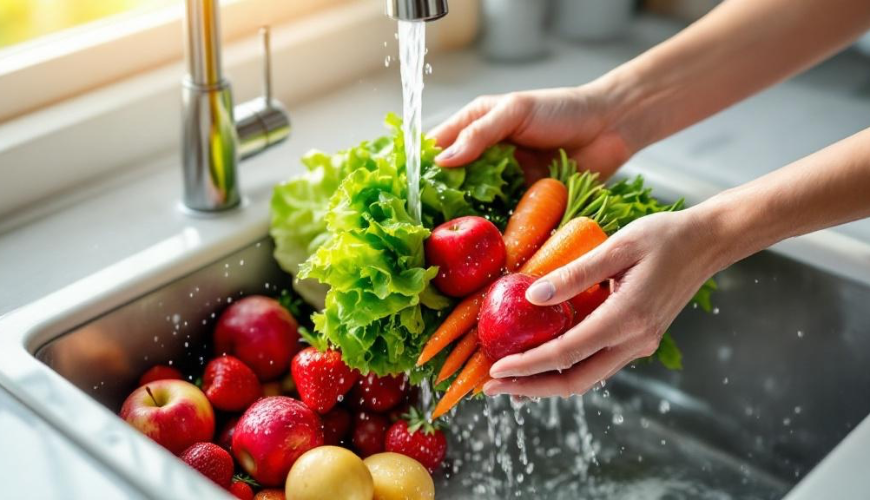
Shopping for fruits and vegetables is something almost everyone can do today, but the question of what to do with them at home isn't always so straightforward. They look fresh, smell inviting, and tempt immediate biting – yet they revolve around one of the most practical topics of everyday healthy living: how to properly wash fruits and vegetables to make them truly "clean". It's not just about the visible soil from the market or dust from supermarket shelves. There's often concern about removing chemicals from fruits and vegetables (typically pesticide residues), or possibly waxes and substances used during storage and transportation.
An important point remains: the goal isn't to cause panic. Pesticides are regulated, and there are limits that are monitored, but kitchen reality is simple – fruits and vegetables pass through many hands, boxes, warehouses, and conveyors. And even if one is a fan of local farmers, there's still a reason why it's important to wash fruits and vegetables: for hygiene, safety, and taste. In some households, washing is automatic; in others, there's reliance on "it's organic". Yet even an organic apple can have dust, bacteria from handling, or soil residues on its skin. That's precisely why it makes sense to talk about how to achieve clean fruits and vegetables without chemicals in the simplest way possible.
Try our natural products

Why it's important to wash fruits and vegetables (and what gets removed from the surface)
The most common reason sounds banal: dirt. However, "dirt" hides more layers. For root vegetables, it's soil; for leafy vegetables, it's dust and small impurities; for berries, it's stem residues, pollen, and sometimes even small insects. Added to this is the human factor – someone laid out, rearranged, and inspected the fruits and vegetables in the store. Transport involves crates, warehouses, cold storage. So washing isn't a whim, but a basic hygiene step.
The second layer is less visible: microorganisms. Not every bacterium is automatically a problem, but some can cause unpleasantness, especially if the vegetables are eaten raw. For this reason, public health recommendations repeatedly highlight the simple advice: wash fruits and vegetables under running water and ensure clean hands and utensils. A practical overview of safe handling of fresh produce is offered by CDC – recommendations for washing fruits and vegetables.
The third layer is what often interests people the most: residues of pesticides, sprays, and surface treatments. It's fair to say that home washing won't make fruits and vegetables a laboratory "zero" product, but it can reduce the amount of residues on the surface. Some substances are mostly on the skin, while others can be partly inside. Still, it makes sense to consider what to use to remove chemicals from fruits and vegetables as gently as possible – without turning the kitchen into a chemical lab.
And finally, there's one often overlooked reason: taste and texture. Gentle rinsing and drying can make a surprising difference, for instance, with strawberries or grapes. As an old kitchen rule goes, which people pass down in various forms: "What wouldn't be eaten from a cutting board shouldn't be eaten from the skin."
How to properly wash fruits and vegetables: a simple routine that works every day
The basic rule is surprisingly simple: running potable water and a bit of time. Many people tend to soak everything in a bowl, "rinse" and be done. However, if multiple pieces are soaking in the same water, impurities can just transfer. Running water is the most reliable in a typical household.
Order is also important: hands first, then the produce. Hands washed with soap (yes, soap belongs here), a clean cutting board, and knife, and only then work with fresh vegetables. However, fruits and vegetables aren't washed with soap or detergent – residues of cleaning agents might remain on the surface, and no one wants to eat them.
In practice, this simple rhythm proves effective: rinse, rub, rinse again, dry. For smooth fruits (apples, pears, cucumbers), gentle rubbing with hands helps. For firmer skins, a clean brush intended just for food can be used – typically for potatoes, carrots, or celery. For leafy vegetables, it's better to separate the leaves, briefly rinse, and let them drain; for leeks or romaine lettuce, impurities often cling between layers.
Timing also makes sense. Some types (wild berries, mushrooms) are better washed just before consumption because moisture accelerates spoilage. Conversely, potatoes or carrots are sometimes washed only before cooking to last longer in the cold. It sounds like a detail, but in a real household, it often determines whether the food is eaten or ends up in the trash.
And now to the question people ask practically: when chemicals are mentioned, what to use to best remove spray residues from fruits and vegetables? There are several gentle methods that don't sound daunting and can be done at home without large investments.
Tips for removing "chemicals" from fruits and vegetables (and what to avoid)
First, it's good to clarify what's actually expected. Home washing typically helps mainly with surface residues – dust, impurities, some pesticides, waxes. If one wants to go a step further, simple kitchen aids can be used. These aren't miracles, but reasonable improvements.
Three approaches are most often mentioned: longer rinsing, baking soda, and vinegar. Each has its place, and it's not necessary to combine everything at once.
Baking soda (sodium bicarbonate) is popular because it's accessible and gentle. Some research suggests that a baking soda solution can help remove some pesticide residues from the surface. A frequently cited study appeared in 2017 in the Journal of Agricultural and Food Chemistry and showed that soaking apples in a baking soda solution led to greater reduction of some residues than just water (but these are specific conditions and specific substances; in a home setting, it's good to take it as guidance, not an absolute promise). For those interested, a record is available through ACS Publications.
Vinegar (fermented alcohol vinegar or apple cider vinegar) is used mainly for the feeling of "disinfection". Vinegar can limit some bacteria on the surface, but it's not a sterilizing magic and its effect depends on concentration and time. Moreover, it can leave a taste and affect the texture of sensitive fruits. Still, it's practical for harder vegetables or rinsing grapes – followed by thorough rinsing with clean water.
And then there's plain water and mechanical rubbing, often underestimated. Rubbing under running water often does more than brief "soaking in something" that isn't properly rinsed.
To be clear and practical, it's enough to choose one of the options based on what's at home and what's being washed. Usually, there's no need to overdo it, but it's handy to have a simple procedure up one's sleeve:
The only practical list: three home washing options
- Running water + rubbing with hands (most common choice): suitable for most fruits and vegetables, ideal everyday minimum.
- Baking soda solution + subsequent rinse: suitable for firm-skinned fruits (apples, pears, cucumbers). Always rinse thoroughly afterward.
- Short vinegar rinse + water: more for harder pieces or grapes when the surface needs "refreshing"; again, the key is final rinsing with clean water.
What to avoid? Don't use detergent, soap, or surface disinfectants. These agents aren't meant for consumption, and the risk of residues on food is unnecessary. Similarly, it doesn't make sense to rely on "miraculous" preparations without clear composition. If a special product for washing fruits and vegetables is purchased, it should have a transparent composition and clear instructions – and even then, the most important thing is thorough rinsing.
Peeling also comes into play. Peeling an apple or cucumber is a simple solution, but it's a trade-off: some fiber and certain micronutrients are often in the skin. Moreover, it doesn't address hand and kitchen surface hygiene. Peeling is therefore a good supplement, not a universal replacement for washing.
And what about "organic"? Organic production can use different plant protection methods than conventional, but it still holds that organic carrots can have soil, and organic lettuce can travel through storage. Washing is always worth it, without succumbing to the notion that without a complex ritual, everything is wrong.
In everyday life, this beautifully fits into a simple example. A family buys a large box of strawberries, a cucumber, apples, and a pack of baby spinach on Friday after work – with the good intention of "eating healthy". Kids take a strawberry straight from the box because "it looks clean", the cucumber ends up on the cutting board right next to raw meat because of rushing, and the spinach is just dumped into a bowl. On Saturday, someone suffers a stomach ache, and the culprit is sought. Often, just a few minutes are enough: gently rinse the strawberries and let them drain, rinse and rub the cucumber, briefly rinse the spinach (even if it's "ready to eat", it doesn't hurt at home), and especially separate the meat cutting board from the vegetable one. Clean fruits and vegetables without unnecessary chemicals then aren't a marketing slogan, but simply a small habit that reduces risk and increases comfort at the table.
People sometimes ask: isn't this over the top when everything is eaten quickly anyway? But precisely fast kitchens are often the most vulnerable. The less time, the more basic steps are skipped. Yet it takes little – to put in mind a simple rule that anything going raw into the mouth should at least go through a brief rinse. For small fruits like blueberries, it's practical to use a colander and rinse under a gentle stream. For citrus fruits, it's useful to rinse even the peel, even if it's not eaten – because it gets cut with a knife, which can transfer impurities inside.
For those who want to go a step further, publicly available information on pesticide residues and food inspections can be monitored. In the Czech environment, it's worth knowing about the European Food Safety Authority (EFSA), which publishes reports on pesticides in food within the EU. These materials help put concerns into context: a control system exists, but home hygiene is still the last link in the chain that a person has in their own hands.
Ultimately, it all comes back to a simple, even calming thought: a healthy lifestyle doesn't rest on perfection but on repeatable small things. Properly washing fruits and vegetables is one of those little things that cost almost nothing, yet improve safety and taste. And when combined with sensible selection of seasonal produce, gentle handling in the kitchen, and occasional peeling where it makes sense, it creates a daily routine that is sustainable – without stress and without the feeling that battling "chemicals" is necessary at all costs. Just clean water, a few minutes, and a habit that quickly becomes as automatic as putting a napkin on your lap before a meal.