
The Secret to Perfect Cold Pasta Salads
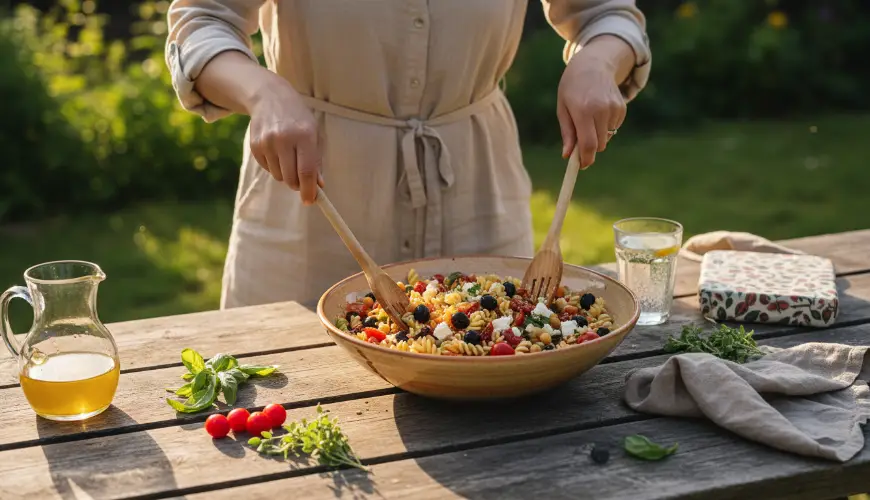
Summer is in full swing, and with it comes the eternal question of what to prepare for a picnic, a family barbecue, or simply a lunchbox for work. Pasta salad seems like the ideal choice – quick, filling, and versatile. But anyone who has ever prepared it the day before knows that disappointing sight in the morning: the pasta is soggy, the dressing has been absorbed, and what was once a fresh salad has become nothing but a sticky mass. Fortunately, there are ways to prevent this fate, and the result can actually taste great the next day too.
The key to success lies not in a single trick, but in a combination of several seemingly minor decisions – from choosing the right type of pasta and the way it's cooked to the composition of the dressing. Once a person understands these principles, cold pasta salads become a reliable part of their culinary repertoire.
Try our natural products




Why pasta goes limp in salad – and how to prevent it
To solve the problem, it's worth first understanding why it happens in the first place. Pasta is made of starch, which has a natural tendency to absorb liquid from its surroundings. After cooking, the surface layers of pasta are soft and porous, and if they are over-cooked or coated with fat immediately after cooking, the starch continues to swell even in the refrigerator. The result is a mushy consistency that is unappealing both visually and in terms of flavour.
The degree of cooking makes a crucial difference. Pasta intended for salad must be cooked significantly less than the packet suggests – ideally removed from the water roughly two minutes before the recommended time. It should be al dente, meaning with a slightly firmer centre. During cooling and marinating, further softening will occur, so what seems too firm right after cooking will be perfectly right in the salad the next day.
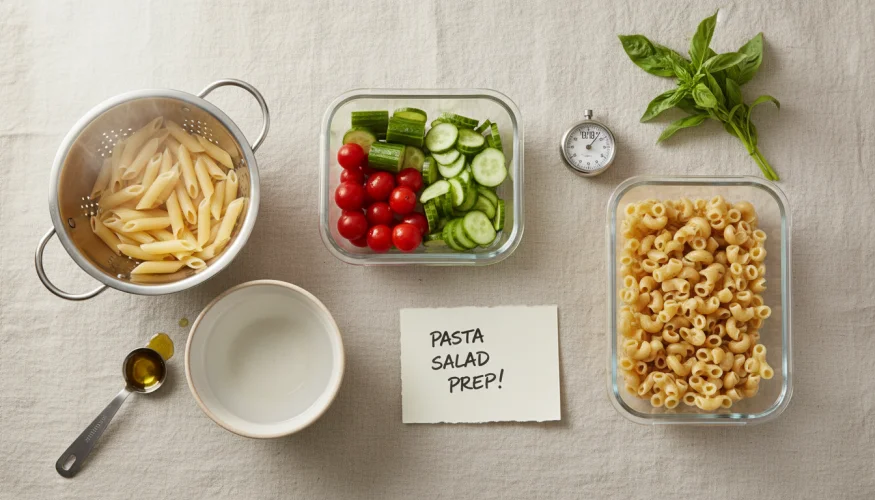
Another important step is rinsing the pasta with cold water immediately after draining. This stops the cooking process, removes excess surface starch, and reduces stickiness. Many cooks resist this step, arguing that it washes away flavour – but for pasta in a salad, this doesn't matter, as the flavour will come from the dressing and other ingredients anyway.
Equally important is the choice of pasta shape itself. Short, hollow, or spiral shapes such as fusilli, penne, farfalle, or rotini are a significantly better choice for cold salads than long pasta. Their shape allows the dressing to cling in the folds and cavities without the pasta having to absorb liquid from the surface. They also hold their shape better after cooling.
The dressing as a foundation – and when to add it
One of the most common mistakes when preparing pasta salad lies in the timing of adding the dressing. If pasta is mixed with dressing immediately after cooking and rinsing, it absorbs a large portion of the liquid even before the salad reaches the refrigerator. By the next day, there is nothing left to absorb – and the salad is either dry or, conversely, soggy.
A tried-and-tested approach is to add just a thin layer of olive oil after rinsing the pasta – approximately one tablespoon per 250 grams of pasta. The oil creates a protective film on the surface of the pasta that prevents excessive absorption of the dressing. The dressing itself is then added just before serving, or at least in a smaller quantity when mixing, with the remainder added just before eating.
An olive oil and vinegar or lemon juice-based dressing is generally more resilient for cold salads than mayonnaise-based dressings. Mayonnaise does give the salad richness and creaminess, but it tends to "coat" the pasta and cause exactly that undesirable stickiness. If mayonnaise is the preferred choice, it is recommended to dilute it with yoghurt or sour cream in a 1:1 ratio – the result is lighter, fresher, and holds up better overnight.
The Italian approach to pasta salads works with simplicity: quality extra virgin olive oil, a little vinegar or lemon, salt, pepper, and fresh herbs. Such a base combines beautifully with pasta while allowing it room to "breathe". Mediterranean cuisine has been using this principle for ages, and the results speak for themselves.
There is yet another lesser-known trick that professional cooks like to share: adding part of the dressing to the pasta while it is still warm. Warm pasta will lightly absorb the dressing and "flavour itself from within", while the surface remains firmer after cooling. The next day, simply add the rest of the dressing and the salad tastes as freshly made.
Ingredients that will revive the salad – even the next day
Pasta and dressing alone are not enough. The choice of additional ingredients has a fundamental influence on whether the salad still looks appealing and tastes fresh the next day. Some ingredients keep well in the refrigerator, while others transform into something unusable after just a few hours.
Vegetables with a high water content – tomatoes, cucumbers, or peppers – release liquid that mixes with the dressing and makes the pasta soggy. The solution is not to avoid these types of vegetables, but to add them just before serving. If the salad is being prepared in advance, tomatoes and cucumbers can be stored separately in a sealed container and mixed with the rest of the salad only at the moment of serving.
On the other hand, ingredients such as olives, capers, grilled vegetables, roasted red peppers from a jar, sun-dried tomatoes, hard cheeses, or legumes are ideal companions that keep in the refrigerator without any problem. Chickpeas or white beans add protein and substance to the salad, while their consistency barely changes overnight. Similarly suited are sweetcorn, artichokes in oil, or sautéed mushrooms – all ingredients that retain their texture even after longer chilling.
When it comes to cheeses, harder varieties such as Parmesan, Pecorino, or feta are a significantly better choice than softer cheeses. Feta, for example, holds its shape in a salad overnight and also contributes to the overall flavour with its saltiness and slight acidity. Mozzarella, on the other hand, releases whey and becomes watery and less appetising after a few hours in the refrigerator.
Fresh herbs such as basil or parsley are best added just before serving – in the refrigerator they quickly lose their colour and fragrance. An exception is oregano or thyme, which are more robust and are not harmed by marinating; in fact, they benefit from it.
As a practical example, consider the experience of many families who prepare pasta salad for a Sunday outing. On Saturday evening, they mix cooked penne al dente with olive oil, add olives, sun-dried tomatoes, chickpeas, and feta cheese, along with a dressing of lemon juice, garlic, and oregano. They store the tomatoes and cucumbers separately. On Sunday morning, they add the fresh vegetables, pour on a little more dressing, and the salad is as fresh as newly made – yet all the work was done the day before.
As British chef Yotam Ottolenghi once remarked: "A salad that you have to prepare at the last minute is not a good salad." This thought perfectly captures the philosophy of advance preparation – food should be so well thought out that time works in its favour, not against it.
When looking for inspiration for new flavour combinations, it can be useful to browse recipe databases such as Epicurious or Serious Eats, where culinary experts test recipes repeatedly and share not only the results but also the scientific background of why certain approaches work better than others.
It is also worth mentioning that the choice of quality pasta plays a role that is often underestimated. Pasta made from durum wheat semolina is firmer, has a lower glycaemic index, and resists sogginess better than cheaper varieties. Wholegrain pasta is more nutritious, but its texture is coarser and it may behave less predictably in a salad – it needs to be tried out and the cooking time adjusted accordingly. Lentil, pea, or chickpea pasta, which is currently very popular due to its higher protein content, tends to be softer and requires an even shorter cooking time when preparing a salad.
Proper storage of the finished salad in the refrigerator is the final link in the entire chain. An airtight container prevents the surface of the pasta from drying out and from absorbing odours from other foods. The salad should be stored in the refrigerator at a temperature of up to four degrees Celsius and ideally consumed within two days. Before serving, it is advisable to leave it for five to ten minutes at room temperature so that the flavour fully develops – cold food straight from the refrigerator never tastes as good as food that has been slightly tempered.
A cold pasta salad that retains its freshness and texture even the next day is not the result of chance or culinary talent. It is a matter of understanding a few simple principles and applying them consistently. From the choice of pasta shape and the correct degree of cooking, through the protective layer of oil, to the clever timing of adding the dressing and the selection of resilient ingredients – every step has its purpose. And the result is a dish that delights not only on the day it is prepared, but also when the refrigerator is opened the following morning.