

# How to Properly Store Herbs and Extend Their Freshness Fresh herbs can transform an ordinary dish
Fresh herbs are one of those things that can transform an average meal into something truly exceptional. A bit of fresh basil on an Italian pasta dish, a handful of coriander in a Thai soup, or a bunch of chives sprinkled over a potato salad – these are the details that make all the difference. And yet most people have experienced the same frustration: they buy a beautiful bunch of parsley, store it in the fridge, and three days later find it slimy, brown, and completely unusable. Why does this happen, and how can it be prevented?
The answer lies in the way herbs function as living plants. Even after being cut from the stem or purchased in a shop, herbs are still metabolically active – they breathe, evaporate water, and respond to their surrounding environment. Proper herb storage isn't about any complex science, but about understanding their basic needs. And once you understand these needs, extending the shelf life of fresh herbs becomes a natural part of your kitchen routine.
Try our natural products




Why herbs wilt so quickly
Before we dive into specific methods, it's worth understanding why herbs wilt so quickly. The main cause is moisture loss. Once cut, herb stems stop drawing water from the soil, yet they continue to evaporate it through their leaves. The result is gradual wilting, which manifests as drooping leaves, loss of colour, and eventually decomposition. The second enemy is cold – and this is a paradox that surprises many people. Tropical herbs such as basil, coriander, and tarragon are very sensitive to low temperatures, which means the refrigerator, where most people automatically store them, is actually harmful to them.
On top of that, there's the issue of moisture in the wrong place. While herb stems need moisture, their leaves tolerate it poorly – direct contact with water or excessive condensation in a sealed bag causes rotting. It's like human hair: the roots need hydration, but damp hair sealed in a plastic bag would quickly start to mould. The same logic applies to herbs.
Research in the field of post-harvest plant biology confirms that proper storage conditions can extend the shelf life of fresh herbs up to four times compared to unsuitable methods. It's therefore not an exaggeration to say that the way herbs are stored determines whether they end up in the bin a week later, or whether they make it into a delicious meal.
Storage methods by herb type
Herbs are divided into two main groups, each requiring a slightly different approach. Understanding this distinction is the key to success.
The first group consists of so-called soft or tender herbs – this includes basil, parsley, coriander, mint, dill, and tarragon. These herbs have delicate, juicy stems and leaves that are prone to damage. The second group consists of hard or woody herbs – rosemary, thyme, oregano, sage, and lavender. These have a firmer structure and generally last longer.
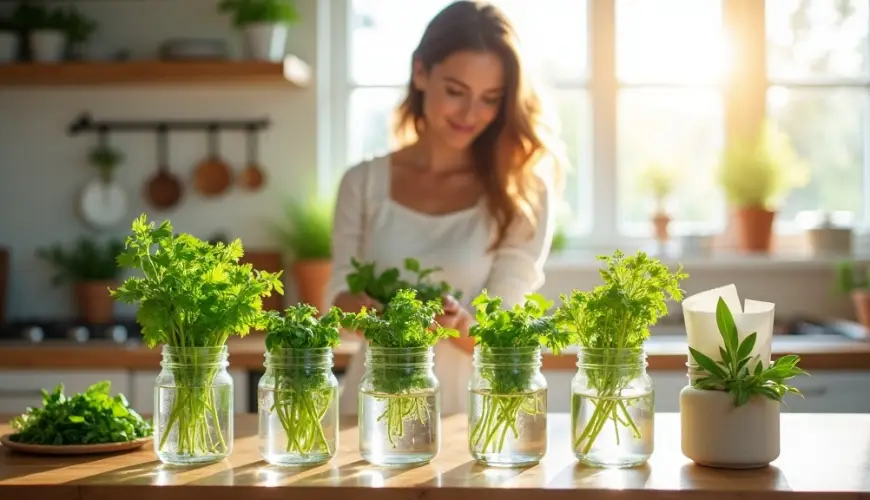
For tender herbs, the best method resembles caring for cut flowers. Simply trim the bottom of the stems, place the herbs in a glass or cup with a little water – about two to three centimetres deep – and loosely cover with a plastic bag or cling film. Parsley or coriander prepared this way can last in the fridge for up to two weeks and will still smell and taste fresh. Basil is an exception – it's better kept at room temperature, as cold damages it. A small jar of basil on the kitchen counter, in a bright spot but out of direct sunlight, is the ideal solution.
For woody herbs, the situation is simpler. These herbs just need to be loosely wrapped in a slightly damp paper towel and stored in a resealable bag or container in the fridge. The paper towel plays a crucial role – it absorbs excess moisture that would otherwise cause rotting, while still maintaining sufficient humidity around the leaves. Rosemary or thyme stored this way will easily last three to four weeks.
A real-life example: Jana, an enthusiastic home cook from Brno, used to buy a large bunch of fresh parsley every week and it always ended up in the bin before she could use it all. After trying the glass-of-water method in the fridge, she found that the parsley stayed in perfect condition for a full two weeks. "It was a revelation," she says. "Such a simple thing and such a big difference."
Alternatives for long-term preservation
What if someone buys or grows more herbs than they can use fresh? This is where long-term preservation methods come in, each with its own advantages and specific uses.
Freezing is probably the most convenient and versatile method. Herbs can be frozen in several ways. The simplest is to chop fresh herbs and place them in ice cube trays with a little water or olive oil. Once frozen, these make practical cubes that can be added directly to soups, sauces, or stews. This method works great for parsley, dill, chives, or basil. It's important to know that frozen herbs will lose their texture and are not suitable as a garnish, but their flavour and aroma are largely preserved.
The second option is drying, which is ideal primarily for woody herbs. Rosemary, thyme, oregano, or sage retain their intense aroma after drying and can be kept in sealed jars for many months. Drying can be done naturally – by tying the herbs into bunches and hanging them in an airy, shaded spot for one to two weeks – or in an oven at a low temperature of around 40 degrees Celsius. Drying in a microwave is a faster alternative, but requires attention to prevent the herbs from burning. Tender herbs such as basil or coriander don't dry as well and lose much of their characteristic aroma in the process.
The third option, which has been gaining popularity in recent years, is preserving in oil or vinegar. Herbs submerged in quality olive oil or wine vinegar transfer their aroma to the liquid while being preserved themselves. The result is a flavoured oil or vinegar that can be used in cooking, in salads, or as a base for marinades. However, it should be noted that herbs preserved in oil at room temperature can pose a botulism risk – the US Food and Drug Administration (FDA) recommends storing such preparations in the refrigerator and consuming them within two weeks.
As the French chef and cookbook author Auguste Escoffier once aptly put it: "Good cooking begins with quality ingredients and their proper preservation." This thought holds true today, perhaps more than ever, at a time when people are increasingly aware of the value of fresh and locally sourced ingredients.
When choosing the right method, it also depends on which herbs are available at a given time and what they will be used for. Below is an overview of the most common herbs and recommended storage methods:
- Basil – a jar of water at room temperature, or frozen in oil
- Parsley and coriander – a jar of water in the fridge, or frozen
- Chives – wrapped in a damp paper towel in the fridge, or frozen
- Rosemary and thyme – damp paper towel in the fridge, or dried
- Mint – a jar of water in the fridge or at room temperature
- Sage and oregano – damp paper towel in the fridge, or dried
Growing your own herbs as the best solution
Interestingly, the best way to always have fresh herbs on hand and avoid the problem of wilting is actually to grow them yourself. A small herb bed on a balcony, a kitchen windowsill with three or four pots of herbs, or even a simple vertical growing system on a wall – these are all realistic options even for people without a large garden or growing experience.
Growing your own herbs has several advantages. First, herbs are harvested gradually in only the quantity currently needed, eliminating the problem of surplus and wilting. Second, home-grown herbs are fresher than anything you can buy in a shop. Third, growing herbs is financially worthwhile – a single pot of basil from a shop costs roughly the same as a seedling from which you can harvest throughout the entire season.
For beginners, the easiest herbs to grow are basil, chives, mint, and parsley. These herbs are hardy, grow quickly, and require no special care. All they need is sufficient light, regular watering, and occasional fertilising. Mint is so resilient that some gardeners consider it more of a weed – it grows quickly and persistently, so it's best grown in a separate container to prevent it from overrunning other plants.
For those who want to go even further and have herbs available during the winter months, hydroponic growing systems are an excellent choice. These compact devices allow herbs to be grown without soil, purely in nutrient-enriched water, year-round regardless of weather or season. Modern versions of these systems are aesthetically pleasing, quiet, and low-maintenance – they can serve as a decorative feature in the kitchen while also being a practical source of fresh herbs.
Whether you choose to grow your own herbs or store purchased ones cleverly, the key is always attention and a little care. Herbs are not a disposable commodity, but a living part of the kitchen that deserves the same attention as any other ingredient. And the reward for this care is wonderful – every dish seasoned with fresh herbs is one step closer to perfection.