

Tai chi heals the body with slow movements and the mind too
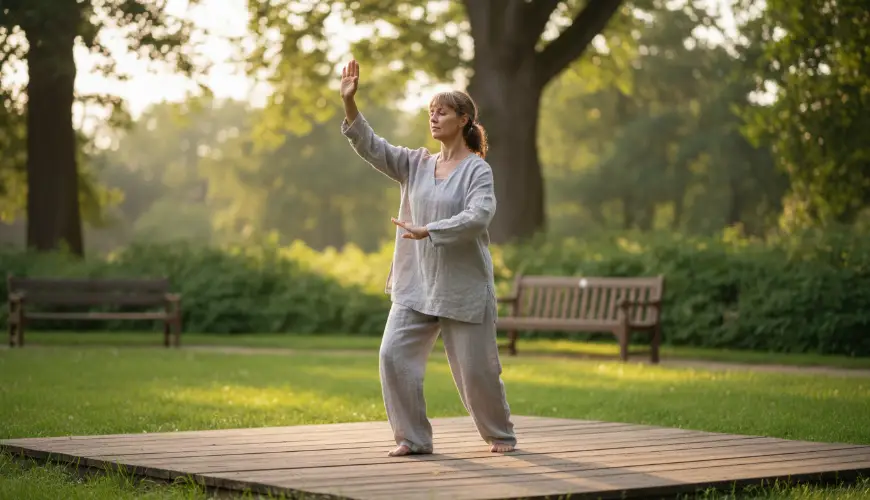
There is a movement practice that requires no equipment, does not strain the joints, can be done practically anywhere, and yet delivers demonstrable health benefits for both body and mind. It is called tai chi, and in recent years it has been finding its way into European parks, living rooms, and rehabilitation centres. Yet many people still perceive it as something exotic, distant, or reserved exclusively for seniors. The opposite is true.
Tai chi, full name tai chi chuan, is an ancient Chinese art of movement that originated several centuries ago as a martial discipline and gradually evolved into one of the most accessible health care systems in the world. Its essence is a fluid sequence of movements performed slowly, mindfully, and in harmony with the breath. It is precisely that apparent slowness that surprises most people — and that simultaneously makes tai chi so effective.
Try our natural products




Why slow movement heals
At first glance, it might seem that slow movements cannot have a significant physical effect. Yet the opposite is true. When the body moves slowly and with full awareness, the deep stabilising muscles are activated — muscles that remain unused during fast-paced sport. At the same time, breathing slows down, cortisol levels drop, and the nervous system shifts from "fight or flight" mode into a state of calm alertness. It is precisely this combination of physical movement and mental calming that gives tai chi the nickname meditation in motion.
Scientific research confirms these observations. Harvard Medical School identifies tai chi as an exercise that demonstrably improves balance, reduces the risk of falls in older adults, alleviates symptoms of arthritis and chronic back pain, and even helps in the treatment of depression and anxiety. And all of this without a single squat, weightlifting equipment, or joint strain.
Traditional Chinese medicine explains the effects of tai chi through the concept of qi — vital energy that flows through the body along pathways called meridians. Regular practice is said to harmonise this energy and release its blockages. Whether or not one believes in this concept, the results documented by research are real and measurable.
A remarkable example is the case of Věra, a sixty-year-old teacher from Brno, who took up tai chi after knee surgery when her doctor recommended something low-impact. "I was expecting a dull rehabilitation, but instead I discovered a form of movement that completely captivated me," she says. After three months of regular practice at home, she not only returned to normal life but also stopped taking the sleeping pills she had been using for years.
Tai chi does not work solely with the body, but with the whole person. The concentration it demands — awareness of the position of every part of the body, the fluidity of transition from one movement to the next, synchronisation with the breath — naturally draws attention away from everyday worries and brings it into the present moment. It is essentially meditation, only with the hands and feet in motion.
As Master Yang Cheng-fu, one of the most significant proponents of the Yang style in the 20th century, once said: "In tai chi, there is not a single place where the body is not light and agile." This lightness is not merely physical — it is a state of mind to which the practice gradually leads.
Tai chi at home: how to start without a class and without worry
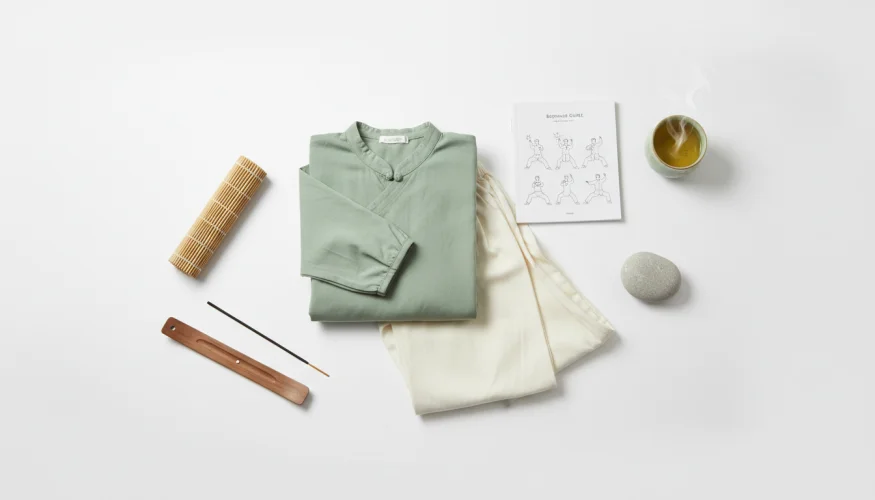
One of the greatest advantages of tai chi is its accessibility. Unlike many other movement disciplines, it requires no special equipment, large space, or physical fitness. All you need is a quiet corner in your living room, comfortable clothing, and a willingness to devote at least twenty minutes a day to movement.
Beginners often ask: where to even begin? There are many traditional forms of tai chi — the Yang style, the Chen style, the Wu style, and others — and each has its own specific aesthetic and technical demands. For complete beginners, the best choice is the so-called 24-movement form, compiled in 1956 by a Chinese government commission as a simplified version of the Yang style. It is short enough to be learned gradually, while still representing the essence of the entire system.
Before embarking on a specific form, however, it is useful to understand a few basic principles that run through all of tai chi regardless of style. The spine should be upright, but not rigid. The knees are always slightly bent, never locked. Movements originate from the centre of the body — from the area below the navel that the Chinese call the dan tian. And breathing is always slow, deep, and natural, never held.
First steps for beginners
A practical entry into tai chi at home might look something like this: spend the first week focusing solely on standing and conscious breathing. Stand in a slightly wide stance, bend your knees gently, relax your shoulders, and for five minutes simply breathe and sense the centre of gravity in your body. It sounds simple, but many people discover that they are holding a great deal of tension in this basic posture — tension they were not even aware of.
The second step is the so-called "wave movement" — a gentle shifting of weight from one foot to the other, as if the body were swaying on a calm water surface. This movement recurs in almost every tai chi sequence, and mastering it is essential. Gradually add arm movement — the arms move as if displacing air, not cutting through it. The movement is rounded, never angular.
Only after mastering these fundamentals does it make sense to move on to specific exercises. One of the most well-known and accessible is "Part the Wild Horse's Mane" — a movement in which the body turns to the side and the arms naturally spread like wings. Another favourite for beginners is "White Crane Spreads Its Wings", in which one hand rises upward and the other descends, while the body leans slightly to one side. Both of these movements develop coordination, stretch the hips and shoulders, and at the same time teach the basic dynamics of weight transfer.
For self-study at home, there are now very high-quality resources available. The International Federation of Tai Chi and Qigong offers an overview of styles and certified teachers, and many of them provide instructional materials online. Videos on platforms such as YouTube vary in quality, but channels run by reputable masters — such as Dr. Paul Lam — are an excellent starting point for independent study.
The key to success is not to quickly master as many movements as possible, but rather to achieve a deep understanding of just a few movements. It is better to practise three movements thoroughly over the course of a month than to rush through the entire 24-movement form in a week. Tai chi is a discipline that rewards patience — and that in itself is an important lesson it imparts.
A good complement to tai chi is qigong, with which tai chi is closely associated. While tai chi is a movement form with a fixed structure, qigong offers simpler, repetitive movements focused purely on working with breath and energy. Many teachers recommend starting with qigong, as its movements are less complex and easier to absorb.
It is noteworthy that tai chi is also gaining an increasingly prominent place in modern medicine. Some hospitals in the USA, the United Kingdom, and the Czech Republic are incorporating it into rehabilitation programmes for patients recovering from heart attacks, living with Parkinson's disease, or dealing with chronic pain. The World Health Organization recommends movement activities such as tai chi as part of healthy ageing, emphasising their role in fall prevention and maintaining mobility.
The question naturally arises: is it better to practise alone at home, or to attend a class? The answer depends on the individual. Some people need community and feedback from a teacher; others appreciate the calm and privacy of the home environment. The ideal is a combination — a class as a foundation and home practice as a daily routine. In the Czech Republic, there are a number of quality tai chi schools, whether in Prague, Brno, or other cities, where introductory workshops can be attended.
What matters most, however, is not to remain at the stage of thinking about tai chi, but simply to begin. The body learns through movement, not through reading about movement. And tai chi is one of those disciplines where the first experience — that moment when a person stands still, slows down, and begins to move consciously — is often surprisingly powerful in itself. Many beginners are struck by the sense of calm that arrives after the first twenty minutes of practice, and it is precisely that which keeps bringing them back.
Tai chi is not a practice reserved for the select few, for seniors, or for those interested in Eastern philosophy. It is a movement practice for anyone who wishes to pay attention to their body, slow down in an overloaded world, and find a way to move with greater ease — literally and figuratively. All it takes is a little space, a little time, and a willingness to be surprised by what slow movement can do.