

# Why Do People Drink Bulletproof Coffee in the Morning? Drinking coffee with fat (known as **"bull

In the morning, right after waking up, most of us automatically turn on the coffee maker. Coffee is a ritual, a companion, and for many people literally a prerequisite for a functional day. But in recent years, a trend has been spreading among health enthusiasts, biohackers, and athletes that takes the traditional cup of black coffee to a completely different level. Coffee with fat – known in the English-speaking world as bulletproof coffee – looks like a curious experiment at first glance, but behind this combination lies a well-thought-out nutritional philosophy that has its firm supporters as well as critics.
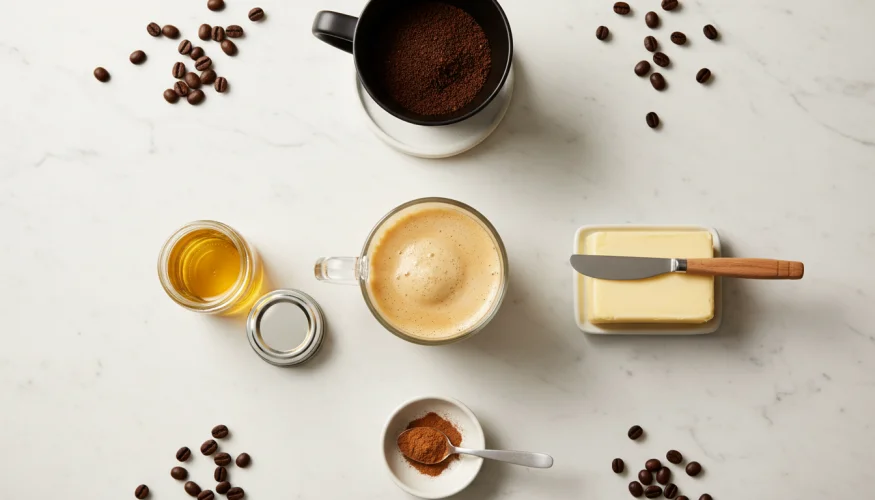
This wasn't a random idea from someone who accidentally added butter to their coffee one morning. The bulletproof coffee concept was popularized by American entrepreneur and biohacker Dave Asprey after returning from Tibet, where local tea with yak butter inspired him to create his own version of an energy drink. Asprey introduced his recipe to the world in 2011, and since then the drink has gained millions of fans across continents. The basic recipe is surprisingly simple: quality black coffee, a tablespoon of unsalted butter from grass-fed cows and a tablespoon of MCT oil – all thoroughly blended together into a smooth, creamy consistency reminiscent of a latte.
Try our natural products


Why put fat in coffee and what happens in the body?
To understand why anyone would add fat to a morning drink, it's necessary to peek under the hood of modern nutritional approaches. Bulletproof coffee is closely linked to ketogenic and low-carbohydrate diets, whose principle is to shift the body into a state called ketosis. In ketosis, the body burns fat instead of glucose as its primary energy source, producing ketone bodies – an efficient fuel especially for the brain and muscles.
MCT oil (medium-chain triglycerides) plays a key role in this process. Unlike common fats, MCT oil is digested differently – the liver converts it into ketone bodies very quickly, without the need for a longer digestive process. The result is a rapid and stable supply of energy without the blood sugar fluctuations that are typical after a classic carbohydrate-rich breakfast. Butter from grass-fed cows then provides healthy saturated fats, fat-soluble vitamins, and butyric acid, which has a positive effect on the health of the intestinal lining.
The caffeine from the coffee itself further amplifies this effect. The combination of caffeine and ketone bodies can lead to a significant improvement in mental clarity, concentration, and overall energy – at least that's how people who have regularly incorporated bulletproof coffee into their mornings describe it. Scientific research in the area of MCT oils and cognitive function is still in its early stages, but a study published in the journal Frontiers in Aging Neuroscience suggests that ketone bodies may have a positive effect on brain function, especially in older adults.
It's also interesting that the fats in the drink slow down the absorption of caffeine, which prolongs and smooths out its stimulating effect. Instead of the typical rapid energy spike followed by a crash that many people experience after regular coffee, bulletproof coffee brings a more gradual and longer wave of focus. For people who are sensitive to caffeine or suffer from the so-called caffeine crash, this property can be a real game changer.
Let's consider a specific example: Markéta, a thirty-four-year-old graphic designer working from home, decided to try bulletproof coffee after experiencing fatigue and inability to concentrate around ten in the morning following a classic breakfast of bread rolls. After two weeks of drinking coffee with fat instead of a traditional breakfast, she described working better in the mornings, feeling less hungry, and generally experiencing less fluctuation in her energy levels. Of course, this is an individual experience, but there are plenty of similar stories circulating online and in professional communities.
As Dave Asprey himself once noted: "Don't eat less, eat smarter." This is precisely the principle that bulletproof coffee embodies – it's not about deprivation or drastic restriction, but about a conscious choice of foods that truly benefit the body.
Who does bulletproof coffee make sense for and who doesn't it suit?
This is where we get to the most important question. Coffee with fat is not a universal solution for everyone, and it would be naive to present it as such. There are groups of people for whom this drink offers real benefits, but there are equally situations where it's better to stick with a classic cup.
Bulletproof coffee makes the most sense for people following a ketogenic or low-carbohydrate diet. For them, the morning fat-enriched drink is a natural part of their nutritional plan – it helps keep the body in ketosis, provides energy without carbohydrates, and replaces breakfast in a way that aligns with their macronutrient goals. It's also appreciated by followers of intermittent fasting. Technically, coffee with fat does break a fast (it contains calories), but many practitioners include it as a so-called fat fast – consuming fat alone without protein and carbohydrates minimizes the insulin response and largely preserves the metabolic state close to fasting.
Other candidates include people who generally don't like breakfast or don't have time for it, but still need to perform at full capacity in the morning. In this case, bulletproof coffee serves as a quick and satisfying solution that takes no more than five minutes to prepare. Athletes and active individuals seeking stable energy without fluctuations are also among those who can benefit from this drink – especially if they train in the morning on an empty stomach or prefer a low-carbohydrate approach to sports nutrition.
On the other hand, it must be said openly: bulletproof coffee is not suitable as a permanent replacement for a balanced breakfast for everyone. People who don't follow a low-carbohydrate diet and whose bodies are adapted to burning glucose may have more trouble with such a high fat intake in the morning – whether digestive or energy-related. Moreover, the drink contains virtually no protein, fiber, or micronutrients that are essential for health. If someone were to replace a substantial breakfast of eggs, vegetables, and whole grain products with just a cup of coffee with fat, without it being part of a well-thought-out nutritional plan, they could end up with a caloric or nutritional deficit.
People with cardiovascular problems or high cholesterol should pay particular attention. Butter and MCT oil are rich in saturated fats, and although current science is reassessing the previously negative view of saturated fats, consulting a doctor or nutrition specialist is definitely advisable in such cases. The American Heart Association still recommends limiting saturated fat intake, even though the debate within the professional community remains active.
There is also a group of people for whom bulletproof coffee is simply a fashionable trend with no personal benefit. And that's perfectly fine. Nutrition is a very individual matter, and what works wonderfully for one person may not work at all for another. The key is always to listen to your own body, experiment sensibly, and consult a professional when in doubt.
If someone decides to try bulletproof coffee, it's worth paying attention to the quality of the ingredients. The choice of coffee plays a crucial role – ideally freshly ground, high-quality single origin coffee with a low content of mycotoxins (mold toxins), which Asprey also emphasizes in his philosophy. The butter should genuinely come from grass-fed cows, as such butter has a significantly better nutritional profile than conventional varieties – it contains more omega-3 fatty acids and vitamin K2. And MCT oil, ideally in the form of C8 (caprylic acid), is available in numerous health food stores and online shops focused on healthy living.
The preparation itself is straightforward, but the details matter. The key to the right consistency is thorough blending – stirring by hand with a spoon isn't enough, the fat would separate and the result would be greasy and unpleasant. An immersion blender or countertop blender running for 30 to 60 seconds creates a creamy, frothy drink that in terms of taste resembles a full-fat latte. Some enthusiasts also add a pinch of cinnamon, vanilla, or collagen peptides to enrich both the flavor and nutritional profile.
Bulletproof coffee is, in short, a phenomenon that deserves more than just a superficial dismissal or, conversely, uncritical enthusiasm. Behind the fashionable trend lies real nutritional logic, supported by a growing body of research on fat metabolism and brain function. It's not a miracle drink that will solve everything, but for the right person in the right context, it can be a genuine ally – a morning ritual that changes how you feel throughout the entire day.