

Savory oatmeal porridges inspired by culinary traditions
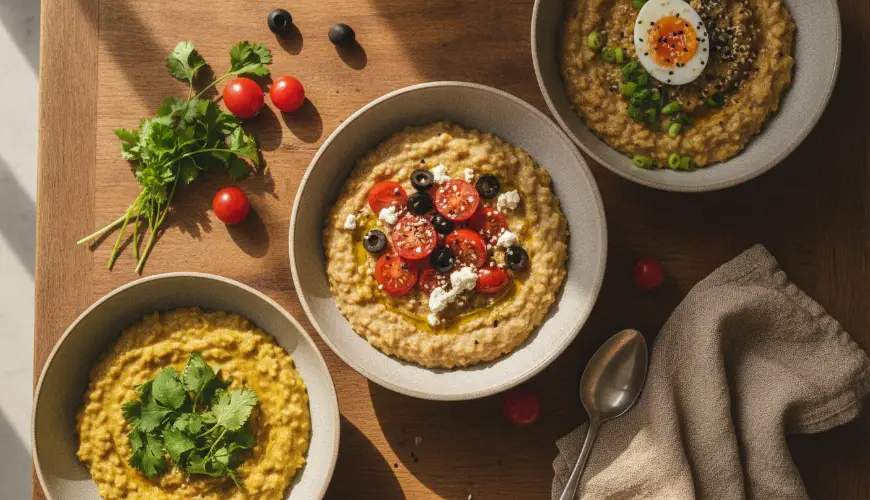
Oatmeal. For many, it's a symbol of a boring but healthy breakfast
A white mass in a bowl, drizzled with a little honey and topped with banana. But what if it were possible to turn this entire ritual upside down while getting something significantly tastier, more filling, and more interesting? Savoury oatmeal is a phenomenon conquering kitchens around the world, yet in the Czech Republic it remains a somewhat overlooked alternative. Let's take a look at how different cultures approach this simple dish – and why they might forever change your view of breakfast.
Oats are, at their core, a neutral canvas. Their mildly nutty flavour and creamy texture work equally well with both sweet and savoury ingredients, and from a nutritional standpoint, they are one of the most valuable breakfasts you can prepare. Oats are rich in beta-glucans, which are soluble fibres that, according to research published in the academic journal Nutrients, help lower cholesterol levels and stabilise blood sugar. The savoury version also naturally reduces added sugar, and thanks to the proteins and healthy fats from additional ingredients, it keeps you fuller for much longer than the classic sweet version.
The transition from sweet to savoury doesn't have to be radical. It's enough to start thinking of oatmeal not as a dessert, but as a real meal – much like rice porridge in Asia or polenta in Italy. And that's where the most interesting part of the story begins.
Try our natural products





How others do it: Inspiration from around the world
Japan: Okayu with miso paste and egg
Japan has a long tradition of rice porridge called okayu, which is served during illness or as a light breakfast. The same principle – a simple porridge with umami ingredients – can easily be transferred to oats. Japanese-inspired oatmeal is prepared in broth instead of water or milk, seasoned with a teaspoon of miso paste, a little soy sauce, and served with a soft-boiled egg placed on top. Sprinkle with sesame seeds and sliced spring onion, and you have a breakfast that will keep you going all morning while taking less than ten minutes to prepare.
Miso paste is not just a flavour miracle – it is a fermented food full of probiotics that support the health of the gut microbiome. Combined with oats, it creates a breakfast that is beneficial not only for the taste buds but also for digestion.
China: Congee-inspired porridge with ginger and mushrooms
Chinese congee is a thick rice porridge consumed in various forms throughout Asia. An oat version inspired by this dish relies on the power of ginger, dried shiitake mushrooms, and a drop of sesame oil. Ginger has proven anti-inflammatory properties, and combined with mushrooms – a source of B vitamins and zinc – it produces a porridge that works almost like a morning tonic for the immune system.
This recipe will be particularly appreciated by those who, during the winter months, are looking for something warming and nutritious. Simply soak the shiitake mushrooms overnight, chop them in the morning and briefly sauté with ginger, then add the oats and cook in mushroom broth. The result is surprisingly deep and complex – nothing that would remind you of a boring childhood breakfast.
India: Masala oatmeal with turmeric
Indian cuisine is a master at transforming simple ingredients into flavour experiences, and turmeric, cumin, and coriander can turn oatmeal into something entirely unexpected. Masala oatmeal is prepared by briefly toasting cumin seeds in ghee or coconut oil, adding chopped onion, fresh ginger, chilli, and turmeric, then stirring in the oats and pouring over vegetable broth. The finished porridge is served with a spoonful of coconut yoghurt and fresh coriander.
Turmeric is not just a trendy superfood – its active compound curcumin is the subject of extensive scientific research. According to a review study published in the journal Foods, curcumin has strong antioxidant and anti-inflammatory properties. Adding a small amount of black pepper, as Indian cuisine has done since time immemorial, significantly increases its bioavailability.
Mediterranean: Greek version with olive oil and feta
Mediterranean cuisine is repeatedly declared one of the healthiest ways of eating in the world, and this savoury oatmeal is a perfect example of that. The base is porridge cooked in vegetable broth, topped with sliced cherry tomatoes, olives, crumbled feta, and a generous drizzle of quality extra virgin olive oil. A pinch of oregano and freshly ground black pepper complete the dish.
Olive oil is the heart of the Mediterranean diet – its health benefits are documented by dozens of studies, and regular consumption of extra virgin olive oil is associated with a reduced risk of cardiovascular disease. Feta adds protein and calcium, and its distinctly salty flavour means there's no need to season the dish further. This combination is also ready in less than ten minutes, making it ideal for everyday use.
Imagine a working parent who has time for nothing more than a quick breakfast in the morning – this Mediterranean porridge gives them energy, keeps them full, and requires no special ingredients or complex procedures. Tomatoes, a few olives, a piece of feta, and a spoonful of olive oil are things that are almost always in the fridge.
Mexico: Oatmeal with avocado and egg
Avocado on toast has been a phenomenon in recent years, but few people realise it works just as well on oatmeal. Mexican-inspired savoury breakfast combines the creaminess of avocado with the spiciness of jalapeños or chipotle, adds an egg prepared to taste, and finishes it all with a squeeze of lime juice and fresh coriander. The result is a nutritious, filling, and flavourful breakfast that feels more like brunch than a quick morning meal.
Avocado is an exceptional source of monounsaturated fatty acids, potassium, and vitamin E. Combined with the protein from eggs and the complex carbohydrates from oats, it makes for a nutritionally near-perfect breakfast. It's no coincidence that this combination has become particularly popular among athletes and people who care about sustained performance throughout the day.
Northern Europe: Scandinavian porridge with fried onion and cheese
Scandinavia has historically had a very close relationship with oatmeal – havregrød is a traditional Danish breakfast that has been eaten for centuries. A modern savoury version inspired by Nordic cuisine uses caramelised onion, grated hard cheese (such as aged gouda or parmesan), and a dash of Worcestershire sauce. Sometimes a piece of smoked bacon is added, or a plant-based alternative for vegetarians.
This version is perhaps the closest to Central European taste preferences. Caramelised onion adds a natural sweetness that paradoxically satisfies a sweet craving better than honey or syrup – and it is an entirely natural process in which the sugars in the onion transform through heat. As Danish chef René Redzepi once noted: "The best food is that which respects its ingredients and lets them speak in their own language." This holds true for savoury oatmeal perhaps more than for anything else.
Why savoury oatmeal can replace sweet cravings
It seems like a paradox – how can a savoury breakfast suppress cravings for something sweet? The answer lies in biochemistry. When we eat a sweet breakfast in the morning, blood sugar levels rise quickly and then drop just as quickly, triggering further sugar cravings by mid-morning. A savoury breakfast with sufficient protein, healthy fats, and complex carbohydrates eliminates this fluctuation, and energy levels remain stable throughout the entire morning.
Moreover, the umami flavour – that deep, full taste present in miso paste, cheese, mushrooms, or tomatoes – activates receptors in the brain in a way that induces a sense of satiety and satisfaction. There's no need to reach for chocolate or biscuits, because the body has received what it needed. Research in nutritional psychology, such as work published at the Harvard T.H. Chan School of Public Health, consistently confirms that the quality of breakfast directly influences taste preferences for the rest of the day.
The transition to savoury oatmeal doesn't have to happen overnight. It's enough to start with once a week – choose one of the versions described above, prepare the ingredients the evening before, and treat yourself in the morning to a different kind of pleasure than the sweet kind. Many who have made this step describe how, after a few weeks, sweet oatmeal begins to feel overwhelmingly intense, while the savoury versions feel more natural and satisfying.
The world of savoury oatmeal is surprisingly diverse, and each culture brings something unique to it – Japanese precision, Indian aromaticity, Mediterranean simplicity, or Scandinavian earthiness. They all have one thing in common: they prove that oatmeal is far more than a boring dietary obligation. It is a universal base, simply waiting to be taken seriously.