

# Homemade Spice Blends as a Replacement for Semi-finished Products in the Kitchen
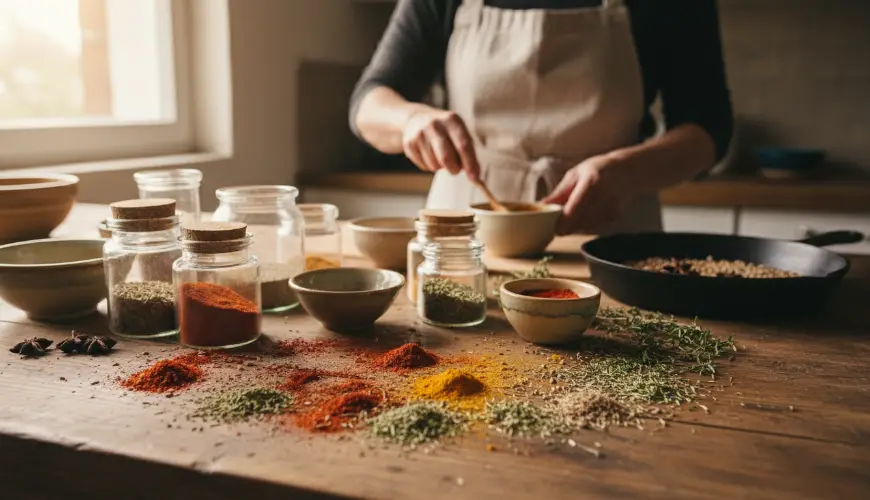
Modern kitchens are full of shortcuts. A packet of spices for goulash, a seasoning blend for chicken thighs, an instant soup base – all of it promises speed, simplicity, and guaranteed flavour. But behind this convenience lies something manufacturers would rather not talk about too openly: long lists of ingredients featuring monosodium glutamate, maltodextrin, colourants, and amounts of salt that a dietitian would describe as alarming at the very least. Replacing ready-made products with homemade spice blends is no rocket science – and the results will convince you faster than you'd expect.
Just take a look at the ingredients in a typical packet of svíčková seasoning or a ready-made base for Bolognese sauce. Alongside fairly recognisable ingredients like paprika or onion powder, you'll find a range of E-numbers, thickeners, and flavourings that have nothing to do with fresh taste. Yet making your own spice blend at home takes about five minutes, and the resulting flavour is incomparably richer, more authentic, and – which is perhaps the most important argument – entirely under your control.
Try our natural products




Why ready-made products are a problem few people realise
Industrial spice blends and seasoning preparations are designed to appeal to everyone. That sounds like an advantage, but it's actually a compromise: manufacturers combine ingredients to achieve a neutral, easily acceptable result that appeals to the widest possible group of consumers. But it's precisely this "average flavour" that makes dishes prepared from ready-made products feel monotonous and, over time, actually bland – even when they are technically seasoned.
Another problem is sodium content. The World Health Organization recommends a maximum salt intake of 5 grams per day, while the average Czech consumes nearly double that amount. Industrial seasoning blends are one of the main hidden sources of salt in the diet – salt in them serves not only as a flavouring, but also as a preservative and a carrier for other flavours. When you prepare your own blend, you immediately have a clear picture of how much salt you're actually adding to your food.
And then there's the economic argument, which tends to be overlooked. A small packet of spices for one specific dish typically costs between twenty and forty crowns in a shop. For the same money, at a good spice shop you can buy a supply of individual spices from which you can make dozens of your own blends. Homemade spice blends are therefore not only healthier, but also a significantly more economical choice.
Take Martina, for example, an enthusiastic home cook from Brno who for years swore by packet seasoning blends. One day she read the ingredients on her favourite chicken seasoning and discovered that spices made up less than thirty percent of the contents – the rest was salt, sugar, starch, and various flavourings. She decided to try making her own blend. She mixed paprika, garlic powder, thyme, a little cumin, and a pinch of chilli. The result was so convincing that she never went back to packet blends again.
The basic building blocks of homemade spice blends
To be able to replace ready-made products with your own combinations, it's useful to understand how aromatic blends work. Every good spice blend rests on three pillars: base flavour, depth, and accent. The base flavour is provided by the spice that carries the main character of the dish – paprika in Hungarian cuisine, turmeric in Indian, or marjoram in Czech. Depth is added by spices with a more complex, less pronounced profile, such as onion powder, garlic, cumin, or coriander. The accent is provided by intense components that bring the whole blend to life – chilli, ginger, cloves, or lemon zest.
If you have a good selection of basic spices in stock, you can replicate or even surpass the flavour of the vast majority of industrial blends. The foundation should consist of roughly ten to fifteen spices, from which you can combine practically anything. These include sweet and hot paprika, turmeric, whole and ground cumin, coriander, cinnamon, ginger, cloves, allspice, garlic and onion powder, thyme, oregano, rosemary, and black pepper. With this arsenal, you're able to prepare everything from Mexican fajita seasoning to Moroccan ras el hanout to classic Czech svíčková seasoning.
The transition from ready-made preparations to your own blends doesn't have to happen radically. It's enough to start with one or two favourite dishes and gradually expand your repertoire. Someone who makes goulash soup every week can start there: instead of a packet, they mix a tablespoon of sweet paprika, half a teaspoon of cumin, a quarter teaspoon of marjoram, and a pinch of chilli. That's all they need. The flavour will be livelier, the aroma more intense, and there won't be a trace of unnecessary ingredients in the bowl.
As British chef Yotam Ottolenghi once remarked: "Spices are the music of food – each one adds its own note, and only together do they form a melody." This metaphor perfectly captures why industrial blends so often disappoint: they're like recorded music from a speaker, while homemade spice combinations are a live concert.
An important part of working with spices is also their proper storage and handling. Spices lose their aroma when exposed to light, air, and heat, so it's ideal to store them in dark, airtight containers away from the cooker. Whole spices will keep in good quality for two to four years, while ground spices last approximately one to two years. If you have old spices at home with no noticeable aroma, it's not worth using them – even the best homemade blend recipe won't be saved by spices that have lost their character.
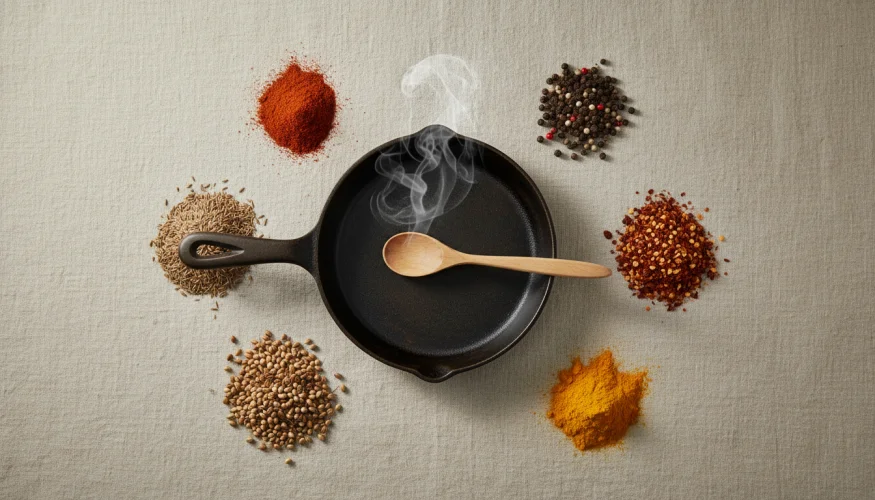
Another trick that significantly raises the quality of homemade blends is toasting spices in a dry pan. Brief heating over medium heat for one to two minutes releases essential oils and awakens aromas that would otherwise remain hidden. This practice is completely standard in Indian, North African, or Mexican cuisine, and surprisingly few people use it in home cooking. Yet it's one of the main reasons why dishes from restaurants with authentic cuisines taste different from homemade ones.
Practical tips: what to replace the most common ready-made products with
Moving from theory to practice means knowing exactly what to replace the most popular industrial preparations with. Here are a few tried-and-tested combinations that anyone can make:
- Chicken seasoning blend: 2 parts sweet paprika, 1 part garlic powder, 1 part thyme, half a part cumin, half a part oregano, a quarter part chilli. Mix together, store in a jar, and use just like a packet preparation.
- Goulash base: 2 parts sweet paprika, 1 part onion powder, half a part cumin, a quarter part marjoram, a pinch of ground pepper and allspice.
- Mexican fajita blend: 2 parts cumin, 1 part paprika, 1 part garlic powder, 1 part oregano, half a part coriander, half a part chilli.
- Curry blend: 3 parts turmeric, 2 parts coriander, 1 part cumin, 1 part ginger, half a part cinnamon, a quarter part cloves, a quarter part chilli.
- Italian herbs for pasta and pizza: equal parts oregano, basil, thyme, and rosemary, with a pinch of garlic powder added.
These blends can be prepared in advance in larger quantities and stored in glass jars, keeping in good quality for several months. This approach is actually more convenient than buying packets – you have a supply at home and don't need to buy anything extra before each cooking session.
It's also worth mentioning soy sauce, Worcestershire sauce, or fish sauce as liquid alternatives to glutamate-based seasonings. These ingredients add what is known as umami flavour to dishes – that deep, savoury dimension that industrial preparations achieve using synthetic glutamate. Adding a teaspoon of quality soy sauce to a soup or braised meat will produce a similar effect, but through natural means.
For those who want to go even further, the world of fermented foods offers additional possibilities: miso paste, fermented black garlic, or dried shiitake mushrooms are natural carriers of umami flavour and at the same time bring a whole range of health benefits. Research confirms that consuming fermented foods positively influences the gut microbiome, which plays a key role in immunity and overall health.
Switching to your own spice blends is actually a small revolution in how you perceive cooking. You start to experience food differently – not just as a result, but as a process in which you have genuine control over what you eat and how it tastes. Ready-made products quietly take away this control, because they leave all decisions about flavour to the manufacturer. Homemade blends return it to the kitchen – and with it, the joy of cooking that so easily slips away in the rush of modern life.
There's no need to change everything at once. It's enough that next time you reach for a packet of spices, you pause for a moment, read the ingredients, and consider whether you could put together the same thing yourself from the spices in your kitchen. In most cases, you'll find that you can – and the result will be better than you expected.