

# Why Do We Get Headaches from Dehydration and How to Prevent Them

A hot summer day, a demanding meeting at work, or an intense gym session – these are all situations where the body loses more fluids than it takes in. And then comes that familiar dull pain, creeping its way from the back of the head to the temples. Headaches caused by dehydration are among the most common types of headaches altogether, yet people continue to underestimate them and reach for medication before they even pour themselves a glass of water. Why does a lack of fluids actually trigger pain, and what can reasonably be done about it?
The human body is composed of approximately 60% water, while the brain is made up of roughly 75% water. This seemingly dry statistic has a very practical implication: as soon as the body begins losing fluids faster than it replenishes them, the brain literally shrinks in volume. Neurologists and physicians describe this phenomenon as a transient shrinkage of brain tissue, which causes tensile stress on the meninges and surrounding pain receptors. The brain itself does not feel pain – it has no pain receptors of its own – but the structures surrounding it do. And it is precisely these structures that begin sending signals we perceive as the characteristic dehydration headache.
The World Health Organisation and numerous expert studies, including one published in the Journal of Nutrition, confirm that a loss of just 1–2% of body weight in fluids can lead to measurable deterioration in cognitive function and the onset of headaches. For a person weighing 70 kilograms, that amounts to a mere 700 millilitres to 1.4 litres of water – a quantity that can easily be breathed out, sweated away, or simply forgotten to replace.
Try our natural products


How dehydration triggers pain in the body
The mechanism behind headaches caused by fluid deficiency is both fascinating and unsettling. When the volume of fluids in the body drops, the blood thickens and blood flow to the brain slows down. In response, blood vessels dilate in an attempt to compensate for the reduced flow – and it is precisely this dilation of blood vessels (vasodilation) that is one of the primary triggers of both migrainous and tension headaches. The brain is also dependent on stable electrolyte levels, particularly sodium, potassium, and magnesium, which regulate electrical impulses between neurons. When an imbalance occurs, the nervous system responds with irritability and pain.
There is also an interesting hormonal dimension to the whole process. During dehydration, the body releases the hormone vasopressin (ADH), which helps the kidneys retain water. However, this hormone has a side effect: it causes constriction of blood vessels outside the brain while simultaneously amplifying the perception of pain. The body thus finds itself in a vicious cycle – trying to protect itself while at the same time intensifying unpleasant symptoms.
A headache from dehydration follows a characteristic pattern. It typically comes on slowly, most often in the front of the head or across the entire skull, and worsens with movement, bending over, or physical activity. It is usually accompanied by fatigue, reduced concentration, a dry mouth, and darker urine – the last of which is one of the most reliable and straightforward indicators of hydration status, observable without any equipment whatsoever.
A familiar example from everyday life: you wake up after a demanding evening – whether involving alcohol, overwork, or simply forgetting to drink enough water – and before you even have breakfast, a dull pain in the forehead takes hold. The body went without fluid intake overnight, lost further reserves through breathing and sweating, and by morning is simply running at a deficit. A glass of water and a little patience can work wonders in such a moment – and yet most people instinctively reach for coffee, which only makes the situation worse.
As the prominent American neurologist Dr. Andrew Weil once said: "Water is not just a drink. It is medicine, fuel, and building material all in one." This thought perfectly captures why hydration is so fundamental to the functioning of the entire organism, including the prevention of headaches.
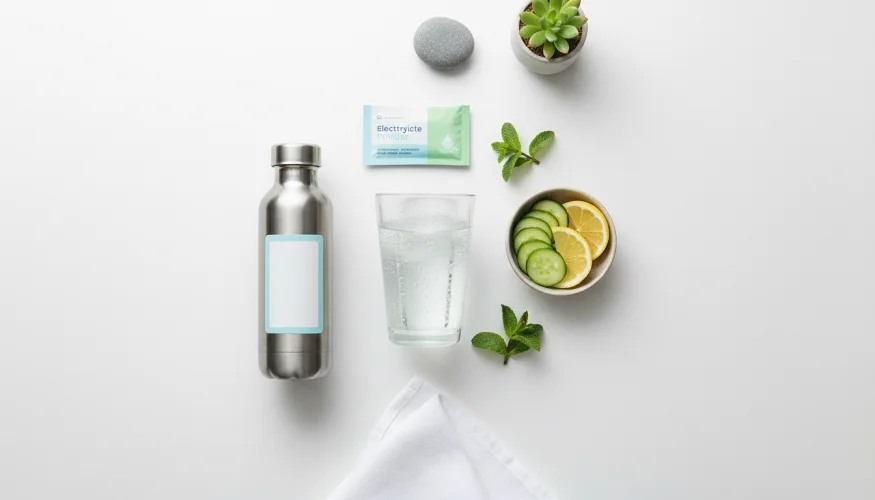
How to prevent headaches caused by insufficient water intake
Prevention is in this case considerably simpler than treatment, and requires no special equipment or expert knowledge. The key is a regular and mindful intake of fluids spread evenly throughout the day, rather than drinking a large quantity of water all at once.
The general recommendation from the European Food Safety Authority (EFSA) states that women should consume approximately 2 litres of fluids per day and men approximately 2.5 litres, with these figures including fluids contained in food. During physical activity, in high temperatures, or during illness, the requirements are considerably higher. Athletes, people working in hot environments, or those travelling by plane should bear in mind that their fluid needs may be twice as high.
Practical rules that genuinely work include several simple habits:
- Starting the day with a glass of water before breakfast and before the first coffee
- Carrying a water bottle and refilling it throughout the day
- Eating foods with a high water content – cucumbers, watermelon, tomatoes, lettuce, citrus fruits
- Monitoring urine colour (pale yellow indicates good hydration, dark yellow or orange is a warning sign)
- Setting reminders on your phone if it is difficult to remember to drink
Special attention should be paid to caffeine and alcohol, which have a diuretic effect – meaning they accelerate the excretion of fluids from the body. This does not mean they need to be avoided entirely, but it is important to know that after every cup of coffee or glass of wine, the body should receive at least an equivalent amount of plain water as compensation. Many people suffering from chronic headaches find significant relief after reducing their caffeine intake and increasing their water consumption – without any medication whatsoever.
The quality of fluids consumed also plays a significant role. Plain water remains the best choice, but herbal teas, diluted fruit juices, or drinks enriched with electrolytes are also suitable – particularly after exercise or during diarrhoea and vomiting, when the body loses minerals more rapidly than usual. It is precisely electrolytes that enable the body to actually utilise the water it receives, rather than simply excreting it. Without sufficient sodium, potassium, and magnesium, the body may struggle to absorb ingested water into its cells.
It is worth noting that some people are more susceptible to dehydration headaches than others. Older people naturally have a reduced sense of thirst and their kidneys retain water less efficiently. Children are vulnerable because their bodies contain a higher percentage of water and losses occur relatively more quickly. Pregnant and breastfeeding women have increased hydration requirements that are easy to underestimate. And people who suffer from migraines will find that dehydration is one of the most reliable triggers of attacks – even a mild fluid deficit can be enough to set off hours of pain.
If a headache does occur despite these precautions, the first course of action should be to drink 400–500 millilitres of water and rest in a quiet, cool environment. Most dehydration headaches subside within 30 minutes to two hours of fluid replenishment. If the pain persists, is very intense, or is accompanied by fever, confusion, or visual disturbances, medical attention must be sought – in such cases, the condition may be more serious and warrant professional examination.
A mindful approach to hydration is neither complicated nor expensive. It requires no special supplements or costly functional drinks – though quality products focused on hydration and electrolyte replenishment can be a pleasant and practical aid for active individuals. The foundation remains plain, clean water and an awareness that the sensation of thirst is always a late signal – the body sends it only once the fluid deficit has already become noticeable.
A headache caused by dehydration is a message from the body, not an unfortunate coincidence. And listening to the body before it starts crying out in pain is perhaps the simplest and most effective thing anyone can do for their health each day. A glass of water in the morning, a regular fluid intake throughout the day, and a little attention paid to one's own body – these are small things that have a greater impact on quality of life than they might first appear.