

# Overcome Social Anxiety with Small Steps
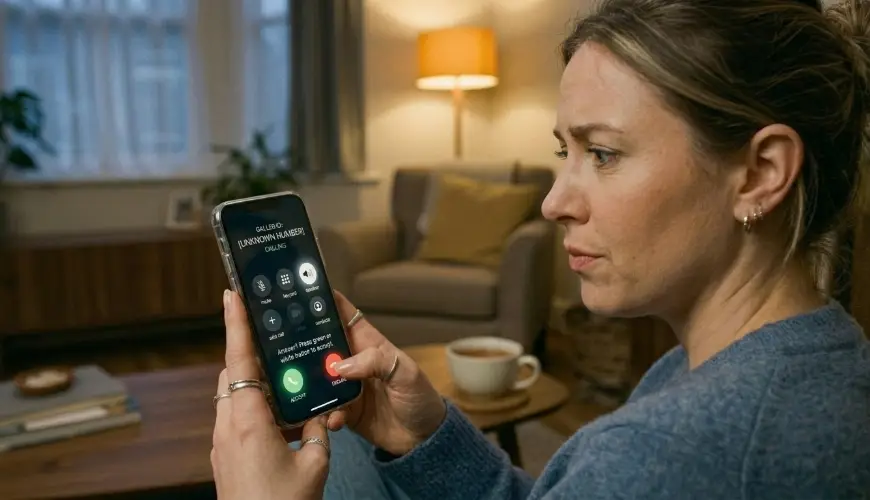
A birthday party invitation, a call from an unknown number, or a simple "Hi" from a neighbour in the hallway – and some people immediately feel their chest tighten, their heart rate increase, and their mind begin running through every possible scenario of how it could go wrong. This isn't excessive shyness, nor does it mean the person is "weird". It is social anxiety – one of the most widespread yet least understood conditions that people experience today.
According to data from the World Health Organization, approximately 264 million people worldwide suffer from some form of anxiety disorder. Social anxiety is among the most common subtypes. Yet it is discussed surprisingly little – perhaps precisely because people who experience it are afraid to say so out loud.
Try our natural products




What social anxiety actually is and how to recognise it
Social anxiety is not the same as introversion, although these terms are often confused. An introvert may love solitude and yet feel perfectly comfortable at a party if the people there are familiar to them. Someone with social anxiety, on the other hand, experiences an intense fear of being judged by others – they worry about saying something stupid, embarrassing themselves, or having others notice them trembling or blushing and thinking less of them. This fear is not limited to large social events. It can arise when paying at a shop, ordering food at a restaurant, answering a question in class, or speaking at a work meeting.
The symptoms are both physical and cognitive. Physically, social anxiety can manifest as a racing heart, sweating, trembling, dry mouth, or nausea. Mentally, it is accompanied by thoughts such as "everyone is looking at me", "they must think I'm incompetent", or "I'd rather not go at all". Also typical is so-called anticipatory anxious thinking – fear of an event that has not yet occurred. A person may spend days dreading an upcoming meeting, mentally rehearsing every possible scenario and looking for ways to avoid the situation.
Avoidance itself is one of the most important warning signs to watch for. When someone regularly declines invitations, avoids phone calls, postpones important conversations, or takes a longer route just to avoid running into a neighbour – this is not simply laziness or an introverted personality. It may be a learned strategy for protecting oneself from anxiety, one that paradoxically deepens anxiety over the long term.
As American psychiatrist and anxiety disorder expert Jonathan Abramowitz wrote: "Avoiding situations that trigger anxiety provides immediate relief, but in the long run tells the brain that the situation was genuinely dangerous."
Social anxiety can appear at any age, but most commonly begins during adolescence – a time when social acceptance is particularly important and self-confidence is still being formed. This does not mean it is a childhood problem that will resolve on its own. Without adequate support, it can persist for decades and significantly diminish quality of life.
So how can one tell whether something is natural nervousness or social anxiety? The key distinguishing factor is the extent to which the fear interferes with everyday functioning. Nervousness before an important presentation is normal. But if someone avoids a medical appointment out of fear of others' reactions, cannot ask for help at work, or feels unable to form any new relationships – that is a signal that seeking support would be worthwhile.
How to reduce social anxiety in everyday life
The good news is that social anxiety is certainly not incurable. There are many approaches – from professional therapy to small everyday changes – that can make a significant difference. And the latter is often the first step for many people, since visiting a therapist can itself be a major challenge for someone with social anxiety.
One of the most effective tools recommended by psychologists and cognitive-behavioural therapy research is gradual exposure. This involves deliberately and progressively facing situations that trigger anxiety – starting with less demanding ones and gradually moving towards more difficult ones. For example, someone who fears phone calls might begin by calling a customer support line, where the conversation is clearly structured and brief. They can then gradually progress to more challenging situations, such as calling an unfamiliar person about a work matter.
It is important not to rush or try to overcome everything at once. The brain needs time to learn that the situation is not dangerous. This process – technically known as habituation – is what makes exposure effective. The more frequently a person faces a given situation without a negative outcome, the less the brain perceives it as a threat.
Another very practical tool is working with thoughts. Social anxiety is largely driven by distortions in thinking – a tendency to overestimate the likelihood of a negative outcome and underestimate one's own ability to handle the situation. The exercise involves first consciously naming the negative thought ("I think I'm going to embarrass myself"), then asking what real evidence exists for and against this belief, and finally attempting to formulate a more realistic alternative ("I might make a mistake, but others probably won't even notice, and even if they do – it says nothing fundamental about my worth").
Alongside psychological techniques, caring for the body also plays an important role. Research consistently shows that regular physical activity reduces cortisol levels – the stress hormone – while also increasing the production of endorphins and serotonin, which naturally improve mood and reduce anxiety. This need not involve competitive sport – a daily walk, yoga, or dancing at home in the living room is sufficient.
Sleep and nutrition are equally important. Sleep deprivation demonstrably increases the reactivity of the amygdala – the part of the brain that processes fear – and thereby increases overall anxiety levels. Similarly, a diet rich in industrially processed foods, sugar, and caffeine can intensify anxious states. Conversely, foods rich in magnesium, omega-3 fatty acids, and fermented products (such as quality kimchi, kefir, or kombucha) can support nervous system health and natural balance. The connection between the gut microbiome and mental state – known as the gut-brain axis – is today one of the most actively researched areas in neuroscience, as documented by Harvard Health Publishing, among others.
Consider a concrete example: Jana is a thirty-four-year-old graphic designer who works from home. Social anxiety has been with her since secondary school, but she never gave it a name. She thought she was simply "odd" or "too sensitive". It was only when she began declining work meetings – both online and in person – and her circle of friends shrank to a minimum that she realised something was wrong. She started reading about social anxiety, tried a meditation and mindfulness app, and signed up for group yoga classes – and after three months discovered she was looking forward to the classes instead of searching for excuses to skip them. She was not cured, but it was the first step back into life.
Mindfulness – conscious presence in the current moment without judgement – is another approach with solid scientific support. It helps people with social anxiety by teaching them to focus attention on the present moment rather than on the catastrophic scenarios their minds generate in advance. Apps such as Headspace or Calm offer structured programmes available in Czech, but freely available recordings on YouTube or a simple breathing exercise work equally well: four seconds inhale, four seconds hold, four seconds exhale.
If everyday techniques are insufficient, or if social anxiety significantly limits one's professional or personal life, seeking professional help is appropriate. Cognitive-behavioural therapy (CBT) is currently considered the most effective form of psychotherapy for social anxiety – as confirmed, for example, by a review study published in Psychological Medicine. In the Czech Republic, accredited therapists can be found through the database of the Czech Association for Psychotherapy or through a general practitioner, who can provide a referral.
In some cases, doctors also recommend pharmacological support – most commonly antidepressants from the SSRI group, which regulate serotonin levels. These are not "courage pills", as they are sometimes incorrectly described, but a medical tool that can help the brain reach a state in which therapy becomes possible at all. The decision regarding medication always rests with a psychiatrist.
It is also worth recognising that social anxiety does not exist in a vacuum. The environment in which a person lives, the quality of their sleep, the relationships surrounding them, and what they eat each day – all of this forms the foundation from which the psyche draws energy, or alternatively squanders it. A holistic approach that combines psychological work with care for the body and lifestyle therefore tends to be more effective in the long term than any isolated solution.
Social anxiety is real, widespread, and manageable. Failing to name it and waiting for it to resolve on its own is a strategy that rarely works. But every small step – naming the fear, one phone call, one walk, one open conversation – is a step in the right direction.