

Plastic in tea bags is a silent problem
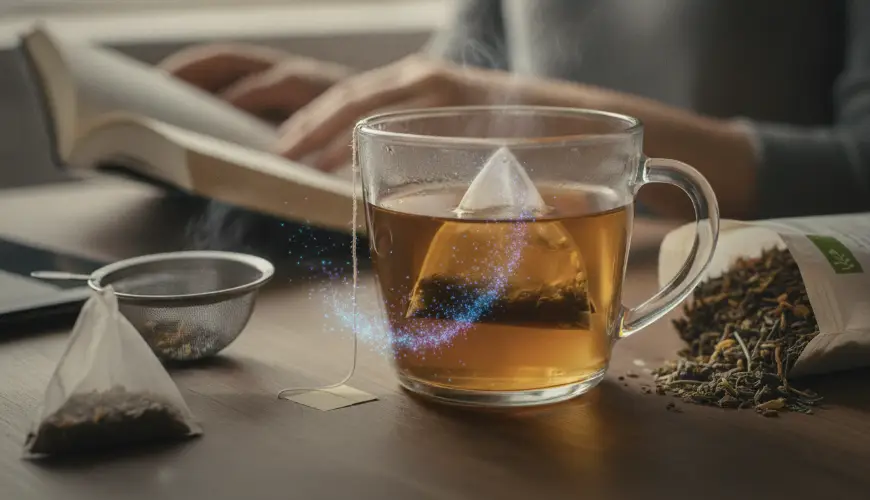
A cup of hot tea in the morning. For millions of people, it's a moment of calm, a ritual that precedes the hustle of the day. Yet it is precisely in this seemingly innocent moment that a problem hides — one that few people think about: microplastics leaching directly into a favourite beverage. A tea bag looks like a piece of paper and a few herb leaves, but the reality is more complex and more troubling than it might appear at first glance.
Research published in the scientific journal Environmental Science & Technology showed that a single plastic tea bag releases approximately 11.6 billion microparticles and 3.1 billion nanoplastic particles into a single cup during preparation. This is not an abstract number — it is a substance that a person actually drinks along with the tea they are preparing in good faith, believing they are doing something healthy. This discovery shook the world of food safety research and is gradually making its way into the awareness of ordinary consumers, even if changes in habits are slow to follow.
Try our natural products

Why are tea bags made of plastic?
Many people assume that tea bags are made exclusively from paper or natural materials. They are partly right — traditional bags are indeed made of paper. The problem arises with modern variants that have appeared on the market in recent decades, which manufacturers present as a premium experience. These are transparent pyramid-shaped bags or other shapes that are in fact made from plastic fibres — most commonly nylon, polyethylene terephthalate (PET), or polypropylene.
Manufacturers introduced them so that tea leaves would have more room to expand and release their full flavour and aroma. From a marketing perspective, it was a brilliant move — the customer sees beautiful leaves floating in a transparent bag and gets a sense of luxury and quality. From a chemical perspective, however, it is a material that degrades when in contact with hot water and releases microscopic particles directly into the drink. The higher the temperature, the more intense this process becomes.
Even classic paper bags are not automatically safe. Many manufacturers use a thin layer of plastic or synthetic adhesive to seal them, which serves the same function and poses the same risk. Furthermore, some paper bags are treated with epichlorohydrin — a substance used as a stabiliser that can convert into potentially harmful compounds upon contact with water. A tea bag, therefore, may be far from what it appears to be.
Consider an example from everyday life: Jana, a thirty-four-year-old teacher from Brno, drank two to three cups of tea from pyramid bags every morning, convinced she was enjoying a healthy drink full of antioxidants. When she read about the problem with microplastics, she initially didn't believe it. "They look so elegant and natural," she says. Today she has switched to loose-leaf tea and admits that preparation takes only a few minutes longer, but the peace of mind is worth it.
Microplastics in the body: what do we know?
The question of what microplastics do to the human body is still the subject of intensive research. Science does not yet have all the answers, but what we do know is not reassuring. Microplastics have been found in human blood, lungs, placenta, and faeces. A study published in the New England Journal of Medicine in 2024 demonstrated a link between the presence of microplastics in vascular plaques and an increased risk of heart attack and stroke. These are serious findings that cannot be ignored.
As the World Health Organization notes, "the potential health impacts of microplastics require further thorough research, and preliminary caution is warranted." This wording is typically cautious in scientific terms, but in practice it means one thing: until we know precisely how harmful microplastics are, it makes sense to reduce their intake wherever possible. And tea is one of the easiest areas where a change can be made immediately and without great sacrifice.
Microplastics are not merely physical foreign bodies in the organism. They also act as carriers of other chemical substances — they can bind pesticides, heavy metals, or endocrine disruptors and transport them into tissues where they would not otherwise reach. This so-called Trojan horse effect is one of the reasons why scientists consider microplastics a more complex problem than their mere physical presence would suggest.
It is important to note, however, that tea itself remains a healthy beverage with proven benefits. The problem is not the tea, but the way it is packaged. The antioxidants, polyphenols, and other substances contained in tea leaves are still present and beneficial — it is simply a matter of accessing them without unnecessary chemical additives.
The situation is further complicated by inadequate regulation. While the European Union has adopted a number of measures in recent years restricting single-use plastics, specific rules for plastic tea bags are still missing or insufficiently enforced. Manufacturers are therefore not required to state on the packaging what material the bag is made from, nor to warn of possible microplastic release. The consumer is thus left to their own initiative and ability to read between the lines of marketing messages.
So how can you tell whether a bag contains plastic? Transparent or silky bags are almost always plastic. A bag that feels smooth to the touch and does not crumble like paper when scrunched likely contains synthetic fibres. Classic matte, coarser bags tend to be made of paper, but even that is no guarantee — it is worth checking the composition on the packaging or contacting the manufacturer directly.
How to avoid plastic tea bags?
The most reliable solution is to switch to loose-leaf tea prepared in a stainless steel or ceramic strainer. This method of preparation was the standard for centuries — the tea bag is a relatively recent invention from the early 20th century, which gained popularity primarily for its convenience. Loose-leaf tea is also generally of higher quality, as it contains whole or larger pieces of tea leaves rather than the dust and fragments typically used to fill bags.
For those who do not want to or cannot give up bags — for example when travelling or at work — alternatives exist in the form of certified compostable bags or hemp paper bags without plastic seals. When choosing, it is advisable to look for certifications such as OK Compost or to seek out brands that explicitly state "plastic-free" on the packaging and are audited for this claim by an independent third party.
Popular eco-friendly and health-conscious choices include:
- loose-leaf tea with a stainless steel strainer — the most economical and ecological option
- tea bags made from certified compostable material without plastic heat-sealed closures
- paper bags without a metal staple, sealed only by folding or natural starch
- glass or metal reusable tea capsules for use with your own loose-leaf filling
Switching to loose-leaf tea need not be complicated. A basic stainless steel cup strainer costs only a few dozen crowns at shops selling ecological goods and will last for years. Choosing a quality loose-leaf tea is then more of a pleasure than an obligation — the global market offers thousands of varieties, from classic Darjeeling to Japanese sencha to herbal blends that can be mixed precisely to one's own taste.
The change to a morning ritual need not be dramatic. It is enough to swap one small item — a plastic bag for a metal strainer — and the everyday cup of tea becomes what it should have been from the start: a clean, simple pleasure without hidden additives. And perhaps that is where true luxury lies — not in a transparent pyramid bag full of marketing promises, but in the knowledge that what one is drinking is really just tea.