
One dough as the base for five great snacks
Imagine a Monday morning. The alarm goes off, the kids are shouting, you're looking for your keys, and on top of all that, you need to figure out what to bring to work for lunch. It's one of those peculiar moments when you realize it would be wonderful to have something prepared in advance – something that doesn't take hours in the kitchen, yet is filling and tastes good. This is exactly where one of the simplest and yet most clever tricks of modern cooking comes in: a basic dough prepared once, used five different ways.
This isn't some trendy fad from cooking shows. It's an approach that skilled homemakers and cooks have practiced for generations – they just didn't call it "meal prep" or "batch cooking" back then. They simply called it – being thrifty. And today, when time is among the most precious commodities, this approach is making a comeback with new force and new meaning.
Try our natural products


Why one dough changes everything
The basic idea is simple: if you prepare one universal dough on Sunday afternoon, you have a foundation for a whole range of snacks for the days ahead. You don't need to stand at the stove every evening, you don't need to think about what to buy, and most importantly – you don't need to throw away leftovers, because the dough itself is a base from which you can create almost endlessly.
This approach is, incidentally, in line with what nutritionists and advocates of sustainable living recommend. Less waste, more planning, higher-quality ingredients. According to the Food and Agriculture Organization of the United Nations (FAO), approximately one third of all food is wasted globally – and a large portion of this occurs in households, where too much is bought or ingredients don't get used in time. The simple strategy of "one dough, multiple variations" is a small but meaningful step in the right direction.
But let's move from philosophy to practice. What does such a dough look like and what can actually be made from it?
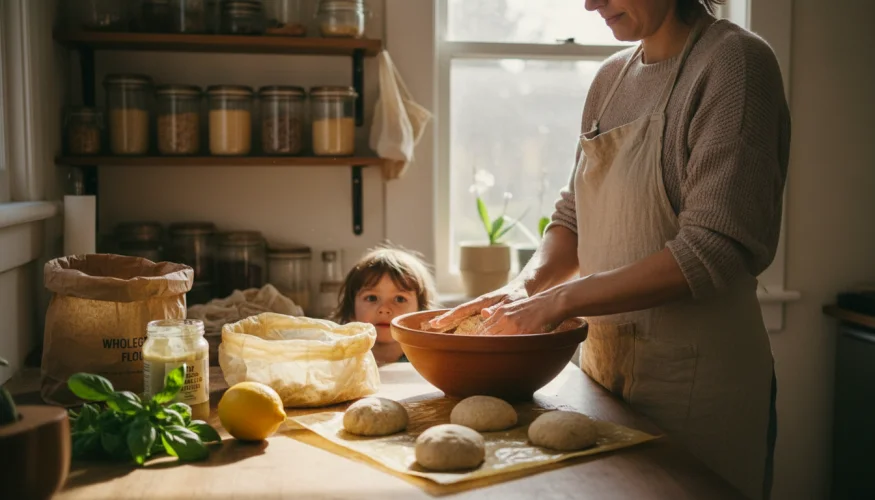
The base consists of flour, water, oil, a pinch of salt, and a leavening agent – in its simplest form. If you want a more nutritious dough better suited to a healthy lifestyle, reach for wholegrain flour, spelt flour, or a blend of different types. Add flaxseeds, chia seeds, or oat flakes, and the dough will gain not only a better nutritional profile but also a more interesting texture. A base prepared this way will keep in the refrigerator for three to four days without any problem, or it can be frozen for longer storage.
The result? From one bowl of dough, five completely different snacks will emerge over the course of the week, differing from one another in flavour, form, and filling – but sharing the same carefully prepared base.
Five forms of one dough
The first variation is flatbreads. Simple, quick, versatile. Roll the dough out into a thin sheet, fry it in a dry pan, and you have a base that everyone can fill to their own taste. One person prefers hummus with sautéed vegetables, another reaches for avocado spread with radishes, a third wants cheese and herbs. Flatbreads are the ideal work snack – they can be rolled up, wrapped in beeswax wrap or a fabric pouch, and won't leak anywhere.
The second option is small savoury muffins. Simply enrich the dough with grated vegetables – courgette, carrot, beetroot – and a little cheese or legumes, add an egg for binding, and bake in the oven for about twenty minutes. The result is a filling, tasty bite that will keep in the refrigerator for several days and works equally well as a school snack for children or a quick snack for adults in a hurry.
The third variation is mini quiches or savoury tart cases. Press the dough into muffin tins, add a filling of eggs, vegetables, and herbs, and you have an elegant snack that looks as though you spent hours in the kitchen. The preparation takes a quarter of an hour – the oven does the rest on its own.
The fourth form is flatbread or focaccia. Spread the dough on a baking tray, drizzle with olive oil, sprinkle with rosemary or thyme, add olives or cherry tomatoes, and bake. Focaccia pairs wonderfully with a little hummus or as a side to soup – and it smells so tempting that few people can resist it.
The fifth and perhaps most creative variation is mini scrolls or rolls. Roll out the dough, spread it with pesto, a cheese spread, or a mixture of nuts and dried fruit, roll it up, and cut into rounds. Once baked, the result is snacks that are equally delicious warm or cold, and which children take to school with great enthusiasm.
The key to success is treating the dough as a canvas, not a finished work. On its own it is neutral and understated – but once you enrich it with different fillings, seasonings, or preparation methods, it transforms into something entirely unique.
How to organise it all so it actually works
The theory is beautiful, but practice is often different. Who hasn't experienced that situation where you promise yourself on Sunday that you'll eat healthily all week and prepare snacks in advance – only to end up at the vending machine with a chocolate bar by Wednesday? For this approach to truly work, it needs a little system.
The most important thing is to dedicate roughly one hour on Sunday afternoon. No more. The dough is prepared, divided into portions, and stored. Part of it is used straight away – for flatbreads or focaccia, for instance – and the rest is wrapped up and put in the refrigerator or freezer. Then each evening you simply take out one portion, decide on a variation, and in the morning everything is ready in twenty minutes.
It also helps to keep a stock of basic fillings and accompaniments. Hummus can be made at home – from chickpeas, tahini, lemon, and garlic – and will keep in the refrigerator for a whole week. Pesto made from basil, pumpkin seeds, and olive oil is ready in five minutes. Oven-roasted vegetables will keep for three days. When you have these basics to hand, combining dough variations is a breeze.
As British cook and sustainable cooking author Nigella Lawson once said: "Cooking shouldn't stress us out – it should bring us joy. And that's best achieved when we have a foundation from which we can create freely." This attitude fits perfectly with the philosophy of one dough and five snacks.
The economic aspect is also not to be overlooked. Preparing your own snacks from homemade dough is significantly cheaper than buying ready-made products, snack packs, or making daily visits to cafés and bistros. Moreover, if you reach for quality, local, or organic ingredients – wholegrain flour from a Czech miller, organic eggs, seasonal vegetables – you are investing in both health and sustainability, while still keeping within a reasonable budget.
The ecological dimension of the whole approach is considerable. Fewer packaging materials, fewer ready-made industrially processed foods, less waste in the bin. If you also pack snacks in fabric pouches, beeswax wrap, or glass containers instead of single-use plastic bags, you are doing a little more for the planet than you might realise. Exactly this kind of approach – small everyday choices with a greater impact – underpins the philosophy behind Ferwer, an online shop focused on healthy living, an eco-friendly home, and sustainable fashion.
But let's return to the cooking itself, because one thing is preparing the dough, and another is storing it correctly. Properly wrapped dough in the refrigerator will keep for three to four days, and in the freezer for up to three months. When freezing, it is best to divide the dough into smaller portions – ideally corresponding to one snack or one recipe – and wrap each portion separately. Defrosting is best done overnight in the refrigerator, or at room temperature for about an hour before use.
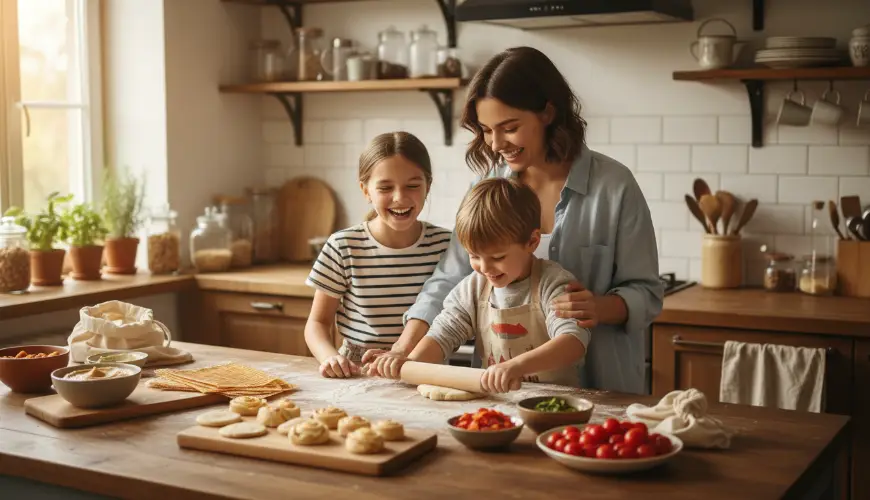
One practical experience from real life: a mother of two school-age children from Brno, who began practising this approach a year ago, describes how her Monday mornings were transformed. Previously, every morning she would search for inspiration about what to pack for the children, and would often end up with shop-bought biscuits or cereal bars. Now she prepares the dough on Sunday, they bake small savoury muffins and mini scrolls together with the children, and on Monday morning she simply reaches into the refrigerator. The children have also grown fond of the baking itself – and when they take part in preparing the snacks, they eat them with greater enthusiasm.
This is precisely the kind of small change that doesn't require dramatically reorganising your life, but brings real results – less stress, better food, less waste, and a little extra joy. One dough, five different snacks. It really can be that simple.