

School snacks that kids will actually eat are created from a few simple principles
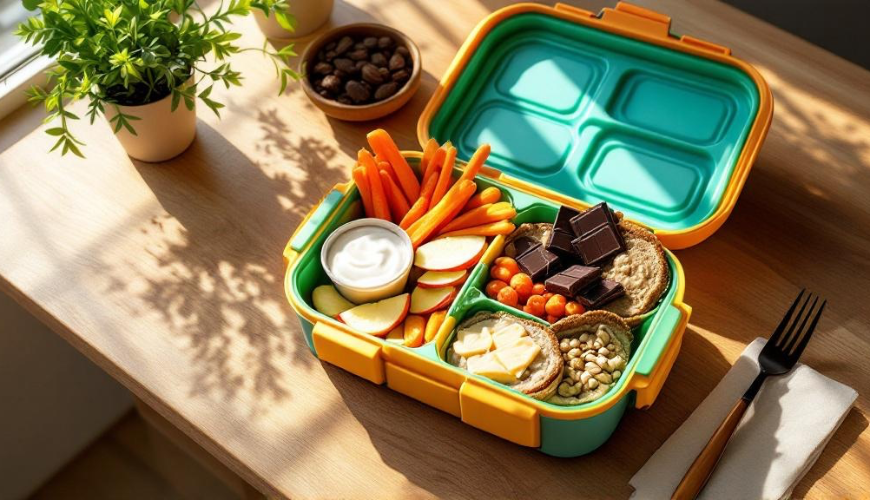
The morning rush before leaving for school has a peculiar ability to shrink time. While finishing a cup of tea, searching for the second sock, there's a question that can raise the stress levels of even the calmest parents: what should we pack for the kids' lunch today? School snacks aren't just "something in a box." For many children, it's fuel for the whole morning, a small certainty during classes, and often the only moment they can really eat in peace. At the same time, it's a discipline where nutrition, practicality, and children's taste (which can be unpredictable) meet.
The good news is that delicious and healthy snacks that kids will actually eat don't come from perfect photos on the internet but from a few simple principles. When you manage to combine what's nutritious with what's appealing, and you can prepare it without half an hour of cutting into animal shapes, the whole household wins. It also has a broader impact: less food waste, fewer disposable packages, and a calmer morning.
What makes a school snack really functional (and why kids don't want to throw it away)
It's tempting to focus only on "healthy" and forget about "edible." But kids aren't a nutrient chart. The decision about a snack often depends on texture, smell, whether it can be eaten quickly during a break, or if it falls apart after the first bite. And also whether it's something to look forward to. Sometimes, a small change is enough: slicing an apple into wedges instead of leaving it whole, adding a small dipping sauce, or replacing a dry roll with something juicier.
From a nutritional perspective, a simple combination has proven effective over time: something with protein, something with fiber, and a bit of healthy fat. Plus water or unsweetened tea. Protein (yogurt, cottage cheese, eggs, legume spread, cheese, quality ham, tofu) helps with satiety. Fiber (fruit, vegetables, whole grain bread, oats) keeps energy more stable. Fat (nuts, seeds, avocado, olive oil) can "soften" the snack and often enhance the taste.
The environment is important too: kids have short breaks, sometimes they're in a hurry to go outside, and other times they're embarrassed to pull out something "weird." That's why it works when the snack looks normal, smells good, and can be eaten without complications. And when something "playful" appears occasionally, but without pressure for perfection.
For inspiration, it's worth following recommendations from professional institutions. For example, the World Health Organization has long emphasized the importance of sufficient fruit and vegetable intake and limiting free sugars in children's diets (WHO: https://www.who.int). Similarly, Czech sources on children's nutrition agree that the regularity and quality of snacks help maintain attention and mood during the school day (SZÚ: https://www.szu.cz).
And then there's reality: a child comes home, and almost everything is left in the box. It doesn't automatically mean the snack was "wrong." Maybe it was too big. Maybe it was too dry. Maybe it was hard to eat comfortably. Or the child was just worried about a test, and their stomach was in knots. It's helpful to approach it as fine-tuning, not a battle.
Tips for school snacks that save time and nerves (and are nature-friendly)
The biggest trick with school snacks is paradoxically that they're not prepared in the morning. Or at least not all of them. Anyone with ten minutes in the evening wins half an hour in the morning. Just create a small "snack rhythm": every two to three days, make a spread, bake a tray of simple muffins, or chop vegetables into a box that will last in the fridge. In the morning, it's just about putting it all together.
Packaging plays a big role too. A snack box and a reusable bottle aren't just an ecological choice; they're often more practical. Food doesn't get squished, doesn't dry out, and it's easier for the child to eat it. Adding a small container for dip or yogurt opens up a world of snacks that would otherwise be "impractical."
And what's the most common reason why kids don't finish their snacks? Surprisingly often, it's boredom. That's why simple rotation works: one day bread, another "in a bowl," a sweeter option (but still reasonable) one day, and something savory another. You don't need to come up with something completely new every day; just rotate a few proven options.
Here's one practical framework that can be followed without much thought:
- Base: bread / tortilla / oatmeal / yogurt
- Protein: egg / cottage cheese / cheese / hummus / legume spread
- Color: fruit or vegetable (ideally something crunchy)
- "Something extra": nuts, seeds, olives, a few pieces of dark chocolate (for older kids)
When you rotate this, school snack tips practically create themselves. Plus, they can easily be adapted to what the child likes. Some love crunchy cucumbers, others can't stand tomatoes. Some are happy to eat hummus three times a week, while others need the milder taste of cottage cheese. Consistency is key: an easy snack for kids is one that can be repeated and doesn't require a new shopping trip every day.
Then there's another dimension – waste. Regularly throwing away half the snacks is a signal to reduce the portion or change the structure. Sometimes a "tasting" strategy helps: give less, but add a small piece of something new. The child doesn't feel overwhelmed and has a chance to get used to new flavors.
One sentence that often works better than long discussions: "Choose one thing you definitely want in your snack and one thing we'll try." This gives children a sense of control and parents an opportunity to adjust the menu without pressure.
Quick snack recipes for kids: simple combinations that taste good even the next day
A school snack doesn't have to be a culinary feat. Most kids appreciate a taste that's "familiar" and a structure that's easy to eat. The following ideas are designed to be quick, variable, and can be prepared even when you don't feel like doing anything complicated in the morning. It's not about exact measurements but about proven combinations that can be adjusted according to age, taste, and what's on hand at home.
A very reliable option is the "curd line." Curd or thick yogurt can be transformed into sweet or savory, and it provides proteins that are often missing when the snack is just bread-based.
Sweet variant: put plain yogurt in a cup, a teaspoon of nut butter or a few chopped nuts, a piece of banana, and a handful of oats. Add cinnamon if desired. It creates a creamy snack that fills you up and doesn't feel like a "diet punishment." Kids often enjoy that it's eaten with a spoon and that it contains small pieces that crunch.
Savory variant: mix curd with chives, a pinch of salt, and a bit of olive oil, add pepper or cucumber separately into a box. With a piece of quality bread. This is a typical easy snack for kids because it can be made in the evening and just packed in the morning.
If a child prefers "something to hold," tortillas work great. They're not as crumbly as some rolls and can be filled in a way that holds firm. Spread hummus or legume spread on the tortilla, add slices of cheese, grated carrot, and a few lettuce leaves. Wrap tightly and cut into two parts. The result looks attractive, is easy to eat, and most importantly – tastes good even when it's not completely fresh.
Another "quick fix" is an egg snack. Hard-boiled eggs can be cooked even two days in advance. Add a small pinch of salt, a piece of bread, and some vegetables for a simple yet nutritious option. For more sensitive kids, it might be better to peel the egg at home and give it already sliced to avoid hassle.
Then there are snacks that look like a treat but are surprisingly reasonable inside. For example, homemade oat "cookies" without unnecessary sugar: mashed banana, oats, a handful of raisins or chopped dates, a teaspoon of cocoa. Mix, shape into patties, bake briefly. They last two to three days, and the child feels like they've received something special. Yet it's one of the most rewarding options when looking for quick snack recipes for kids.
For kids who refuse "wet" things and want everything crunchy, it's worth working with dips. A small container can hold a yogurt dip (yogurt, lemon, a pinch of salt) or hummus, along with sliced carrot, cucumber, or kohlrabi. It's a snack that's fun because it's for dipping. Often, this breaks the resistance to vegetables – not because they're talked about, but because they're enjoyable to eat.
A real-life example known to many families: in third grade, a trend of store-bought sweets from vending machines took off in the classroom. Some parents noticed that kids started bringing snacks home. Not because they were bad, but because they seemed "boring" next to colorful packaging. One mom solved it surprisingly simply: she started adding a small "bonus" to the box – maybe two extra strawberries, a few roasted chickpea crisps, or a square of quality dark chocolate for the older child. The snack remained nutritious but gained an element of surprise. Within a week, the boxes were coming back empty. It wasn't about extra sugar, but about signaling that the snack is something to look forward to.
And how do "healthy" boundaries fit into this? Primarily by not being based on prohibition but on quality. There's no need to erase sweet flavors from the world; it's better to anchor them in something that also has nutritional value. After all, recommendations to limit free sugars (WHO) speak to a long-term direction, not absolute purity without a single exception.
When you put it all together, the conclusion is quite liberating: good school snacks aren't about perfection but about rhythm. Having a few basic ingredients on hand that can be quickly combined and being willing to adjust the plan according to what's actually eaten. Sometimes the most "healthy" change happens very subtly – like swapping a sugary drink for water, adding crunchy vegetables, or packing a homemade oat patty instead of a store-bought cookie.
"Children don't need perfect snacks, but regular, calm care," is often said in various forms – and you can see this every day in school lunchboxes. It's enough if they contain something that provides energy, something that tastes good, and something that can be eaten without much thought. And if it occasionally happens that half comes back? That's also part of the fine-tuning, which surprisingly simplifies over time.