

Learn how to save burnt or over-salted food

Every cook, whether experienced or beginner, has been there. The phone rings, the doorbell goes off, or attention simply wanders for a moment – and a fragrant soup becomes a burnt brew, a carefully seasoned sauce becomes an oversalted disaster. Such a situation can ruin both your mood and your dinner at the same time. Yet in most cases, there's no need to immediately reach for the phone and order pizza. There are tried-and-tested methods for how to rescue burnt or oversalted food, and many of them are surprisingly simple.
The important thing is to act quickly and not panic. The outcome depends on how quickly and correctly you react – and also on exactly what happened to the food. Burning and oversalting are two completely different problems that require different approaches.
Try our natural products





When Food Burns: Rescue Step by Step
Burning is one of the most common kitchen accidents. Whether it's a pot of rice, braised vegetables, or a meat sauce, the key to rescue is immediately transferring to a different container. It sounds simple, but this step makes the biggest difference. The burnt part remains stuck to the bottom of the original pot, and only the unaffected portion of the dish transfers to the new container. The burnt pot must not be scraped or stirred – doing so would spread the burnt flavour throughout the entire dish, making rescue practically impossible.
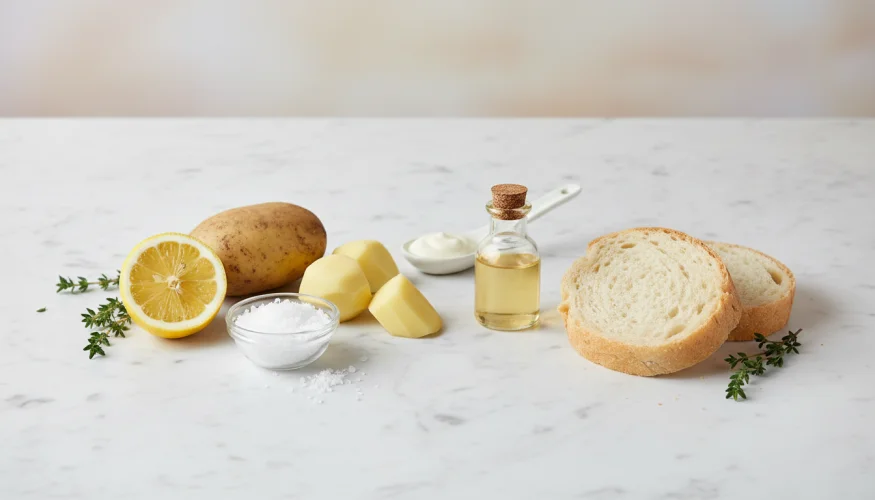
After transferring to a clean container, it's advisable to taste the food. If the burnt flavour still persists, there are several additional tricks. One of the most well-known is placing slices of bread on the surface of the food – white or dark bread can absorb unwanted odours and partially the burnt taste as well. The slices are left in the pot for approximately ten to fifteen minutes without stirring them into the food, then carefully removed. This method works particularly well with soups and thick sauces.
Another helpful tool is a potato. A raw, peeled potato cut into larger pieces is placed in the food and left to cook for a while. Potatoes have a natural ability to bind unwanted flavours and odours. After a few minutes, it is removed and the food is tasted again. This method is particularly popular with soups, but can also be used with braised dishes.
When it comes to burnt rice, the situation is somewhat more specific. Rice sticks very quickly to the bottom of the pot and the burnt flavour spreads easily. Experienced cooks recommend placing a damp cloth over the pot of burnt rice and leaving it to work for a few minutes – the moisture helps loosen the burnt parts and also reduces the intensity of the smell. The top layer of rice, which was not in direct contact with the hot bottom, usually remains salvageable.
An interesting perspective on this topic is also offered by the American food database and research centre Serious Eats, which has long been dedicated to a scientific approach to cooking. According to their tests, transferring to a different container is truly the most effective first step – and all other methods are merely supplementary.
Oversalted Food: How to Rescue It Without Throwing It Away
Oversalting is perhaps an even more common problem than burning. A moment of inattention when adding salt, forgetting that a salty ingredient such as soy sauce or stock was already added, and the result is clear – the dish is inedible. How do you rescue oversalted food? Fortunately, there are several reliable methods.
The simplest and most well-known solution is adding larger quantities of other ingredients. If possible, doubling or increasing the amount of unsalted components will naturally balance the dish. If a sauce is oversalted, more vegetables, meat, or potatoes are added. The result will be a larger portion, but one that is rescued and edible. This method is most effective when the oversalting is mild and the food is still in the cooking phase.
A very popular trick is adding a raw potato. Just as with burning, the potato does excellent work here too – it absorbs excess salt from the liquid. A raw, peeled potato is cut into larger pieces, placed in the food, and left to cook for approximately ten to fifteen minutes. It is then removed. It's important to taste the potato before discarding it – if it is noticeably salty, it means it has done its job. This method works best with soups, stocks, and sauces with a larger amount of liquid.
Acidity is another natural counterpart to salt. A teaspoon of lemon juice or vinegar can balance an oversalted dish by adding a contrasting flavour that optically reduces the saltiness. This is a culinary trick used by professional chefs around the world. The flavour is not eliminated, but the brain perceives it as less intense due to the presence of the acidic component. Adding a small amount of sugar works similarly – it also disrupts the perception of saltiness, although it needs to be used carefully to avoid giving the dish an unwanted sweet flavour.
If a soup or stock is oversalted, simple dilution with water or unsalted stock will help. Adding more liquid reduces the concentration of salt. The downside is that this may also weaken the flavour of the other ingredients, so after diluting it is advisable to re-season the food with spices – but this time, without salt.
Milk or cream is also an interesting helper. Dairy products have the ability to bind salt while also giving the dish a creamier consistency. This method is particularly suited to sauces, soups, or braised dishes where adding a dairy component makes culinary sense. Italian cuisine, for example, uses this technique when rescuing an oversalted tomato sauce – adding a tablespoon of butter or a little cream can save the entire dish.
As the famous French chef Auguste Escoffier once said: "Cooking is an art, but rescuing food is a science." And there is something to that – understanding how different ingredients react to salt, heat, and time gives the cook powerful tools.
Prevention Is Better Than Rescue
Despite all the tricks mentioned above, the best rescue is the one that isn't needed. Both burning and oversalting can be prevented in most cases with a few simple habits. Cooking over medium heat and stirring regularly significantly reduce the risk of burning. Using pots with a heavier base that distributes heat more evenly is also a great help – and this is where it pays to invest in quality cookware.
When it comes to oversalting, the key is gradual seasoning. Professional cooks salt food in small amounts and taste continuously. Salt is added at the beginning of cooking, during, and at the end – but always in small quantities. It is much easier to add more salt than to rescue an oversalted dish. Those working with ready-made stocks, soy sauce, fish sauce, or pickled ingredients should be particularly careful – these components already contain salt, and adding them can significantly increase the overall saltiness.
A practical real-life example can be found in the experience of Jana, a home cook from Brno: she was preparing a Sunday goulash for the whole family and, while talking to her daughter, accidentally added salt twice. The goulash was noticeably oversalted, but instead of throwing it away, she added two large peeled potatoes and removed them after fifteen minutes of cooking. She then supplemented the goulash with a larger amount of onion and peppers, added a teaspoon of red wine vinegar, and the result was surprisingly balanced and tasty. The family didn't even notice that anything had gone wrong.
Such situations are far more common than one might think. According to a survey by the British organisation WRAP, which deals with food waste, unsuccessful cooking is one of the most common reasons why households throw food away. Yet a large proportion of such "ruined" food could be rescued without any problem.
A sustainable approach to cooking does not just mean buying organic or local products. It also means valuing what is already in the pot and finding ways to avoid wasting food unnecessarily. Rescuing burnt or oversalted food is a small but meaningful step towards a more responsible approach to food – and at the same time proof that culinary creativity knows no bounds. Next time something goes wrong, it's worth pausing for a moment, reaching for a potato or a lemon, and trying to fix it. The result may surprise you.