

# What Causes Hiccups and How to Stop Them Quickly ## What Are Hiccups? Hiccups are an **involunta

Everyone knows it. It comes unexpectedly, usually at the worst possible moment – in the middle of an important meeting, during a romantic dinner, or just before you're about to speak in front of an audience. Hiccups are one of those minor bodily phenomena that can be surprisingly annoying, even though they only last a few minutes. But what is actually happening in the body when we hiccup? And why do traditional folk remedies sometimes fall short?
The answers are surprisingly interesting and reach deep into the anatomy and physiology of the human body. Understanding why hiccups occur is, after all, the first step toward stopping them effectively.
Try our natural products


What happens in the body during hiccups
Hiccups are caused by involuntary spasmodic contractions of the diaphragm – a flat muscular organ that separates the chest cavity from the abdominal cavity and plays a key role in breathing. When the diaphragm suddenly and uncontrollably contracts, it causes a rapid intake of breath that is immediately interrupted by the closing of the vocal cords. It is precisely this abrupt closure of the glottis that produces the characteristic "hic" sound that everyone knows so well.
The entire process is controlled by the autonomic nervous system, with the vagus nerve (nervus vagus) and the phrenic nerve (nervus phrenicus) playing key roles. These nerves connect the brain to the diaphragm, and their irritation triggers the entire chain of events leading to hiccups. Interestingly, from an evolutionary perspective, hiccups serve no apparent function in adult humans – some scientists believe they are a remnant of a reflex that was useful in vertebrate ancestors during the transition from aquatic to terrestrial environments, helping to expel water from the gills.
The most common triggers are eating or drinking too quickly, swallowing large amounts of air, consuming food that is too hot or too cold, as well as alcohol, sudden excitement, or stress. The stomach, which lies just below the diaphragm, irritates the surrounding nerves when overfilled or distended, and these nerves then send signals that cause the spasm. This is why hiccups so often occur after a large meal or after gulping down sparkling water.
Most hiccups resolve on their own within a few minutes. However, if they persist for more than 48 hours, they are referred to as persistent hiccups, and if they last longer than a month, they are considered chronic. Chronic hiccups can be a symptom of a more serious condition – such as esophageal inflammation, a tumor, a metabolic disorder, or a central nervous system disorder – and they definitely warrant medical examination.
Why traditional remedies sometimes work and sometimes don't
"Hold your breath, drink a glass of water upside down, have someone scare you." Who hasn't heard these classic tips passed down from generation to generation? Surprisingly, some of them have a genuine physiological basis – even if not always for the reasons people think.
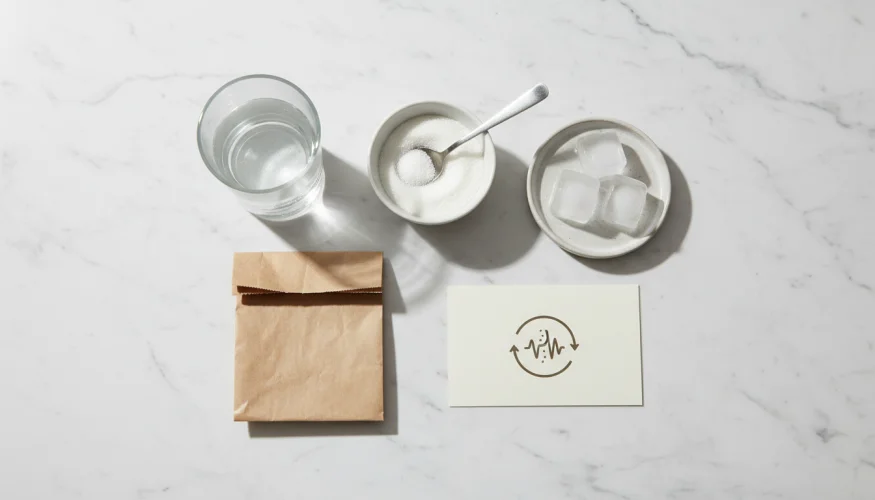
Holding your breath works on the principle of increasing the level of carbon dioxide in the blood. Higher CO₂ concentrations have a calming effect on the nervous system and can interrupt the cycle of involuntary diaphragm contractions. Breathing into a paper bag works similarly, and for many decades it was a standard piece of advice – although doctors today don't particularly recommend this method for safety reasons (there is a risk of hypoxia with prolonged use), the principle behind it is sound.
Drinking water, especially in small sips or with fingers plugging the ears, can stimulate the vagus nerve and interrupt the reflex loop. The act of swallowing activates muscular movements in the esophagus that can "override" the rhythm of diaphragm spasms. Sucking on ice or swallowing a spoonful of sugar has a similar effect – the physical stimulation of the throat and esophagus disrupts the repeating nerve signal.
Being frightened works on a different principle: a sudden surprise activates the sympathetic nervous system and causes brief stress that can interrupt the automatic pattern of diaphragm behavior. It's a bit like restarting a computer – a rapid system overload that clears the problematic process. However, the effect is unreliable and depends on the intensity of the surprise and the individual person.
There are also less traditional but scientifically supported approaches. One of them is the so-called Valsalva maneuver – attempting to exhale with the mouth and nose closed, which increases intrathoracic pressure and can stimulate the vagus nerve. Another is direct massage of the carotid sinus in the neck, which slows the heart rate and calms the nervous system – this method should, however, only be performed by a doctor.
The American organization Cleveland Clinic states that for short-term hiccups, home remedies are usually sufficient, with the most effective being those that directly influence vagus nerve function or increase CO₂ levels in the blood.
When hiccups are more than just an annoyance
For most people, hiccups are just a momentary inconvenience. But there are situations where what begins as a trivial phenomenon becomes a real problem. For example, ninety-three-year-old American Charles Osborne entered the Guinness World Records as the person who hiccupped continuously for 68 years – from 1922 to 1990. His case is an extreme exception, but it shows that hiccups can take on very serious forms.
Chronic hiccups significantly reduce quality of life – they disrupt sleep, make eating and drinking difficult, complicate communication, and can lead to exhaustion and psychological problems. In such cases, doctors turn to pharmacological treatment. The most commonly used medication is chlorpromazine (an antipsychotic), which is approved in some countries specifically for the treatment of hiccups. Other options include metoclopramide, baclofen, or gabapentin, with the choice depending on the underlying cause and the patient's overall health.
In extreme cases of persistent hiccups caused by irritation of the phrenic nerve, surgical procedures may also be considered – such as blocking or severing the phrenic nerve. These are, however, truly exceptional situations that affect only a fraction of patients.
Interestingly, hiccups occur more frequently in men than in women, particularly in persistent or chronic cases. Scientists don't yet know exactly why, but it is assumed that hormonal differences and anatomical variations in the nervous system play a role.
Hiccups can also be a side effect of certain medications – such as corticosteroids, benzodiazepines, or chemotherapy drugs. Patients undergoing oncological treatment complain of them quite frequently, which is why research in this area is intensively focused on finding effective and safe ways to suppress hiccups in these specific patient groups.
It is also worth noting that hiccups occur even in unborn babies in the womb – ultrasound recordings clearly show fetuses hiccupping from as early as the second trimester of pregnancy. In this case, it is likely a form of training for the breathing muscles and reflexes, preparing the baby for life outside the womb. This is one piece of evidence that hiccups are a deeply rooted physiological reflex with a long evolutionary history.
So how should we approach hiccups in everyday life? Imagine a situation that many people know all too well: you're sitting in a work meeting, about to present to twenty colleagues, and at that very moment you start hiccupping. Panic will make things worse, because stress is itself a trigger. The best strategy is to stay calm, take a quiet deep breath, hold it for a moment, and then exhale slowly. This simple approach raises CO₂ levels while also activating the parasympathetic nervous system, which calms the body. If a glass of water is at hand, a few slow sips with fingers plugging the ears may help speed things along.
Prevention is, of course, better than cure. Anyone who suffers from hiccups repeatedly and knows what triggers them can reduce the risk by eating slowly and calmly, avoiding very hot or cold drinks consumed in quick succession, cutting back on alcohol and carbonated drinks, and not eating right before stressful situations. None of this requires a lifestyle revolution – it simply takes paying a little more attention to how and what we eat.
Hiccups are one of those fascinating reminders of just how complex and yet surprisingly vulnerable the human body is. Nerves, muscles, reflexes, and the nervous system work in constant coordination – and occasionally this coordination goes slightly off-kilter. Most of the time, it's nothing serious. But understanding what is happening beneath the surface not only gives us better tools for getting rid of hiccups, but also a deeper appreciation for how remarkably our bodies function.