

# Recycling Coffee Grounds at Home and in the Garden
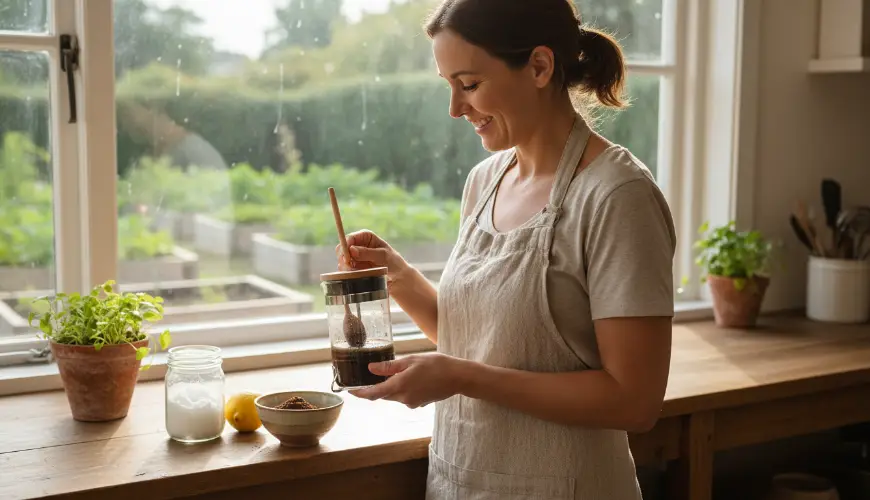
Every morning, tons of waste are generated in households around the world, which most people throw in the bin without a second thought. Coffee grounds – the dark, moist mass left over after preparing the morning cup – conceal surprising potential. Instead of ending up in a landfill, they can serve as a natural fertilizer, cosmetic product, pest repellent, or cleaning agent. Recycling coffee grounds at home and in the garden is so simple that it begs the question: why didn't we start doing this sooner?
Coffee grounds are a by-product that forms when preparing coffee by any method – whether using a drip coffee maker, French press, moka pot, or espresso machine. In terms of composition, they are an organic material rich in nitrogen, potassium, phosphorus, and a whole range of trace elements. It is precisely this chemical composition that makes them a valuable raw material with applications in many areas of everyday life. According to research published on the ResearchGate portal, coffee grounds contain up to 2% nitrogen in dry matter, making them a comparable source of nutrients to some commercial fertilizers.
Yet the vast majority of households simply throw this material away. The average Czech person drinks approximately 160 liters of coffee per year, with roughly eight grams of grounds produced for every ten grams of ground coffee. Over the course of a year, a single household produces kilograms of organic material that could be reused – instead, it unnecessarily burdens municipal waste.
Try our natural products

The garden as the greatest beneficiary of coffee grounds
The best-known and most effective way to use coffee grounds is in the garden. Grounds function as a natural slow-release fertilizer that benefits the soil on several levels. Added to a flower bed or worked into compost, they improve soil structure, increase its permeability, and promote the growth of beneficial microorganisms. Improvement of soil structure is an advantage that every gardener will notice after just the first season.
Composting coffee grounds is one of the simplest ways to use them. All you need to do is add them to the composter continuously along with other organic waste – vegetables, fruit peels, or grass. Grounds are classified as so-called green material rich in nitrogen, and should therefore be balanced with brown materials such as dry leaves or cardboard. The resulting compost will then be balanced and valuable for the entire garden. According to recommendations from the U.S. Department of Agriculture (USDA), coffee grounds should not make up more than 20% of the total volume of compost, to prevent the mixture from becoming too acidic.
Direct application to flower beds is another popular method. Grounds can be scattered around plants as mulch, which retains moisture and gradually releases nutrients. This method is particularly appreciated by growers of blueberries, raspberries, rhododendrons, and azaleas – plants that prefer more acidic soil. However, if the garden includes vegetables or plants that prefer neutral soil, it is better to compost the grounds first, as direct application can slightly lower the pH.
Gardeners also value grounds for their ability to repel certain garden pests. Slugs and snails avoid coffee grounds because they contain caffeine, which is toxic to them. Scattering a thin layer around susceptible plants can therefore act as a natural barrier without the need for chemical products. A similar effect has been observed with ants – they generally avoid areas with grounds. This will be appreciated by anyone who has battled ant colonies on a patio or in flower beds.
An interesting use of coffee grounds is in mushroom cultivation. Oyster mushrooms grow surprisingly well on coffee grounds, as they need a nutrient-rich substrate. There are even entire communities of enthusiasts who grow mushrooms at home in this way – they collect coffee grounds not only from their own households but also make arrangements with local cafés. This approach is a beautiful example of circular economy on a small scale.
Take, for example, the Novák family from Brno, who started collecting coffee grounds two years ago and adding them to their composter. The result? Their garden soil visibly improved within one season, tomatoes grew more vigorously, and the use of chemical fertilizers dropped to a minimum. "We didn't expect such a small change to have such a big impact," Mrs. Nováková described her experience. Stories like this are not exceptional – just look at gardening forums and discussions, where similar experiences abound.
Coffee grounds in the household: surprising uses
The garden is not the only place where coffee grounds prove their worth. In the home, they find use as a natural cleaning and cosmetic product that can replace a whole range of commercial products full of chemicals.
In the bathroom, coffee grounds work well as a natural scrub. Their coarser texture gently removes dead skin cells, while the caffeine in the grounds stimulates blood circulation and can temporarily reduce the visibility of cellulite. Simply mix the grounds with a little coconut oil or honey to create a simple homemade scrub that rivals expensive cosmetic products from the drugstore. The cosmetics industry, after all, commonly uses caffeine in exfoliating products – the homemade version is simply a natural and zero-waste alternative.
Coffee grounds also work as a natural deodorizer. Their ability to absorb odors makes them an excellent helper in the refrigerator, where they neutralize unpleasant smells – simply place a bowl of dry grounds on a shelf. They work equally well in shoes or in a rubbish bin. This property is due to the porous structure of coffee particles, which physically trap odor molecules.
In the kitchen, grounds can be used to clean stubborn dirt from dishes or a grill. Their mildly abrasive texture helps mechanically remove burnt-on residue without damaging the surface. Care should be taken with aluminum or stainless steel cookware, where scratching could occur – in these cases, it is better to use the grounds only as an ingredient in a cleaning paste with a fine consistency.
A lesser-known but very practical use of coffee grounds is as a natural dye. Grounds can color paper, fabric, or wood in warm brown shades, which is appreciated by creatives and artists looking for natural alternatives to synthetic dyes. Simply boil the grounds in water, filter the liquid, and use the resulting liquid as a dye. The resulting shades are subtle and natural, though less permanent than commercial dyes.
The practical uses of coffee grounds in the home are summarized, for example, in these most commonly mentioned applications:
- Natural scrub – mixed with oil or honey for skin care
- Odor absorber – in the refrigerator, shoes, or rubbish bins
- Cleaning agent – for stubborn dirt in the kitchen or on the grill
- Natural dye – for creative projects and fabric dyeing
- Insect repellent – in the garden and in the home
How to properly store and dry grounds
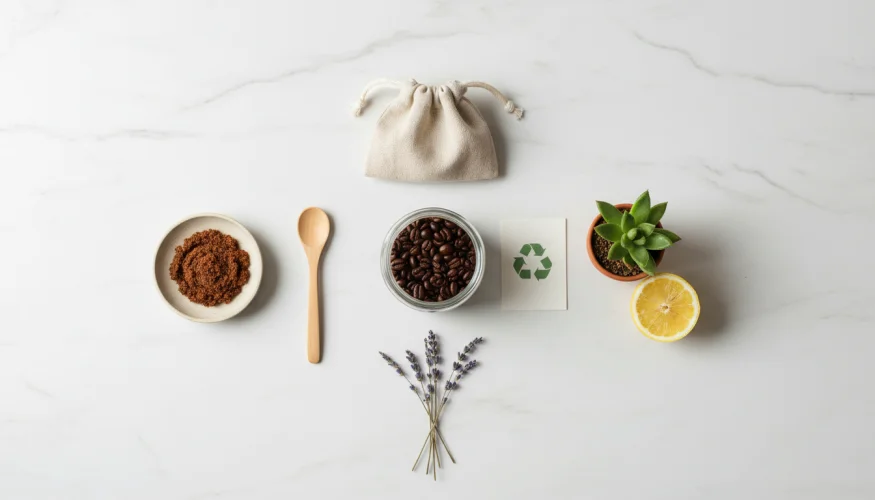
For coffee grounds to be put to good use, it is important to know how to store them properly. Fresh, moist grounds are prone to mold, and so it is advisable to dry them before storage. The simplest method is to spread them on a baking sheet and let them dry at room temperature, or briefly dry them in the oven at a low temperature. Dry grounds will then keep in a sealed container for several weeks without any issues.
For those who collect grounds continuously and do not plan to use them immediately, it is ideal to keep a small container with a lid in the kitchen, adding a fresh batch daily. Once the container is full, the grounds are transferred for drying and the cycle is repeated. This undemanding ritual quickly becomes a natural part of the daily routine – much like sorting plastics or paper.
A sustainable lifestyle does not mean radical changes or great sacrifices. Quite the opposite – it is often about small, smart decisions that add up to something meaningful over time. Recycling coffee grounds is a perfect example of this: it requires no special equipment, no additional costs, and no specialist knowledge. All it takes is a little curiosity and a willingness to try something differently.
The Food and Agriculture Organization of the United Nations FAO has long been highlighting the need to reduce the amount of organic waste that ends up in landfills, where decomposition produces methane – a potent greenhouse gas. Coffee grounds make up a not insignificant portion of food waste globally. It is estimated that over 6 million tons of coffee grounds are generated worldwide every year, with the vast majority ending up as waste. If even a fraction of households were to start actively using their grounds, the environmental impact would be measurable.
Cafés and restaurants are becoming increasingly aware of this potential. In many cities across Europe, initiatives are in place where businesses sort their grounds and offer them to customers, or pass them on to local farms and composting facilities. Some startups are even developing biofuel, building materials, or edible packaging from coffee grounds. All of this shows that this is a raw material with enormous potential that we are only just beginning to fully discover.
And anyone can start tomorrow morning – instead of the grounds ending up in the bin, they can head to the composter, a flower bed, or the bathroom as a scrub. Such a small step, such a big difference.