

Overball will change your view on exercising at home
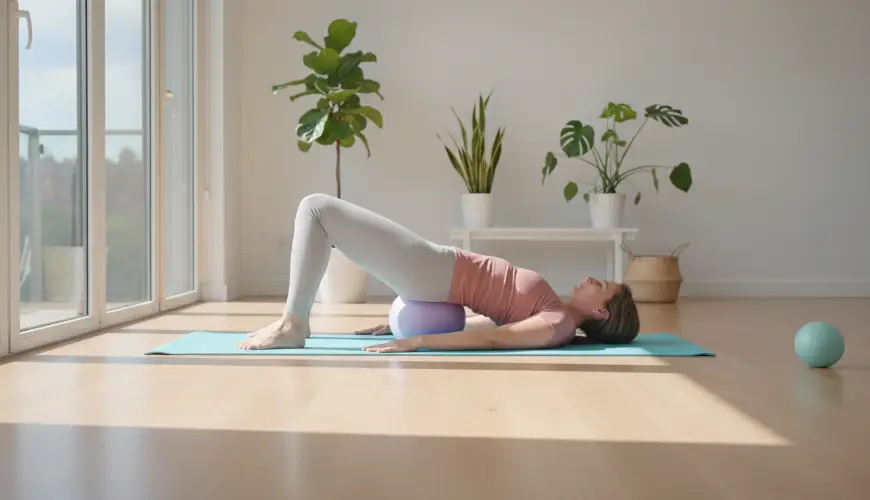
Who would have thought that one of the most useful home exercise tools looks like an inflatable toy from childhood? The overball – a soft, slightly pliable ball with a diameter of roughly 25 to 35 centimetres – has firmly established itself in home gyms, rehabilitation centres, and yoga classes around the world in recent years. Yet its price is a fraction of what most fitness equipment costs, and its range of applications is surprisingly broad. How can such a simple object replace a whole host of expensive machines?
The answer lies in the physics of instability. When a person sits, lies, or leans against a surface that moves and yields slightly, the body immediately activates deep stabilising muscles – primarily the pelvic floor muscles, the diaphragm, the transverse abdominal muscle, and the short back muscles. These structures form what is known as the deep spinal stabilisation system, and in everyday life most people use them far too little. The overball is precisely the tool that can wake them up, without requiring the person to follow a complex training programme.
Try our natural products
Why physiotherapists and athletes alike have come to love the overball
Physiotherapists recommend it to patients recovering from knee, hip, and spinal surgery. Pilates instructors incorporate it into every other class. Yoga communities use it as a support for deep flexibility work. And yet it remains the same simple inflatable ball throughout. The reason is straightforward: the overball is an exceptionally adaptable tool that adjusts to the user's level, not the other way around.
Take Lucie, for example – a forty-year-old accountant from Brno who suffered from chronic lower back pain. After years of sitting at a computer with minimal physical activity, her doctor recommended rehabilitation focused on strengthening her core. Lucie bought an overball and began exercising at home following videos by a physiotherapist. At first, it seemed almost absurd to her that simply lying on a ball and breathing consciously could change anything. After six weeks, however, she herself admitted that the pain had subsided and that, for the first time in years, she felt more grounded in her own body. Does this sound like something from an advertising leaflet? Not at all – research has repeatedly confirmed that exercising on unstable surfaces genuinely increases the activation of deep muscle groups compared with exercising on a firm surface.
Studies published in specialist rehabilitation journals, such as the Journal of Physical Therapy Science, show that training with unstable equipment leads to demonstrable improvements in proprioception – that is, the body's ability to sense the position of its own joints and segments in space. This ability is crucial not only for athletes but also for elderly people, in whom a decline in proprioception significantly increases the risk of falls and subsequent injuries.
The overball is not merely a rehabilitation matter, however. Fitness trainers use it as a complement to conventional strength training – adding the ball under the back during squats, under the hands during push-ups, or between the knees during a bridge immediately makes the exercise more demanding for the stabilisation system, without any need to increase the load. This is particularly valuable for those who want to build functional strength without unnecessarily stressing the joints.
How to use the overball for stretching and strengthening – a practical perspective
Few tools manage to bridge two seemingly opposing disciplines – strengthening and stretching – as naturally as this one. And it is precisely this combination that makes the overball something more than just a fashionable accessory.
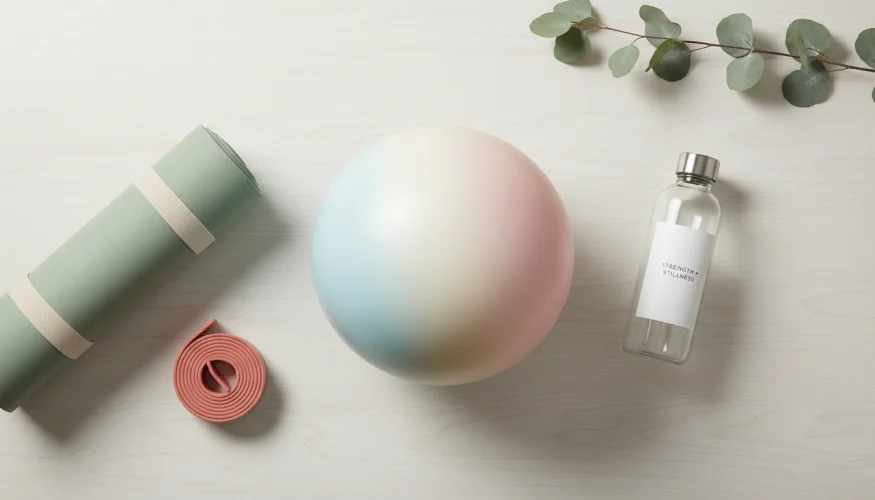
When it comes to stretching, the overball acts as a gentle, shaping support. Placing the inflatable ball under the lumbar or thoracic spine allows gravity to gradually release tension in muscles that would otherwise remain contracted. This is known as passive stretching, in which the body does not work actively but is guided by its own weight. The result is a deep release that many exercisers compare to the effect of a massage. It is no coincidence that many yoga instructors recommend the overball as a more affordable alternative to a foam roller or specialist myofascial release tools.
At the other end of the spectrum lies active strengthening, where the overball serves as an unstable platform or resistance tool. Squeezing the ball between the knees while strengthening the inner thigh muscles, gripping it in the hands during trunk rotations, or lying face down on the ball while exercising the back muscles – these are all simple yet effective ways of adding challenge to existing exercises. An overview of the basic ways to use the overball includes:
- supporting the spine during passive chest and lumbar stretching
- squeezing the ball between the knees to activate the inner thighs and pelvic floor
- resting the hands or feet on the ball during a plank to increase the demands on stabilisation
- the ball under the back during a bridge to intensify the work of the gluteal muscles
- sitting on the ball as an alternative to an exercise stool to activate the core
- the ball as a prop during deep squats to improve posture
The key to successful overball training is correct inflation. A ball that is too firm loses its pliability and instability, while one that is too soft does not provide adequate support. The general recommendation is to inflate the ball so that it yields slightly when gently squeezed between the palms – to approximately 80% of its maximum volume. This seemingly minor detail has a significant effect on the effectiveness of the exercise and on safety, especially in exercises where the ball serves as a support for the spine.
As Pilates pioneer Joseph Pilates once aptly put it: "Physical fitness is the first requisite of happiness." The overball embodies this idea in the most accessible form possible – a tool that does not cost thousands of crowns, does not take up an entire room, and yet can fundamentally transform the quality of movement and the everyday sense of being in one's own body.
Those interested in a deeper understanding of the anatomy of the deep stabilisation system and its role in preventing back pain can draw on materials from the Czech Society of Rehabilitation and Physical Medicine, which publishes specialist articles accessible to non-specialists as well.
Another reason for the overball's widespread popularity is its absolute accessibility in terms of age and physical condition. It can be used by elderly people as part of osteoporosis prevention and balance improvement, by pregnant women to strengthen the pelvic floor, by children as a playful movement supplement, and by elite athletes for recovery and the activation of specific muscle groups. This universality is relatively rare in the world of fitness – most tools target a narrow group of users, whereas the overball transcends boundaries of age, fitness level, and movement focus.
The ecological dimension of the matter is also worth mentioning. The overball is lightweight, compact, and with proper care will last for many years. It travels easily in a rucksack, requires no electricity and no special maintenance. At a time when more and more people are thinking about the impact their purchases have on the planet, acquiring one quality, long-lasting piece of equipment is a more sensible choice than accumulating cheap sports gear that ends up in landfill after three months. Manufacturers who produce the overball from natural latex or recycled materials offer an even more sustainable option for environmentally conscious consumers.
The transition from theory to practice tends to be surprisingly straightforward with the overball. Unlike strength-training machines, which require instruction to operate, or weights, where incorrect technique risks injury, the overball is an intuitive tool. The body itself will indicate where it needs support and where it feels challenged. Beginners are advised to start simply – for instance, by sitting on the ball for ten minutes a day instead of on a conventional chair. This seemingly trivial change activates the core continuously throughout the day and builds the habit of conscious posture without the need to set aside time for formal exercise.
For those who wish to go deeper, there is a wide range of structured programmes available – from the Pilates method through functional training to specialist rehabilitation protocols. Videos, online courses, and guidebooks focused specifically on overball training are readily available, and quality materials are offered, for example, by physiotherapy clinics or certified Pilates instructors on their websites. It is important to seek out resources from professionals with relevant qualifications, rather than simply from influencers with attractive photos on social media.
The overball is not a miracle tool that will resolve all movement problems on its own. It is an instrument – and like any instrument, it delivers results only when it is actually used. But among affordable, safe, and versatile movement tools, you will struggle to find a better companion for everyday care of the body. Whether it is five minutes of stretching before bed, a twenty-minute core workout in the morning before work, or conscious sitting at a desk – the small soft ball has a surprisingly large influence on how a person feels in their body day after day.