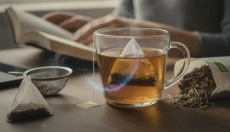

Homemade kombucha reveals the magic of natural fermentation
Few drinks can awaken such passion in people as kombucha. This fermented tea drink has moved over the past few years from the fringes of health enthusiasts into the mainstream, and today you can find it in cafés, organic food boxes, and the fridges of many households. And yet – whoever makes kombucha at home once will rarely buy it in a shop ever again. The reason is simple: homemade kombucha tastes different. More alive, more complex, more authentic. Especially if you venture into second fermentation and start experimenting with real natural flavours.
Fermentation in general is experiencing a renaissance. Interest in the gut microbiome, probiotics, and natural nutrition has drawn thousands of people to home production of yoghurts, kefirs, kimchi, or sauerkraut. Kombucha naturally belongs to this family of fermented foods – and at the same time offers something extra. It is a drink with history, science, and an almost meditative ritual component. Caring for the SCOBY (a symbiotic culture of bacteria and yeast) becomes for many a weekly routine that brings not only health benefits but also deep satisfaction from making something real with one's own hands.
Try our natural products

What actually happens during kombucha fermentation
To understand the magic of second fermentation, it helps to first know how the first one works. SCOBY – a fungus-like culture formed by the symbiotic coexistence of bacteria and yeast – is added to sweetened tea and begins to work. The yeasts break down sugar into alcohol and carbon dioxide, while the bacteria then convert the alcohol into acids, primarily acetic and gluconic acid. The result is a mildly acidic, slightly sparkling drink with a naturally low sugar content and a whole range of organic acids, enzymes, and live cultures.
This first fermentation process typically takes seven to fourteen days depending on the ambient temperature, the strength of the culture, and personal taste preference. The longer the drink ferments, the more acidic and less sweet it becomes. Most people find their ideal point somewhere between these extremes – sufficiently refreshing acidity, but still pleasantly drinkable. It is precisely at this moment that second fermentation comes into play, elevating the entire drink to a new level.
Second fermentation takes place in sealed bottles, without access to air. When pieces of fruit, juices, herbs, or spices are added to the kombucha and the bottle is tightly sealed, the remaining yeasts begin to work again with the natural sugars from the added ingredients. Carbon dioxide is produced, with nowhere to escape – and the result is a natural effervescence that cannot be compared to industrially carbonated drinks. At the same time, the genuine flavour of the ingredients used is transferred to the drink, rather than synthetic aroma.
Second fermentation with real flavours: why ingredients matter
This is where we get to the heart of the matter. There is an enormous difference between kombucha flavoured with synthetic aroma and kombucha into which you have placed fresh ginger, a slice of mango, or a handful of raspberries straight from the garden. Natural ingredients bring not just flavour – they bring enzymes, antioxidants, fibre, and other bioactive compounds, which partially integrate into the drink during second fermentation.
Take the popular combination of ginger and lemon as an example. Fresh ginger contains gingerol, a compound with powerful anti-inflammatory properties, whose positive effects on digestion and the immune system have been repeatedly confirmed by studies published in specialist journals. When slices of fresh ginger are added to kombucha for second fermentation, the drink acquires a sharp, warming flavour with a slightly spicy finish – and at the same time becomes enriched with these bioactive components. The result is incomparable to kombucha flavoured with ginger extract from a bottle.
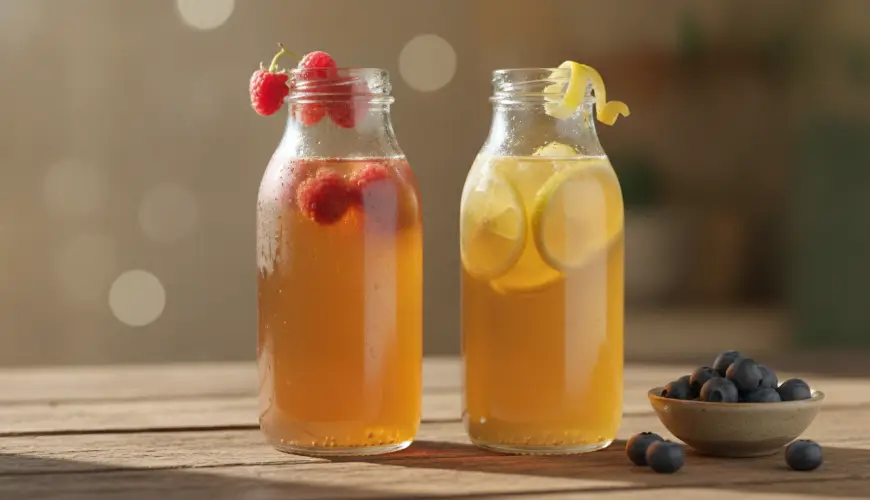
Using fresh or frozen fruit works in a similar way. Raspberries, blueberries, strawberries, or mango bring natural fruit sugars that the yeasts partially consume during fermentation, so the resulting drink is not overly sweet but has a pronounced fruity flavour with a beautiful natural aroma. Using frozen fruit even has one practical advantage – freezing disrupts the cell walls of the fruit and the juice is released more easily, meaning the flavour is transferred to the drink more intensely.
Herbs and spices open up an even wider world of possibilities. Lavender with lemon, mint with lime, cinnamon with apple, or turmeric with black pepper – each combination creates a completely unique drink with its own character. This freedom to experiment is one of the greatest attractions of home kombucha production. No industrial manufacturer will offer you exactly the combination that suits your taste best.
In practice, it looks something like this: Jana, a teacher from Brno, started making kombucha two years ago after struggling with digestive problems. Today she brews it every week for the whole family and says that the greatest discovery for her was adding fresh cherries and basil leaves during second fermentation. "I would never have believed that something so good could come from tea, sugar, and that strange mushroom. And what's more, I know exactly what's in it," she describes her experience.
How to make homemade kombucha in practice: from first to second fermentation
Starting to make homemade kombucha is not complicated, but it requires a little patience and respect for the process. The basic equipment is minimal – a large glass jar, a cloth or paper cover instead of a lid, a rubber band, and of course a SCOBY with so-called starter liquid, which is finished kombucha from a previous batch.
The tea for first fermentation should be classic black or green – the cultures need nutrients from the tea leaves, particularly nitrogen and B-group vitamins. Fruit or herbal teas as a base for first fermentation are not suitable, as they do not contain the necessary components for healthy SCOBY growth. Approximately 70–80 grams of sugar per litre of water is usually added, ideally cane or white granulated sugar – honey or alternative sweeteners can interfere with fermentation.
After the first fermentation, which typically lasts a week to ten days at room temperature of around 22–26 °C, the kombucha is poured into smaller sealable bottles. Bottles with a swing-top cap or PET bottles that allow pressure to be monitored are ideal. At this point comes the addition of natural flavours – and with them begins the most creative part of the entire process.
Several tried-and-tested combinations for second fermentation:
- Ginger + lemon – a classic that never disappoints, bold and refreshing
- Raspberries + vanilla – a delicate, mildly sweet combination with a beautiful pink colour
- Mango + chilli – for more adventurous palates, tropical sweetness with a spicy finish
- Apple + cinnamon + cloves – an autumnal variation reminiscent of mulled wine without the alcohol
- Blueberries + lavender – an elegant combination with a calming aroma
The bottles should stand at room temperature for another two to four days before being moved to the fridge. During this time, second fermentation takes place and the drink naturally carbonates. It is advisable to briefly open the bottle once a day, so-called "burping", to prevent the pressure from exceeding a safe level – especially in warm conditions the effervescence can be very intense.
As a source of further information and scientific context on fermentation and the health aspects of kombucha, see for example the overview article on the Harvard T.H. Chan School of Public Health website, which summarises the available research and at the same time points out what science has so far confirmed with certainty and what remains in the realm of assumptions.
It is also important to think about hygiene. Fermentation is a living process and the cleanliness of containers, hands, and work surfaces plays a key role. Residues of soap or disinfectants can damage the culture, so it is recommended to rinse equipment with hot water or vinegar. Likewise, kombucha should not come into contact with metals – the acids in the drink can react with metal surfaces and release unwanted substances.
As Sandor Katz, one of the most influential advocates of fermentation and author of The Art of Fermentation, says: "Fermentation is not just a technique for preserving food. It is a way of reconnecting with the natural processes of life that surround us."
This thought captures something essential. Homemade kombucha is not just a healthy drink – it is a practice of a slow, mindful approach to what we eat and drink. At a time when most drinks are produced in industrial facilities from concentrates and additives, making your own kombucha is a small but meaningful gesture. A gesture that says: I know what I'm drinking, and it matters to me.
The result of second fermentation with fresh, quality ingredients is always a little different – and that is precisely what fascinates people about home production. No two batches are identical. Temperature, fermentation time, the ripeness of the fruit, the strength of the culture – all these variables contribute to the final flavour. Rather than being frustrating, most home producers experience this as an adventure. Every bottle is a small experiment, every tasting brings new insights.
Whoever once ventures into the world of homemade kombucha and second fermentation with real natural flavours will find it hard to go back to shop-bought versions. Not because industrial kombucha is bad – but because the homemade kind is simply more alive, more authentic, and incomparably more personal. And that is a value that no manufacturing plant can replicate.