

What to Eat for Healthy Gut and Digestion to Gradually Improve Microflora
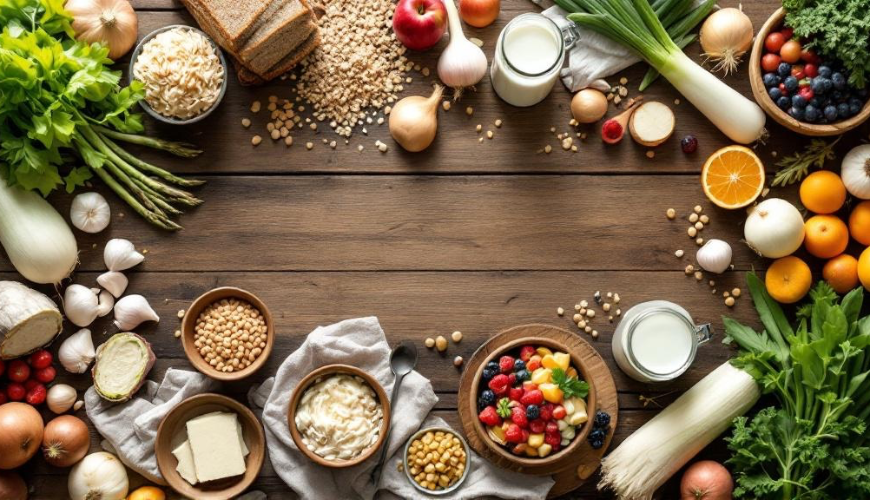
Until recently, intestines were mainly considered as a "tube for digestion." Today, they are almost spoken of as a separate organ with surprisingly wide-reaching effects on everyday well-being. And it's not just a fad. Recent science shows that a healthy gut microbiota (the community of microorganisms in the intestines) is related not only to how we digest food but also to how we feel, how we handle stress, or how often we catch a cold. It's no wonder that the question is increasingly being asked: what to eat for healthy intestines and digestion to feel lighter, more stable, and "more in one's own skin"?
The good news is that it's not a secret discipline for the initiated. Most changes occur in ordinary decisions at breakfast, lunch, and dinner. The bad news? Miracles overnight usually don't happen. The intestinal environment changes gradually but more reliably when given what benefits it in the long run.
Try our natural products

Healthy Gut Microbiota: What It Affects and Why It's Talked About So Much
The gut microbiota (often referred to as the microbiome) is a diverse ecosystem. It contains various types of bacteria and other microorganisms that participate in food processing, the production of certain substances, and "communication" with the immune system. It's not about having sterile cleanliness in the intestines—on the contrary, diversity is often one of the important indicators that the environment is stable.
When we say healthy gut microbiota—what it affects, most people think mainly of bloating or regularity. These are visible signals, but not the only ones. The intestines are closely linked to immunity (a large part of immune activity takes place in the gut area) and, through the so-called gut-brain axis, can also be related to mood, fatigue, or stress response. It doesn't mean that the "right yogurt" will solve all life's troubles, but that diet can be one of the most practical tools to support everyday stability.
For those seeking solid context, starting with overview texts on the Harvard T.H. Chan School of Public Health website or with professional information from the National Institutes of Health (NIH) can be helpful. It's not the "only truth," but it provides a good framework to differentiate trendy shortcuts from what makes sense.
And how to recognize that the intestines are calling for help? Sometimes it's subtle: frequent bloating, alternating diarrhea and constipation, a feeling of heaviness after eating, cravings for sweets, energy fluctuations. Other times, it's more of a long-term impression that the body "isn't running smoothly." That's when it's worth looking at the diet without extremes and with respect for the fact that the intestines love regularity.
"The microbiome is not a dietary supplement. It's an ecosystem that is most shaped by what we eat repeatedly and long term."
What to Eat for Healthy Intestines and Digestion: Foods Giving Microbiota a Chance
If one thing often lacks in the intestines, it's fiber in various forms. Not the kind "added to a bar," but natural, from legumes, vegetables, fruits, whole grains, nuts, and seeds. Fiber is partly indigestible for humans, but it is welcomed "food" for gut bacteria. And when bacteria work, substances that can support the intestinal environment are produced.
However, it's not true that the more fiber, the better—especially if one is not used to it. Intestines need time. Some can add legumes and vegetables without problems, while others need to proceed more slowly to avoid a week of bloated belly from good intentions.
Foods for Healthy Gut Microbiota: Fiber, Diversity, and "Feeding" Good Bacteria
Foods for healthy gut microbiota are mainly those that support diversity. Practically, this means alternating fiber sources and not fearing "ordinary" ingredients.
A simple principle works well: include more types of plant-based foods during the week. It doesn't have to be perfect or expensive. One day oatmeal, another rye bread, lentils, chickpeas, beans, various vegetables, an apple, a handful of nuts. Gut microbiota loves change within naturalness.
It's also sensible to consider so-called prebiotics—food components that are a favorite source for certain bacteria. They can be found in onions, garlic, leeks, chicory, asparagus, Jerusalem artichokes, or slightly green bananas. It's not about exoticism, but rather a return to ingredients that were often common in the kitchen.
And then there are fermented foods. These are almost legendary in discussions about the gut, sometimes even overrated. Yet they have their place—especially if they replace industrially processed foods and bring diversity to the diet. These include sauerkraut, kimchi, kefir, yogurt with live cultures, or tempeh. It's important to choose those that aren't unnecessarily sweetened or sterilized after fermentation.
Real Example: When "Healthy" Equals Mainly Regular and Simple
A typical scenario from everyday life: a person works in an office, coffee on an empty stomach in the morning, a quick "something from the bakery" for lunch, a sweet treat in the afternoon, a large portion of pasta in the evening, and then a feeling of fullness. It's not a character failure, just a daily rhythm that happens on its own.
A big change often comes surprisingly subtly: adding a breakfast that lasts longer (perhaps oatmeal with yogurt and fruit or rye bread with a spread and vegetables), a salad or legume soup alongside the main meal at lunch, a handful of nuts and an apple instead of an afternoon cookie. In a few weeks, one notices that digestion is calmer, energy more stable, and cravings for sweets not as intense. Not because the intestines "miraculously healed," but because they received more regular signals and more fiber to which the microbiota can adapt.
How to Arrange It in Practice So That It's Not Complicated
When considering what to eat for healthy intestines and digestion, a list of "superfoods" is often expected. Yet, an ordinary plate composition works much better. And because practical orientation sometimes saves hours of pondering, a simple guideline is enough:
- The basis consists of plant diversity (vegetables, legumes, whole grains, fruits, nuts, and seeds) along with quality proteins according to preferences (eggs, fish, fermented dairy products, legumes, tofu/tempeh).
- Fermented foods are suitable as a supplement a few times a week, not as a requirement.
- Hydration supports fiber function—without fluids, even good efforts can be counterproductive.
This brings us to an important detail: fiber needs water. Those who sharply increase their intake of legumes, oats, and vegetables but still drink too little can set themselves up for constipation or discomfort. Sometimes it's enough to add a few glasses of water daily, and digestion calms down.
What Harms Gut Microbiota (and How to Balance It Without Bans)
Intestines are not fragile porcelain vases. An occasional pizza, a glass of wine, or a dessert won't destroy the world. The problem is more often when certain things become the norm: low fiber, lots of ultra-processed foods, irregular meals, chronic stress, lack of sleep. The microbiota can then lose diversity, and the intestinal environment can become more irritable.
Ultra-processed foods are a chapter in themselves. They are often energy-dense but low in fiber and natural nutrients. They also tend to have higher salt, sugar, and various additive content. It's not about living "without packaging," but rather noticing what makes up the majority of the diet. If most of the day relies on real foods and simple cooking, the body usually handles the less ideal moments.
Stress has a big impact too. Not because stress "kills bacteria," but because it changes digestion, appetite, and how quickly one eats. Those who eat in a hurry often swallow air, don't chew thoroughly, and overburden digestion. Sometimes it's better for the intestines to have an ordinary meal eaten in peace than the best "healthy bowl" gulped between meetings.
And then there's the issue of antibiotics. When needed, they save lives. However, they can temporarily disrupt the microbiota. During such times, it's sensible to focus on gentle food, sufficient fluids, and gradually replenishing fiber and fermented foods as digestion allows. If someone has specific issues, it's appropriate to address them with a doctor or nutritionist, as there is no universal guide.
Ultimately, it often comes back to one simple question: is the diet diverse and regular, or is it more a series of coincidences? Regularity and diversity are surprisingly calming for the intestines.
That's the magic: instead of chasing perfection, it's worth building routines that can be lived long-term. When legume soup, oatmeal, sauerkraut, root vegetables, quality whole grain bread, and a few simple fermented foods appear more often in the kitchen, healthy gut microbiota has much more space to do its job. And people often notice it not as a "big revolution," but as a quiet improvement: less heaviness after meals, more stable energy, and the feeling that digestion has finally stopped being the main topic of the day.